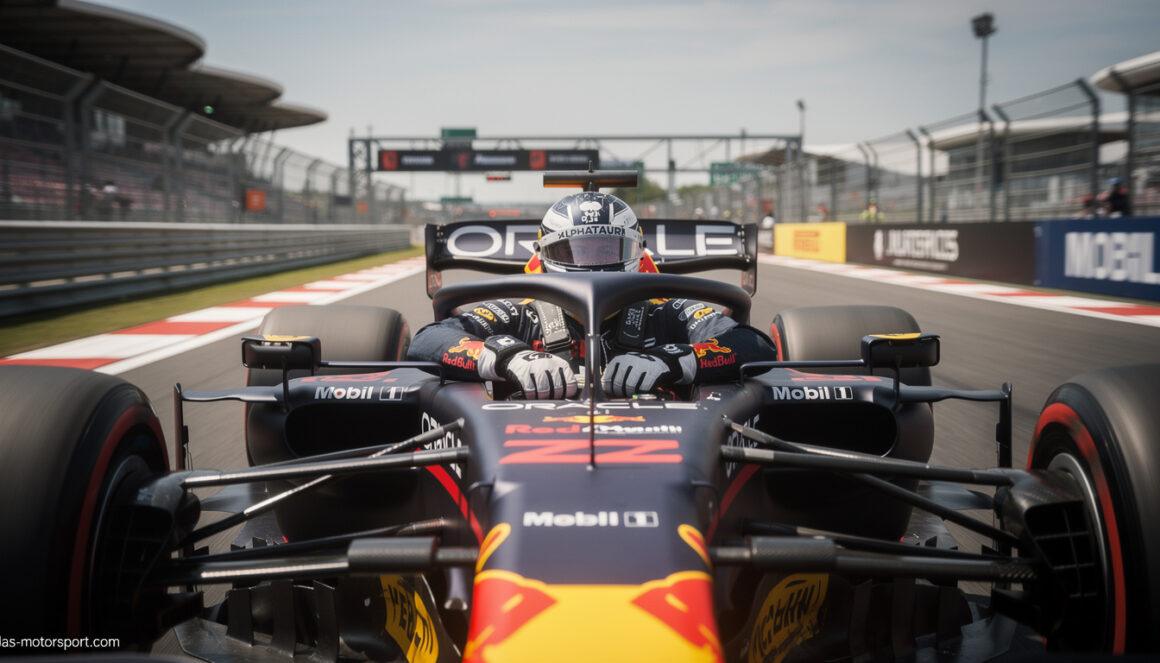


Formula 1 reaches 397 km/h in record conditions, while Formula E targets 320 km/h. Yet straight-line speed explains only part of this comparison. Their contrasting energy systems reshape braking, cornering, overtaking, and driver workload.
At a glance: Formula 1 remains faster over a lap through downforce and hybrid power. Formula E develops electric efficiency through regeneration, compact street circuits, and tightly managed energy. Both championships test different limits of modern motorsport technology.
Formula E vs Formula 1: Speed and Circuit Reality
Formula 1 cars typically exceed 1,000 hp, while Formula E Gen3 Evo reaches 350 kW. That equals roughly 470 hp during Attack Mode. The speed gap reflects aerodynamic purpose, not electric weakness. A study of the perfect racing line shows why corner geometry matters equally.
Formula E racing rewards millimetre-perfect placement on narrow streets. Formula 1 rewards sustained load through longer, faster corners. Those demands create two fundamentally different racing cars.
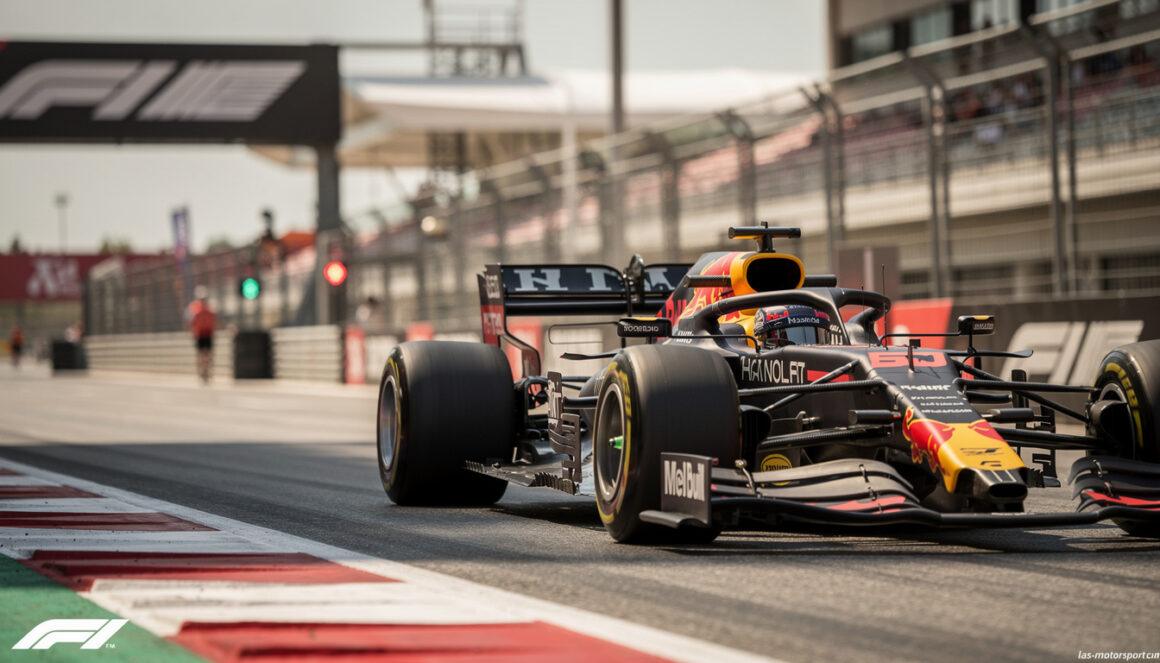
The footage shows how quickly each car builds speed after a tight corner exit.
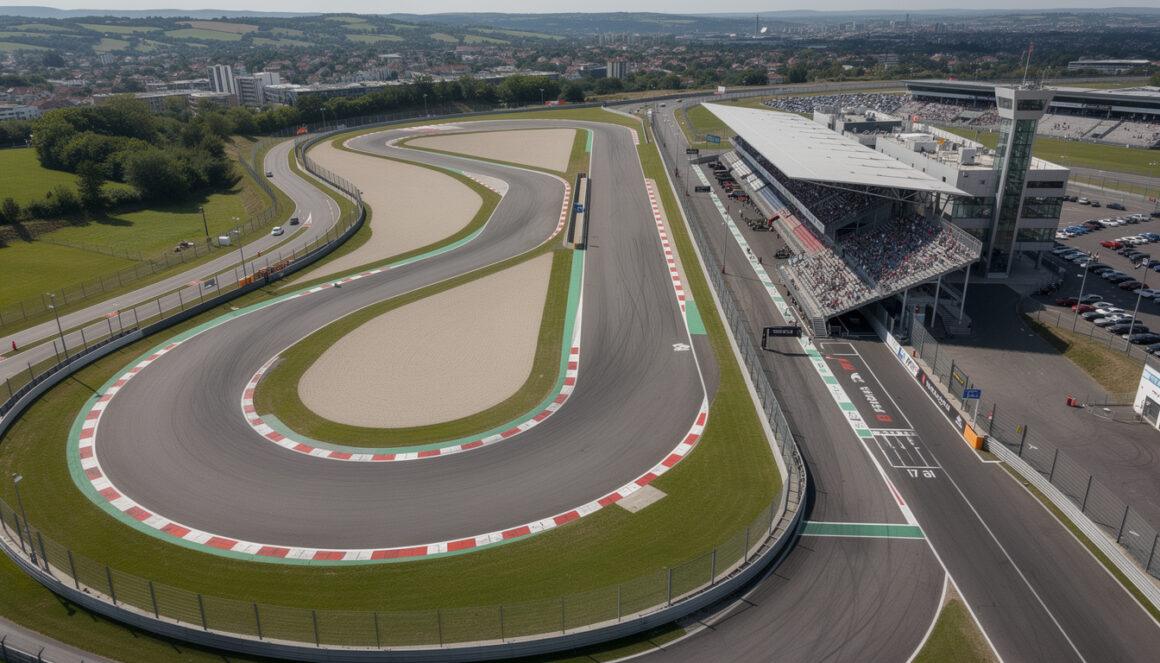
Formula 1’s outright velocity begins with its circuit environment. Permanent venues provide wide run-offs, long straights, and predictable asphalt. Monza, Baku, Jeddah, and Las Vegas allow power units to remain fully deployed. That sustained deployment makes every horsepower valuable.
The official 397 km/h Formula 1 speed record belongs to Honda’s RA106 Bonneville project. It does not represent normal Grand Prix conditions. Still, modern cars can approach 370 km/h on suitable circuits. Valtteri Bottas recorded 378 km/h during the 2016 European Grand Prix weekend.
Formula E’s 320 km/h ceiling belongs to the Gen3 package. It is impressive for a battery-powered single-seater racing on temporary circuits. However, urban layouts rarely offer enough distance to reach that limit. Most Formula E straights end with another braking zone.
That distinction changes the meaning of speed. Formula 1 gains time through long periods of full-throttle acceleration. Formula E gains time through short bursts between 90-degree corners. Drivers attack the same physics through different operating windows.
Formula 1 reaches 100 km/h in approximately 2.6 seconds. Formula E Gen3 Evo targets 0–60 mph in 1.82 seconds. That figure equals 0–97 km/h. Electric torque can therefore make the first metres exceptionally competitive.
Beyond 150 km/h, aerodynamic drag increasingly shapes the comparison. Formula 1 still pulls strongly towards 200 km/h and beyond. Formula E must protect battery energy over the race distance. Its acceleration curve therefore softens sooner.
Imagine both cars leaving the same hairpin. The Formula E car responds immediately with direct electric torque. The Formula 1 car soon gains through power, grip, and lower drag sensitivity. By the braking marker, their separation can become substantial.
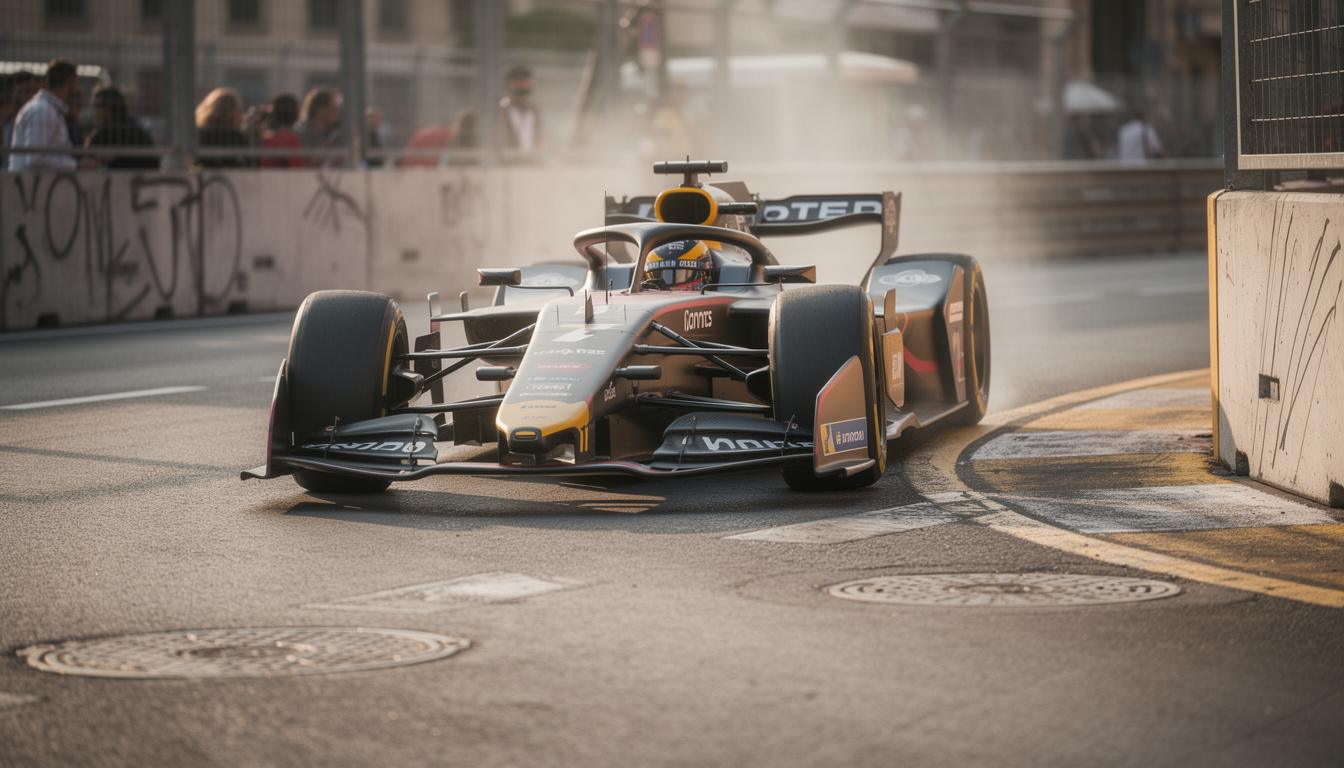
Street circuits also limit visual perception. A Formula E car at 220 km/h between concrete walls feels brutally fast. An F1 car at 220 km/h on a wide permanent circuit looks calmer. Track width changes how spectators interpret pace.
Formula E drivers work with bumps, painted lines, manholes, and changing grip. Formula 1 drivers face smoother surfaces and larger safety margins. Neither discipline is easier. Each extracts performance from a separate set of compromises.
Speed alone never defines performance. The meaningful question concerns usable speed at each circuit. Formula E converts city-centre limitations into close combat. Formula 1 converts aerodynamic load into sustained lap-time advantage.
Formula E vs Formula 1 Car Architecture
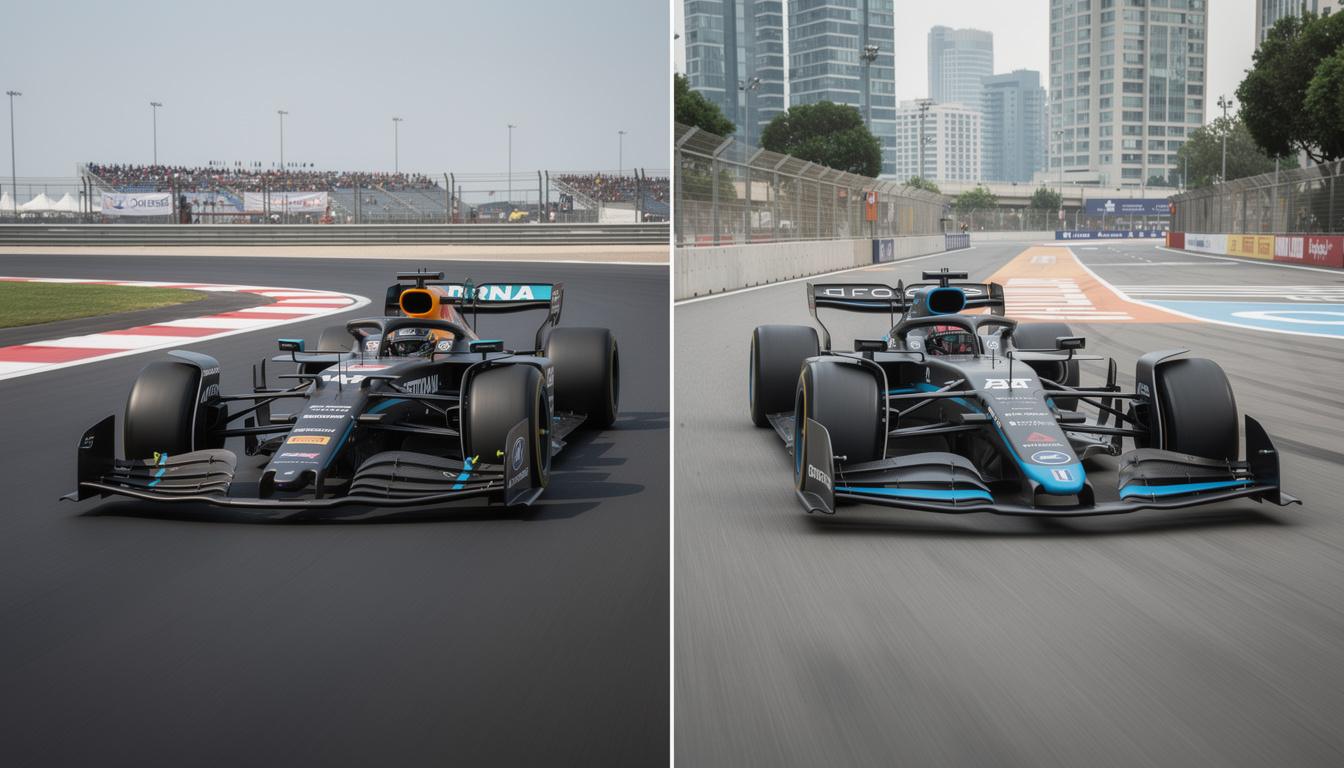
Formula E vs Formula 1 begins with two separate energy philosophies. Formula 1 combines fuel combustion, electrical deployment, and complex thermal management. Formula E stores race energy within a high-voltage battery. The powertrain choices define every chassis decision.
The current Formula 1 framework uses a turbocharged 1.6-litre V6 hybrid engine. The internal-combustion engine produces roughly 400 kW under the 2026 formula. The electrical system can supply another 350 kW. Combined output approaches 1,000 hp when deployment conditions permit.
Formula E’s Gen3 Evo uses a 350 kW rear powertrain in Attack Mode. Race power generally operates at 300 kW, or 402 hp. A front motor supports regeneration rather than continuous propulsion. This layout permits energy recovery at both axles.
The Formula E system can regenerate up to 600 kW under braking. That figure includes 350 kW at the front axle. Rear regeneration contributes another 250 kW. Such recovery fundamentally changes how drivers approach each braking zone.
Formula 1 recovers energy through braking and turbocharger systems. Its battery stores only a small amount of deployable electrical energy. The fuel tank remains central to Grand Prix range. The car must balance combustion efficiency with electrical deployment.
Formula E carries enough usable battery energy for its entire race. The battery’s mass creates a different vehicle-dynamics challenge. Engineers must manage tyre load carefully during direction changes. Energy preservation remains as important as peak output.
Weight, Battery Layout and Mechanical Grip
Formula E cars weigh approximately 860 kg including the driver. Formula 1’s 2026 minimum weight is expected near 768 kg. Battery mass shapes transient behaviour through chicanes. More inertia punishes late steering inputs and abrupt kerb strikes.
Formula 1 places its hybrid components around a compact power unit. The lower overall mass benefits braking and rapid direction changes. Lower mass reduces tyre demand during repeated cornering. That effect compounds through a 300-kilometre Grand Prix.
Formula E requires a stiff survival cell around the battery pack. The battery influences centre-of-gravity height and weight distribution. Teams cannot redesign the entire chassis around proprietary battery concepts. Standardisation controls cost and preserves competitive parity.
Formula 1 teams enjoy more aerodynamic design freedom. They still operate within strict FIA dimensional restrictions. Suspension geometry helps maintain floor height under load. Stable ride height protects underfloor airflow and rear grip.
Both categories use carbon-fibre monocoques and halo protection. Both meet demanding FIA crash standards. Their packaging priorities remain sharply different. Formula 1 protects airflow around mechanical components.
Formula E protects electrical hardware while maximising regeneration. The difference becomes visible during deceleration. A Formula E driver must blend friction braking with electrical recovery. An F1 driver must stabilise enormous aerodynamic load.
Aerodynamics, Downforce and Lap-Time Load
Aerodynamics separates their cornering ceilings more than any headline power number. At 150 km/h, an F1 car can generate downforce near its weight. Faster airflow produces still greater vertical load. Formula E produces far less downforce by regulation.
Formula 1’s floor creates much of its grip. Venturi tunnels accelerate air beneath the chassis. The floor becomes an inverted wing under controlled ride-height conditions. That load helps drivers attack medium-speed corners without excessive tyre sliding.
Formula E uses comparatively simple bodywork and smaller aerodynamic surfaces. The design reduces wake sensitivity and protects efficiency. It also prevents extreme cornering loads on bumpy streets. Concrete-lined circuits demand predictable reactions more than peak downforce.
Formula 1’s Drag Reduction System reduces rear-wing drag on designated straights. It supports overtaking when a driver sits within one second. Formula E uses Attack Mode instead. Attack Mode temporarily increases available power after a defined activation route.
The two tools expose contrasting priorities. DRS improves straight-line efficiency after corner exit. Attack Mode creates a tactical power advantage but costs track position. Drivers must decide when energy and position deliver greater value.
A high-downforce F1 car brakes later because vertical load raises tyre capacity. Formula E brakes aggressively too, but regeneration adds another layer. The driver seeks energy recovery without locking an unloaded wheel. That balance can alter an entire race strategy.
Formula 1 creates grip from air. Formula E harvests grip through precision. Both approaches create demanding machinery, but their lap times emerge differently.
This technical demonstration makes the regeneration process easier to visualise under heavy braking.
Formula E vs Formula 1 Racing and Overtaking
Racecraft changes when energy becomes a visible tactical resource. Formula 1 drivers protect tyre life and track position across longer distances. Formula E drivers often trade positions while managing usable battery energy. The best attack may require restraint before the final laps.
Formula 1 Grands Prix usually cover about 305 kilometres, excluding Monaco. Race duration cannot exceed two hours under normal regulations. Tyres shape almost every strategic decision. Compounds, degradation rates, and pit windows influence overtaking opportunities.
Formula E races are shorter and usually run without scheduled tyre stops. The all-weather Hankook tyre must cope with dry and wet surfaces. Drivers cannot solve a balance problem through a compound change. They must adapt through steering, braking, and energy targets.
That creates a distinct form of pressure. Formula 1 drivers can push hard after fitting fresh tyres. Formula E drivers must retain enough energy for the closing laps. Excessive early pace may leave a driver exposed later.
Energy saving does not mean slow driving. It often means choosing lift-and-coast points precisely. A driver may lift 30 metres before a braking zone. That small action can preserve energy without sacrificing too much lap time.
Formula E’s peloton effect adds complexity. Cars running in groups can use less energy through reduced aerodynamic resistance. A leader may therefore face a strategic disadvantage. Running second can provide a more efficient energy profile.
Driver Inputs and Racing-Line Compromise
Formula E drivers frequently modify braking pressure to maximise regeneration. Too much pedal demand can overload available tyre grip. Brake blending changes corner entry on low-grip street asphalt. The driver must feel what the software cannot predict.
Formula 1 drivers manage a different pedal problem. Downforce falls rapidly as speed decreases. Braking force must follow airflow through the corner approach. Locking a front wheel can destroy a tyre’s surface within seconds.
At Monaco, Formula 1 faces a partial version of Formula E’s challenge. The circuit is narrow, slow, and rhythm-dependent. Yet F1 still brings vastly more downforce. That difference makes its braking zones shorter and corner exits sharper.
Formula E circuits punish even small positioning errors. A car can brush a wall while carrying only slight understeer. Formula 1’s permanent circuits offer wider margins. However, higher cornering speeds magnify the consequences of aerodynamic instability.
Drivers in both series chase a late apex when exit speed matters. Formula E often prioritises rotation before short straights. Formula 1 may prioritise minimum steering angle to preserve airflow. The fastest line changes with the car’s energy source.
The driver’s workload is therefore not identical. Formula E requires constant energy calculation during combat. Formula 1 requires deep tyre, brake, and aerodynamic management. Both demand processing speed far beyond ordinary road driving.
Tyres, Dirty Air and Strategic Positioning
Formula 1’s tyres operate within narrow temperature windows. Surface overheating causes graining or sliding. Tyre temperature controls sustained pace over long stints. A driver can lose several tenths through one overheated axle.
Formula E’s all-weather tyres provide less ultimate grip than F1 slicks. They also offer more durable race-long behaviour. Mechanical grip becomes the primary currency over painted urban surfaces. Drivers must avoid wasting tyre energy through wheelspin.
Formula 1 has improved following behaviour under recent ground-effect rules. Dirty air still reduces front-end consistency behind another car. Formula E’s lower downforce reduces that aerodynamic penalty. Close racing can therefore develop differently.
Formula E overtaking often occurs through Attack Mode timing. The activation zone forces drivers off the normal line. Rivals may pass immediately, then be repassed with extra power. It creates tactical exchanges rather than simple defensive driving.
Formula 1 overtaking depends on tyre offset, DRS, battery deployment, and braking bravery. A faster car may still struggle behind turbulent air. Track layout remains decisive. High-speed circuits expose aerodynamic efficiency more clearly.
Racing quality follows technical constraints. Formula E produces compressed tactical fights. Formula 1 produces longer strategic contests with higher peak loads.
Formula E vs Formula 1 Technology Transfer
The two championships share advanced materials and digital engineering methods. Their useful road-car lessons differ because their objectives differ. Formula E concentrates on electrical efficiency and energy recovery. Formula 1 focuses on extracting performance from hybrid engines under extreme load.
Formula E’s relevance to electric cars is direct. Regenerative braking, inverter efficiency, cooling, and power delivery matter beyond racing. Every recovered kilowatt reduces energy lost as heat. That relationship matters during urban driving as much as competition.
Formula 1’s hybrid architecture also has road relevance. Its power units achieve remarkable thermal efficiency for racing engines. Turbocharging recovers performance from compact displacement. Energy deployment turns a small engine into a powerful system.
The 2026 Formula 1 regulations increase electrical influence considerably. The MGU-H disappears under the revised architecture. Electrical output rises to 350 kW. Sustainable fuel also becomes mandatory under the new formula.
That change narrows the philosophical distance between both series. Formula 1 retains combustion, but reduces its fuel dependence. Formula E remains fully electric and battery-limited. Both must now demonstrate efficiency under competitive pressure.
Formula E also tests rapid charging technology through its Pit Boost concept. The system targets a 600 kW recharge during a race stop. A short stationary charge changes the tactical model. It creates another decision between track position and available energy.
Historic Precedents Behind Modern Efficiency
Formula 1 did not always chase efficiency with today’s intensity. Turbocharged engines dominated the 1980s through raw power. Fuel limits later forced engineers towards better combustion. Regulation pressure often creates smarter machinery.
The 1992 Williams FW14B demonstrated another lesson. Active suspension controlled ride height with exceptional precision. Stable platforms unlock aerodynamic performance more effectively than superficial wing changes. Its legacy remains visible in modern chassis thinking.
The Williams FW14B technical story explains why control systems changed Formula 1 development. Modern regulations restrict active suspension. Engineers instead pursue mechanical compliance and aerodynamic stability. The objective remains consistent: keep the car within its best operating window.
Formula E began with far lower performance than today’s Gen3 Evo. Early cars required mid-race vehicle swaps due to battery limits. Improved energy density eliminated that requirement. The series now races a full distance using one car.
That progression matters more than superficial speed comparisons. Battery technology develops through usable energy, charging capability, and thermal durability. A faster top speed means little if efficiency collapses. Formula E’s development path addresses that limitation directly.
Formula 1’s equivalent challenge is fuel-energy conversion. A power unit must deliver forceful acceleration without wasting fuel. Its battery must deploy strategically across each lap. Engineers chase efficiency because regulation makes waste expensive.
Sustainability Without Simplifying Performance
Sustainability means reducing wasteful energy, not removing competitive intensity. Formula E uses fully electric propulsion and central-city venues. Formula 1 is moving towards fully sustainable fuel. Their environmental strategies remain different but measurable.
Formula E avoids tailpipe emissions during racing. Its wider impact still includes freight, infrastructure, and battery production. Formula 1 faces similar logistics challenges. Neither championship should be judged through one metric alone.
Electric motors deliver torque instantly and efficiently. Battery cells remain heavy and thermally sensitive. Hybrid engines carry fuel mass but enable rapid refuelling outside racing regulations. Every system contains an engineering compromise.
For manufacturers, Formula E provides concentrated electrical research. For fuel producers, Formula 1 provides a demanding sustainable-fuel laboratory. Both series force development under high temperatures and repeated peak loads. That pressure makes results more valuable than laboratory claims.
Technology transfer follows the constraint. Formula E improves electrical systems. Formula 1 improves hybrid efficiency and sustainable combustion.
Formula E vs Formula 1: The 2026 Competitive Direction
The next technical cycle will make comparison more interesting, not simpler. Formula 1 adds more electrical power while reducing aerodynamic drag. Formula E continues refining regeneration and all-electric performance. The two series are converging selectively, while preserving separate identities.
Formula 1’s 2026 chassis rules target smaller, lighter cars than recent generations. Active aerodynamics will switch between high-downforce and low-drag configurations. The intention is better efficiency on straights. Drivers will need to understand changing aerodynamic states during each lap.
That approach echoes Formula E’s long-standing energy-management discipline. Neither driver can simply use maximum power everywhere. Deployment maps and efficiency targets will matter more. However, Formula 1 still operates across much higher downforce ranges.
Formula E’s Gen3 Evo introduces all-wheel-drive capability during selected operating phases. Front-motor drive assists acceleration under permitted conditions. The feature improves launch potential without creating permanent four-wheel-drive racing. Engineers must still protect tyre traction.
The result could make Formula E more spectacular in short acceleration zones. It will not automatically create Formula 1-level lap times. Downforce, braking stability, and track length still create separation. Performance must always be measured within context.
Formula 1 will remain the faster championship on conventional circuits. It combines greater power with extreme aerodynamic load. Formula E will remain the purer electric laboratory. Its compact circuits expose efficiency, precision, and wheel-to-wheel intelligence.
Fans should avoid treating the categories as direct rivals. They answer different engineering questions. Formula 1 asks how fast a hybrid machine can travel. Formula E asks how efficiently an electric racer can compete.
The comparison becomes clearer at a shared venue. A permanent circuit magnifies Formula 1’s downforce advantage. A dense city layout magnifies Formula E’s packaging and regenerative strengths. Circuit design determines which traits become visible.
That is why the discussion extends beyond horsepower. A car’s aerodynamic map, tyre load, and energy budget govern its lap. Performance is always system performance. The fastest solution changes when regulations alter the system.
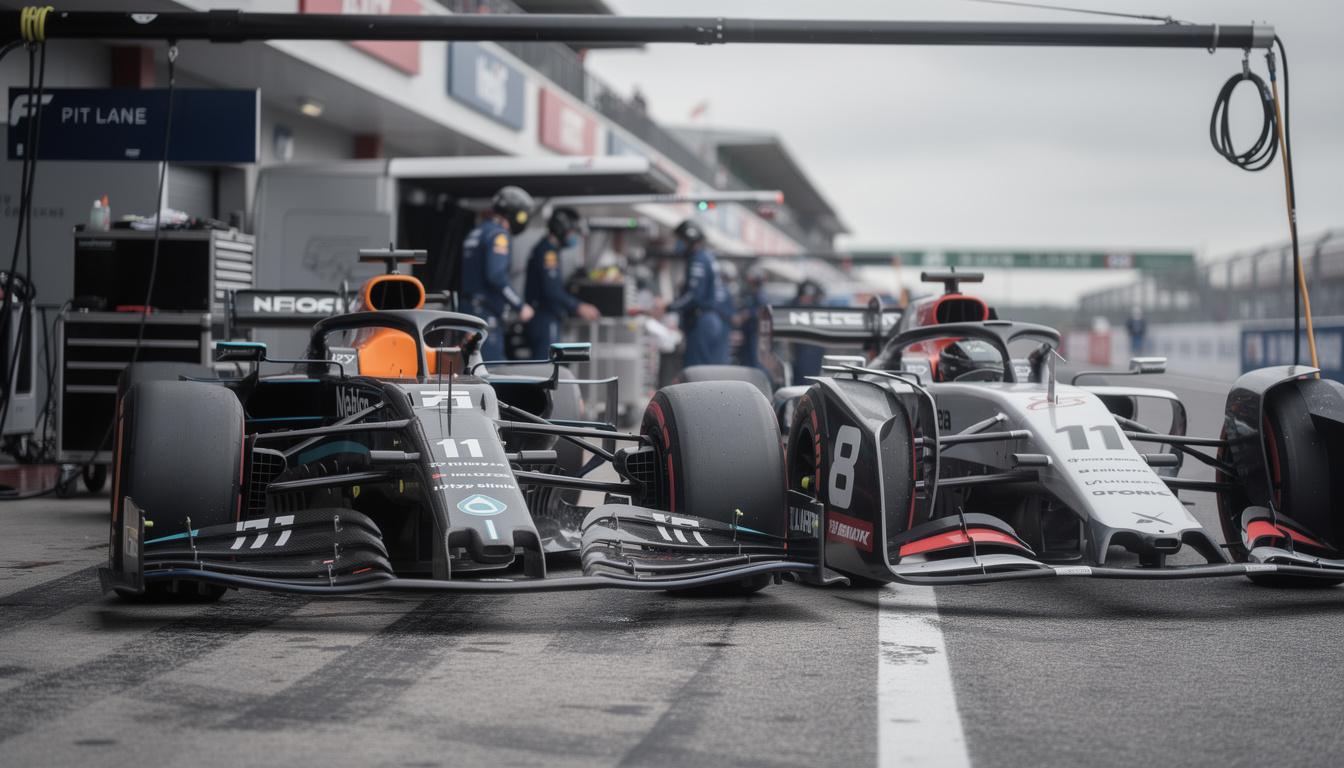
Future regulation will sharpen that lesson. Formula 1’s active aerodynamics and stronger electrical component will demand better energy discipline. Formula E’s development will continue around charging, recovery, and usable battery power. The engineering contest will remain compelling because neither route is uncomplicated.
Is Formula E faster than Formula 1?
No. Formula 1 remains faster in top speed, high-speed cornering, and overall lap time. Formula E’s Gen3 Evo is exceptionally quick from low speeds, especially during short acceleration phases.
Why does Formula 1 corner faster than Formula E?
Formula 1 creates substantially more downforce through its floor, wings, diffuser, and bodywork. Greater vertical load allows higher cornering force and later braking on suitable circuits.
How much power does a Formula E car have?
A Formula E Gen3 car uses 300 kW, or about 402 hp, in race trim. Attack Mode raises available rear power to 350 kW, approximately 470 hp.
Do Formula E cars use regenerative braking?
Yes. Gen3 cars can recover up to 600 kW under braking through front and rear motor systems. This recovered energy is central to Formula E race strategy.