


The Williams FW14B turned raw pace into a systematic advantage, using electronics and chassis control to make every corner repeatable, every braking zone predictable, and every lap a data-driven exercise in domination.
Its blend of active suspension, refined aerodynamics and carefully integrated driver aids did not just win races; it changed how engineers and drivers thought about the relationship between car and circuit. Understanding how this machine was conceived and tuned helps explain why some cars transcend a single season and become reference points for what Formula 1 performance can look like when regulations, talent and engineering vision align.
Here are some key points :
- The Williams FW14B blended electronics, chassis geometry and aerodynamics into a coherent performance package.
- Active suspension, semi-automatic gearbox and traction control reshaped what was possible in Formula 1.
- Nigel Mansell’s attacking style extracted the car’s full potential, while Riccardo Patrese struggled with its feel.
- The FW14B’s race car performance forced regulators to rethink how far F1 technology should go.
- Many concepts developed on the FW14B still influence modern F1 car engineering and setup thinking.
How the FW14B redefined control and consistency
The FW14B’s story begins with dissatisfaction rather than triumph, after Williams and Renault felt their early V10 package had fallen short of its potential. By pairing Adrian Newey’s aerodynamic insight with Patrick Head’s systems thinking, the team built a car that treated the track like a problem to be solved lap after lap.
Within this refined platform, active suspension, traction control and a semi-automatic gearbox were not gadgets but tools to stabilise the car’s behaviour. That philosophy still underpins how engineers think about F1 technology, even as modern rules restrict electronic aids. A detailed technical breakdown of the FW14B’s chassis and suspension gives valuable context for how its systems interacted on track.
Williams FW14B engineering: integrating electronics and aerodynamics
The heart of the Williams FW14B story is not a single component but how its systems were integrated into one coherent package. Newey’s chassis and aerodynamics work were conceived knowing that ride heights would be electronically controlled, which changed how the underfloor and diffuser could be exploited. That level of integration made rivals’ passive designs feel outdated almost overnight. It also showed how far modern downforce thinking owes to this era of aggressive experimentation.
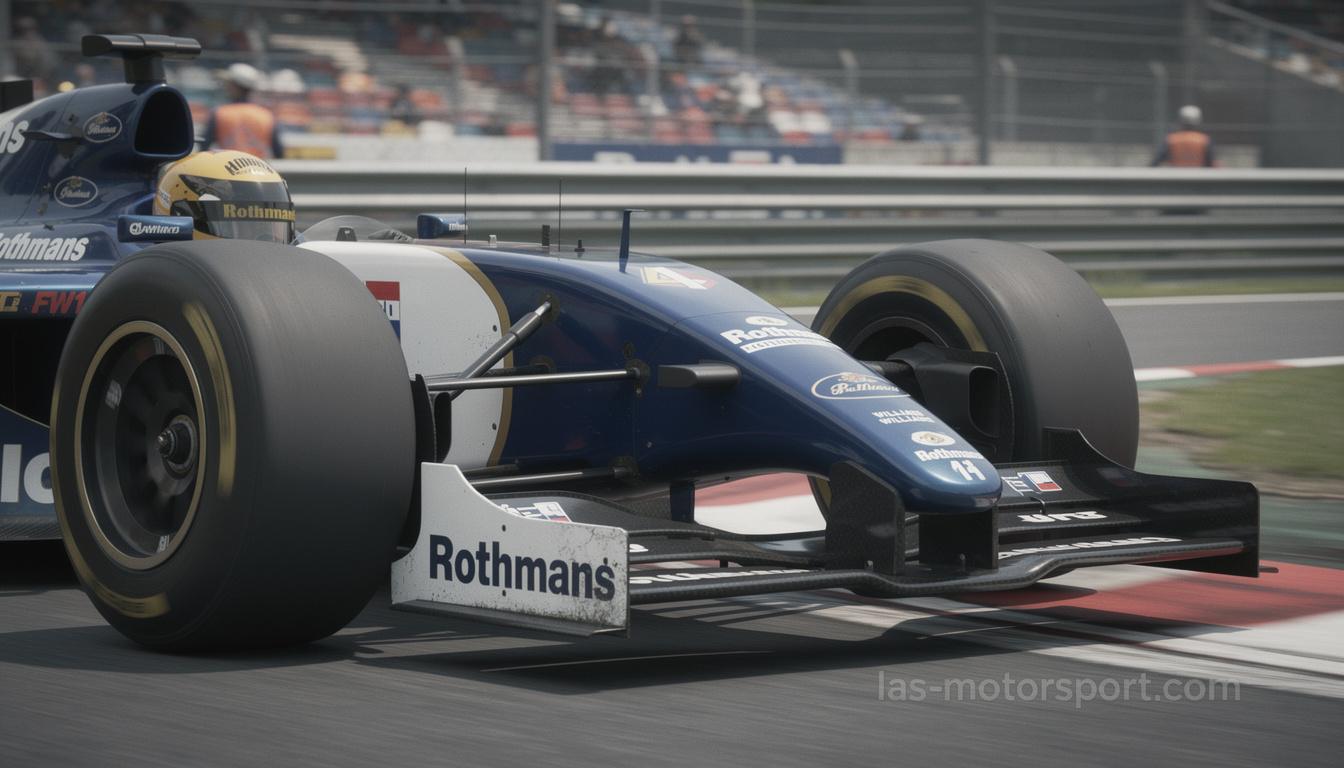
Active suspension as the FW14B’s central weapon
Active suspension on the FW14B aimed to hold the car at optimal ride height around the full lap. Hydraulic actuators, controlled by electronic logic, replaced traditional springs and dampers in determining body position. The system targeted specific front and rear ride heights, constantly trimming the car’s attitude to suit the aero map. This gave engineers a tool to control F1 car engineering behaviour more precisely than any conventional package.
As the programme developed, control strategies became more sophisticated and more closely tied to circuit demands. If drivers complained about understeer in medium-speed corners, engineers could adjust how the system managed roll or pitch. The car could be made to squat differently under power or sit flatter in high-speed bends. In practice, this translated into repeatable race car performance that left rivals guessing where the limit really was.
Electronics, traction control and gearbox evolution
The FW14B’s traction control software aimed to manage wheelspin better than a human right foot on imperfect surfaces. Early iterations were relatively simple but already effective, especially on damp tracks or over kerbs. By trimming engine power when wheel speed data showed slip, the system smoothed exits and stabilised the rear. This meant drivers could commit earlier, trusting the car to look after them with innovative design logic.
The semi-automatic gearbox had been introduced on the FW14 but matured on the FW14B into a competitive advantage. Once reliability issues were reduced, shift times fell dramatically and over-revs were avoided. With paddles mounted behind the steering wheel, drivers could keep both hands steady while braking and turning. That reduction in workload helped them exploit the chassis and F1 technology package more consistently across a stint.
Onboard laps from Nigel Mansell in the FW14B reveal how the electronics and chassis balance worked together through braking and turn-in phases.
Power, chassis and driver: why the FW14B dominated
The Renault 3.5-litre V10 did not rely on a turbocharged engine, yet it delivered a blend of power, weight and fuel economy that suited the FW14B perfectly. Its relatively manageable mass allowed compact packaging, aiding wheelbase, weight distribution and underfloor design. Combined with the actively controlled chassis, this produced a platform where the engine could be exploited aggressively without destabilising the car. That synergy between power unit, suspension and aero was the foundation for the car’s relentless race car performance across the 1992 season.
Renault V10 and the FW14B’s performance window
The Renault V10’s strength lay in its balance of output, reliability and installation flexibility. Engineers could mount ancillaries and coolers in ways that favoured tight bodywork and efficient airflow. This reinforced Newey’s underfloor and sidepod concepts, which relied on clean flow to the diffuser. The result was a stable aero platform that made full use of the aerodynamics and chassis partnership.
The powertrain’s fuel consumption characteristics also mattered for strategy and stint management. Running lighter fuel loads amplified the advantage of the active chassis, which already minimised pitch-induced drag. The car could sustain quick laps across a run without drifting far from its ideal ride height window. From qualifying through race distance, that consistency gave drivers a wider operating envelope and elevated F1 car engineering efficiency.
Driving styles: Mansell vs Patrese
The same technical package did not feel identical to both Williams drivers. Nigel Mansell trusted that, beyond the initial “floaty” phase at corner entry, the active system would settle and supply extra grip. He attacked turn-in, rode kerbs aggressively and accepted momentary uncertainty knowing the car would stabilise. That mindset allowed him to lean heavily on the Williams FW14B chassis through every high-speed change of direction.
Riccardo Patrese, by contrast, preferred a more linear response and clearer feedback from a passive setup. The brief delay while the active system adjusted roll stiffness reduced his confidence in the limit. With less willingness to push through that transition, he could not extract the same lap time. The contrast underlined how F1 technology can favour drivers who adapt quickly to non-traditional sensations and trust the data-driven behaviour underneath.
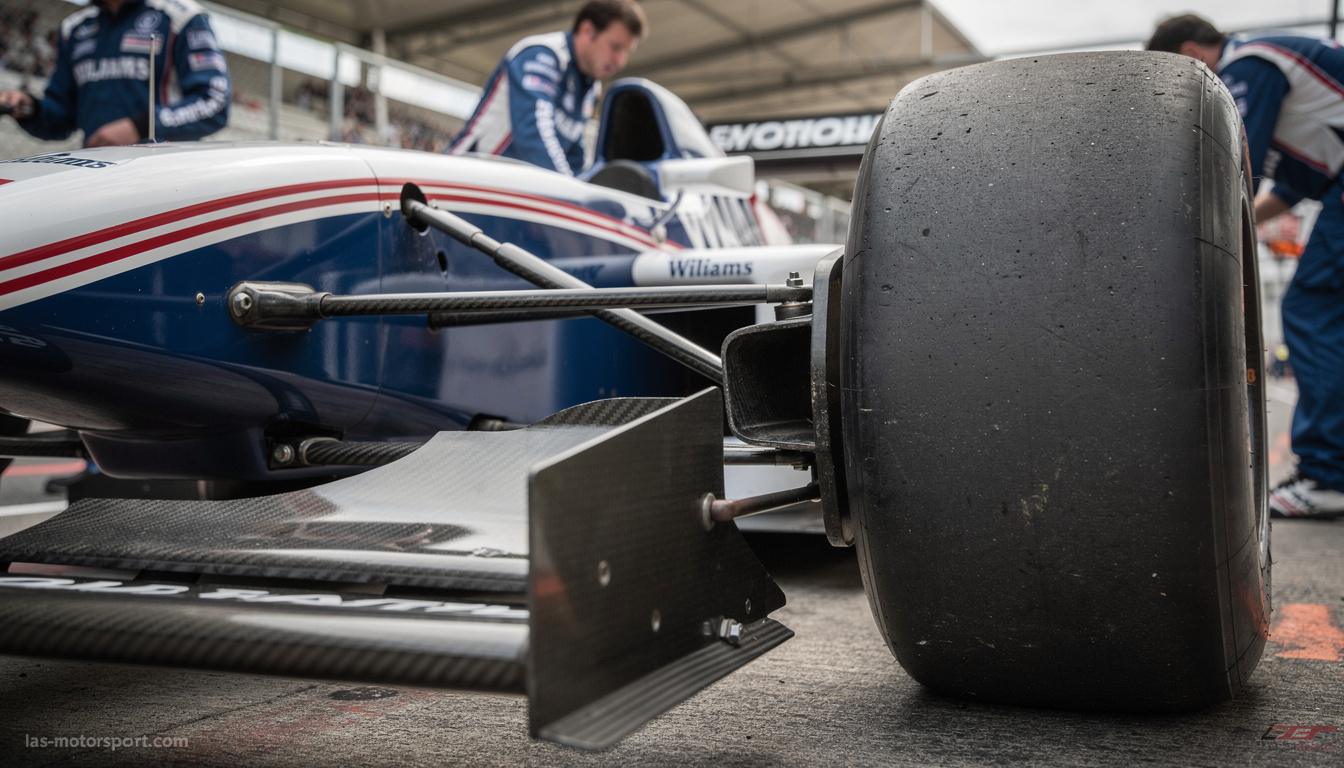
Why the FW14B still shapes modern F1 thinking
Despite regulations now banning active suspension and similar driver aids, the FW14B remains a reference for system-level thinking in F1 technology. Modern engineers still chase consistent ride heights, stable aero platforms and predictable balance, only now with mechanical solutions and controlled flexibility in chassis design. The lessons from this car continue to influence how teams manage suspension geometry, heave springs and anti-dive or anti-squat characteristics. In many ways, today’s cars attempt to recreate electronically assisted behaviour through clever passive engineering and setup tools.
From active control to passive sophistication
With electronics restricted, teams now rely on complex linkage designs to mimic aspects of active behaviour. Geometry choices help manage how the car pitches and rolls under braking and acceleration. Engineers aim for a similar “target ride height” idea, but achieved through clever kinematics instead of hydraulic control. The influence of innovative design thinking from the FW14B’s era is clear in these modern solutions.
Underbody aero has grown even more critical with current ground-effect floors. Stable ride height is once again the primary obsession, whether managed by hydraulics then or mechanical compromise now. Teams juggle stiffness, compliance and tyre behaviour to keep the floor working while maintaining drivability. The FW14B showed that when chassis and aero are conceived together, overall race car performance gains multiply rather than simply add.
Legacy in driver workload, controls and safety
The FW14B also foreshadowed today’s driver environment, where steering wheels manage many functions and gear shifts. Paddle-shift systems and hands-on-wheel philosophy reduced cockpit workload and improved consistency under pressure. Modern pedal and control layouts owe much to that first generation of integrated electronic aids. The car helped normalise a cockpit where electronics and human input share responsibility in managing F1 car engineering complexity.
Safety equipment has advanced since 1992, with devices like the HANS system now standard. Yet the FW14B’s stability out of corners and under braking already reduced some risk of sudden, high-energy snaps. A predictable platform gives drivers more margin to react, which matters alongside formal safety gear. That combination of consistency, control and protection remains a central priority in Formula 1 car design today.
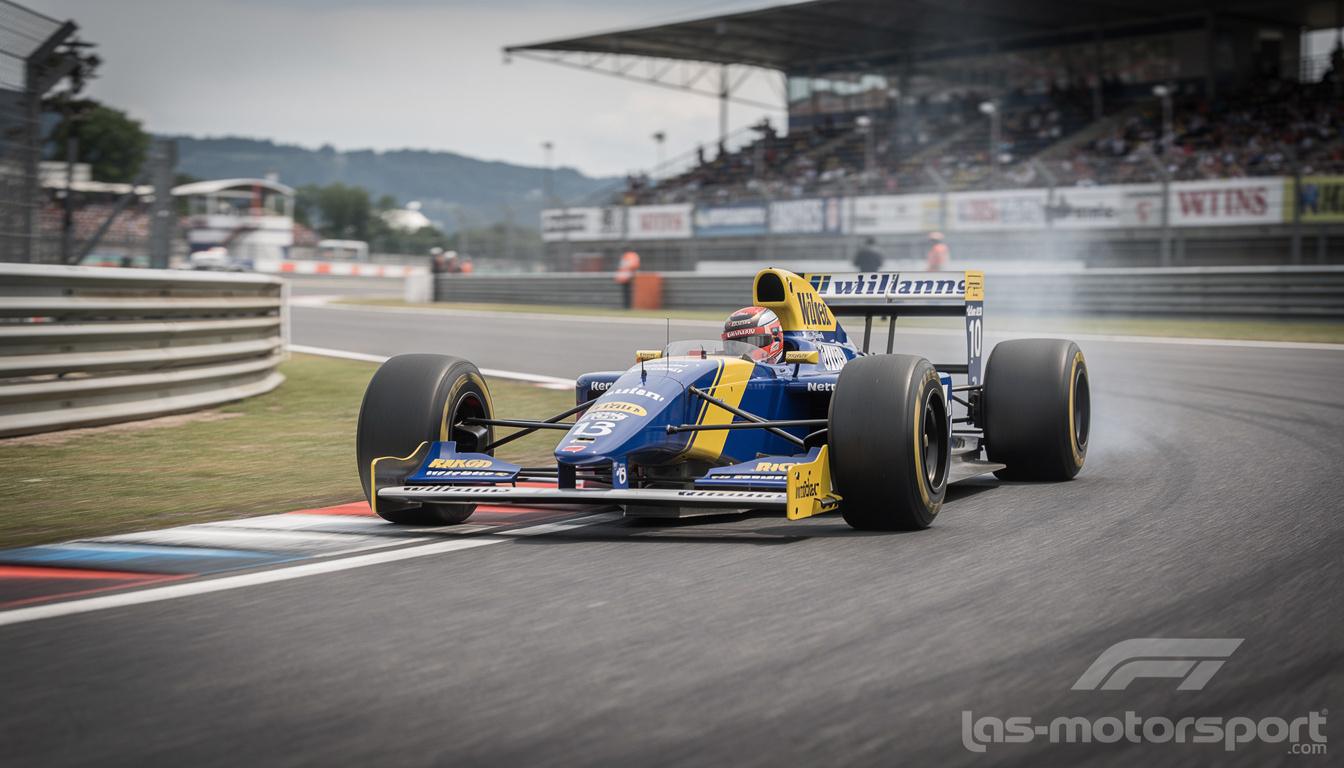
What the FW14B teaches about regulations and performance limits
The FW14B’s dominance forced regulators to confront how far electronic assistance should influence race car performance. Active suspension, traction control and similar systems were later outlawed, not because they were unsafe, but because they risked turning racing into an engineering arms race with limited space for driver expression. That debate still echoes when new technologies emerge and governing bodies decide whether they align with the sport’s identity. The car sits at the intersection between technical freedom and competitive balance, a point that remains delicate in Formula 1 today.
Regulation changes and the cost of dominance
The bans on active systems pushed teams back toward mechanical creativity and conservative electronics. Yet the knowledge gained from the FW14B programme did not disappear; it migrated into subtler areas like damper tuning and kinematic tricks. Engineers learned how powerful fully integrated systems could become when budgets and rules allowed. That awareness shapes current debates over spending limits and overall team costs in the hybrid era, where complexity still threatens to spiral.
The FW14B also demonstrated how quickly a well-conceived car can render rivals obsolete for a full championship. When one outfit aligns chassis, power unit and electronics so effectively, the rest of the field spends a season chasing shadows. This pattern has reappeared with later dominant machines, from Ferrari’s early-2000s cars to recent hybrids. The Williams example reminds fans that such dominance usually stems from long-term planning, not sudden flashes of inspiration.
Why the FW14B still matters to fans and engineers
To many enthusiasts, the FW14B represents a tipping point where aggressive F1 technology collided with a charismatic driver and produced a storyline that felt inevitable yet compelling. Mansell’s charge to the title, secured with several races remaining, showcased what happens when human bravery and electronic precision align. Engineers studying that era see a case study in how to design a car around a known rulebook and then stretch every definition within it. The car’s influence extends beyond nostalgia into how current teams think about boundaries in F1 car engineering practice.
Collectors and historians also value the FW14B because surviving chassis embody the moment when electronics briefly ran ahead of regulation. Auction prices and museum displays underline its status as more than a race winner; it is a marker of where the sport might have gone had rules stayed relaxed. For modern fans trying to understand why active systems are still discussed whenever new suspensions appear, this car supplies the clearest answer. It shows both the promise and the consequences of pursuing pure engineering advantage in Formula 1.
What made the Williams FW14B so dominant in 1992?
The Williams FW14B combined a strong Renault V10 engine, efficient aerodynamics and a highly developed active suspension system with traction control and a refined semi-automatic gearbox. These elements were designed to work together from the start, giving the car consistent ride height, predictable balance and excellent traction. Nigel Mansell’s aggressive driving style suited this platform perfectly, allowing him to attack entries and exits with confidence. The result was a sustained pace advantage of up to several seconds a lap at some circuits.
How did active suspension help the FW14B go faster?
Active suspension used hydraulics and electronic control to keep the FW14B at optimal ride heights around the lap. By managing pitch and roll, the system allowed the underfloor and diffuser to work in their ideal window more often. This increased downforce, reduced drag from unwanted movements and made the car’s behaviour more repeatable for the driver. Together, those gains translated directly into better lap times and more stable tyre usage.
Why were active suspension and similar systems later banned?
Regulators banned active suspension, traction control and related electronic aids because they shifted too much performance away from the driver and into software. Teams with bigger resources could develop extremely complex systems that rivals struggled to copy during a single season. This raised concerns about cost, competitive balance and the purity of driver skill. The bans aimed to keep the sport focused on mechanical ingenuity and human performance rather than fully automated control.
Does any modern F1 car still use ideas from the FW14B?
Modern F1 cars cannot use active suspension or traction control, but they borrow heavily from the FW14B’s philosophy. Teams still design chassis and aerodynamics as a single system and work obsessively on controlling ride height and platform stability. Complex suspension geometries, heave springs and detailed damper tuning all attempt to recreate some benefits of active systems by purely mechanical means. The focus on integrated design and consistent balance is a direct legacy of that era.
How did the FW14B change the driver’s workload?
The FW14B reduced driver workload by introducing a more reliable semi-automatic gearbox and traction control. With paddle shifts, drivers could keep both hands on the wheel while braking and turning. Traction control helped manage wheelspin, especially on corner exit and in changing grip conditions. This allowed drivers to concentrate more on lines, braking points and racecraft while the car managed some aspects of power delivery and stability.