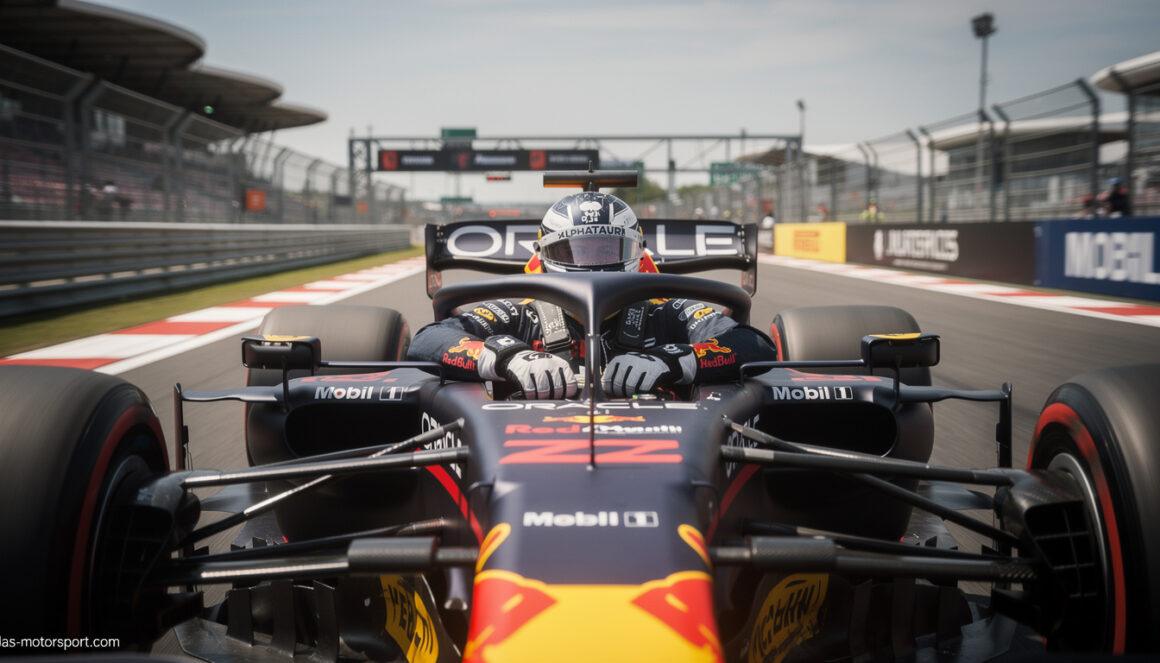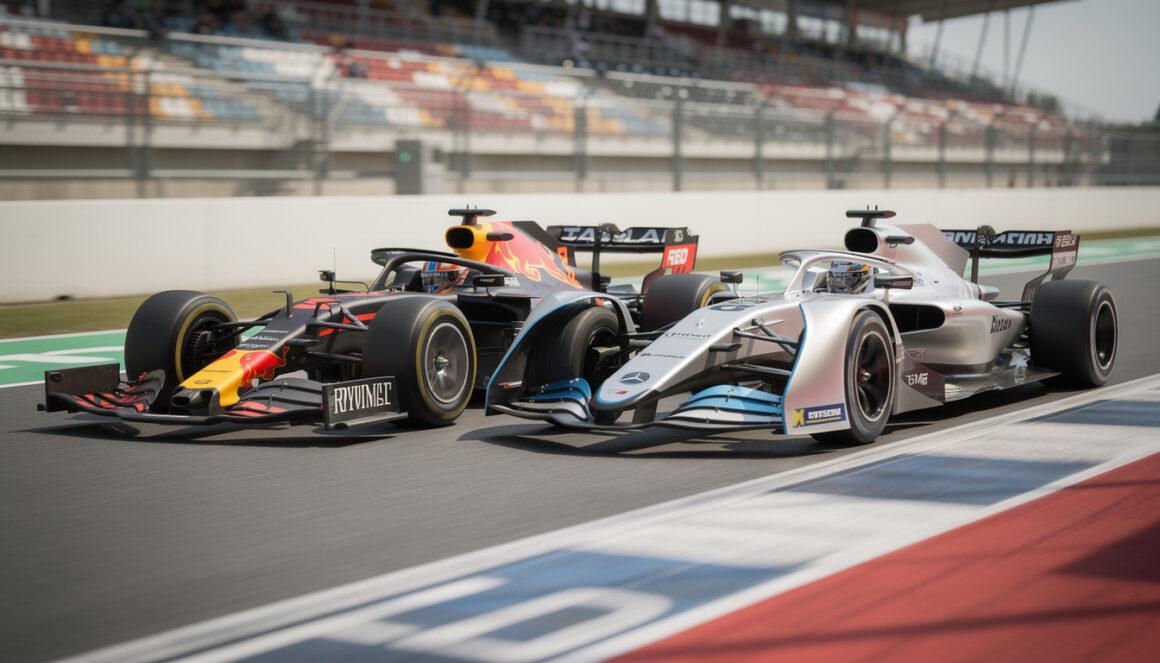


Formula 1 cars achieve extraordinary cornering speeds through complex aerodynamic forces carefully engineered into every surface. Understanding how these machines generate aerodynamics-driven downforce reveals the delicate balance between grip and drag. This balance dictates performance, making aerodynamics a silent but decisive factor in racing outcomes.
The interplay between aerodynamic downforce and drag sets the foundation for how Formula 1 cars tackle circuits with precision and speed. Engineering efforts focus on managing airflow via components such as wings and the diffuser, with the goal of maximizing grip while containing resistance. This feature also explains how the revolutionary ground effect concept enhances racing dynamics on and off the straights. For a deeper look at aerodynamic principles, explore our detailed technical explanation of F1 aerodynamics.
This video clarifies core aerodynamic principles and visualises how various car components influence airflow to generate essential downforce.
The fundamentals of aerodynamics in Formula 1 and downforce generation
Formula 1 cars employ aerodynamic principles to increase tire grip without adding weight or mechanical complexity. The generation of downforce pushes the car onto the track surface, enhancing friction forces that stabilize high-speed cornering. Central to this performance is the manipulation of airflow by surfaces like front wings, rear wings, and the diffuser. Achieving an optimal distribution of downforce ensures balanced handling and predictable vehicle dynamics throughout a lap.
How airflow shapes F1 car performance
The airflow surrounding an F1 car at race speeds creates pressure differences critical to downforce. When air passes over angled wings, it accelerates, reducing pressure above the surface in line with Bernoulli’s principle. Meanwhile, slower airflow beneath the wings creates higher pressure zones that push the car downwards. This continuous pressure differential translates into the downforce required for grip, allowing drivers to maintain speed through corners where conventional cars would lose traction.
In addition to wings, the underfloor and diffuser area manages airflow to enhance this effect through the ground effect. The shaped undertray accelerates air beneath the chassis, creating a low-pressure zone that “sucks” the car onto the track. Coordinated airflow from front to rear reduces turbulent wake that could otherwise destabilize the car, highlighting why teams invest extensively in aerodynamic refinement.
Impact of drag and aerodynamic trade-offs
While aerodynamics generates useful downforce, it simultaneously creates aerodynamic drag—a force opposing forward motion. Drag increases with speed and the size of exposed surfaces, limiting maximum velocity on straights. Engineers must negotiate aero compromises, ensuring downforce gains do not excessively hinder top speed. Different circuits demand unique setups; for tracks with many corners, high downforce is prioritized, whereas tracks featuring long straights favor lower drag configurations.
The complexity increases as downforce and drag are not static during a lap. Changes in speed, ride height, and airflow disturbance by other cars affect aerodynamic balance in real time. Efficient designs minimize the penalty of drag while maximizing the lifespan of tires by avoiding excess heat from sliding or lack of grip. This continuous tuning of aerodynamic forces underpins a competitive edge in lap timing and race strategy.
Ground effect and its critical role in enhancing downforce in Formula 1 cars
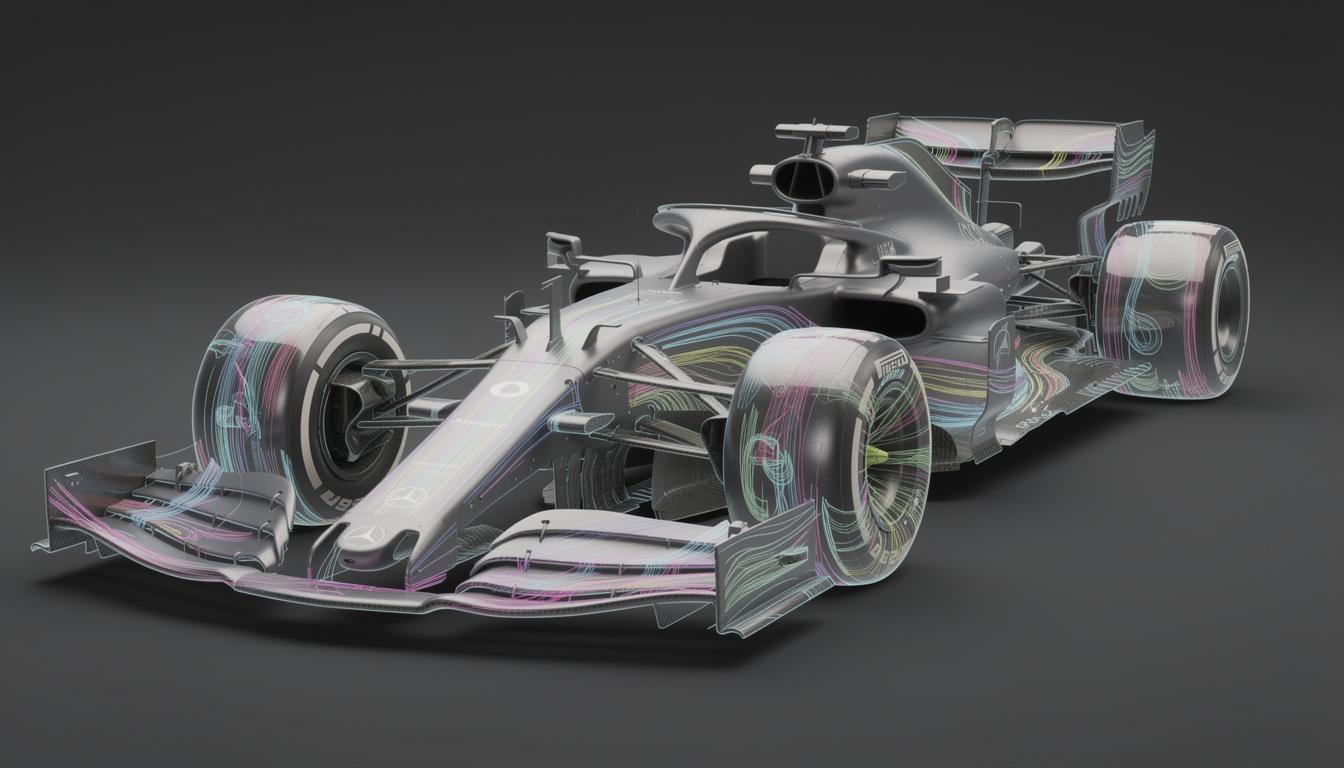
The concept of ground effect is pivotal to understanding how F1 cars generate substantial downforce beneath the chassis. This aerodynamic phenomenon occurs when airflow accelerates through the narrow gap between the car’s underbody and the track surface, resulting in lowered pressure and increased suction. F1’s 2022 regulations reinstated ground effect principles via sculpted underfloors and venturi tunnels, shifting downforce reliance from wings to the car’s floor. This innovation enables stable cornering at higher speeds while reducing aerodynamic drag seen in traditional wing setups.
Technical aspects of ground effect aerodynamics
At elevated speed, air passing beneath the car is channelled through precisely engineered venturi shapes in the floor and diffuser. The narrowing passage accelerates airflow, creating a pressure drop per Bernoulli’s principle. This low-pressure zone beneath the vehicle pulls it downward, drastically increasing grip without the drag penalty wings incur. Teams carefully tune ride height and suspension stiffness to maintain optimal ground effect, as small variances in speed or chassis position can markedly influence downforce levels.
Ground effect also offers increased aerodynamic efficiency by producing higher downforce-to-drag ratios. Diffusers at the rear expand and slow airflow, helping harness underfloor low pressure and venting air cleanly to reduce turbulence. The resulting suction effect has transformed modern F1 car design, enabling historic gains in cornering speed and demonstrating a sophisticated application of fluid dynamics engineering.
Relation between ground effect, overtaking, and racing dynamics
The impact of ground effect on overtaking remains a subject of ongoing analysis within the sport. While it improves car stability, it also alters how aerodynamic wake affects trailing vehicles. Some studies note reduced overtaking because the disturbed air behind leading cars undermines the effectiveness of ground effect on following cars. However, updated regulations aim to minimise wake turbulence to enhance racing quality.
Despite conflicting data about overtaking, ground effect unquestionably improves lap times and vehicle control. Teams continuously explore aerodynamic setups that balance downforce and drag to exploit these effects fully, as seen in recent technological advancements and race day performance. Further context on aerodynamic evolution can be found in our coverage of technological revolutions in motorsport, illustrating ongoing innovation.
This visual guide demonstrates how ground effect transforms cornering speeds and alters aerodynamic behaviour under current F1 regulations.
Core aerodynamic components and their contribution to downforce in Formula 1
Each aerodynamic element on a Formula 1 car functions as part of an integrated airflow management system. The front wing is the first point of contact with air, channeling flow around the wheels and toward the car’s body. This piece generates up to 30% of total downforce and shapes airflow for downstream components. Meanwhile, rear wings provide significant vertical force for stability, especially during braking and high-speed cornering.
Role of the diffuser and airflow management systems
The diffuser’s funnel-like design at the car’s rear manages and decelerates upward airflow after passage beneath the car, rebuilding pressure and creating suction that supplements floor-generated downforce. Its expanding shape slows airflow, magnifying pressure gradients essential for the ground effect. Diffusers contribute over half the car’s aerodynamic load, making their design critical to performance. Efficient diffuser operation depends on clean, uninterrupted airflow from the front wing and undertray, necessitating careful coordination of all aerodynamic parts.
Smaller components, including winglets and brake ducts, optimize airflow stability and reduce turbulence around wheels, which otherwise generate chaotic airflows that increase drag. The meticulous attention to every aerodynamic detail in design and testing defines the edge in race pace and vehicle responsiveness.
Testing methods and technologies shaping F1 aerodynamic development
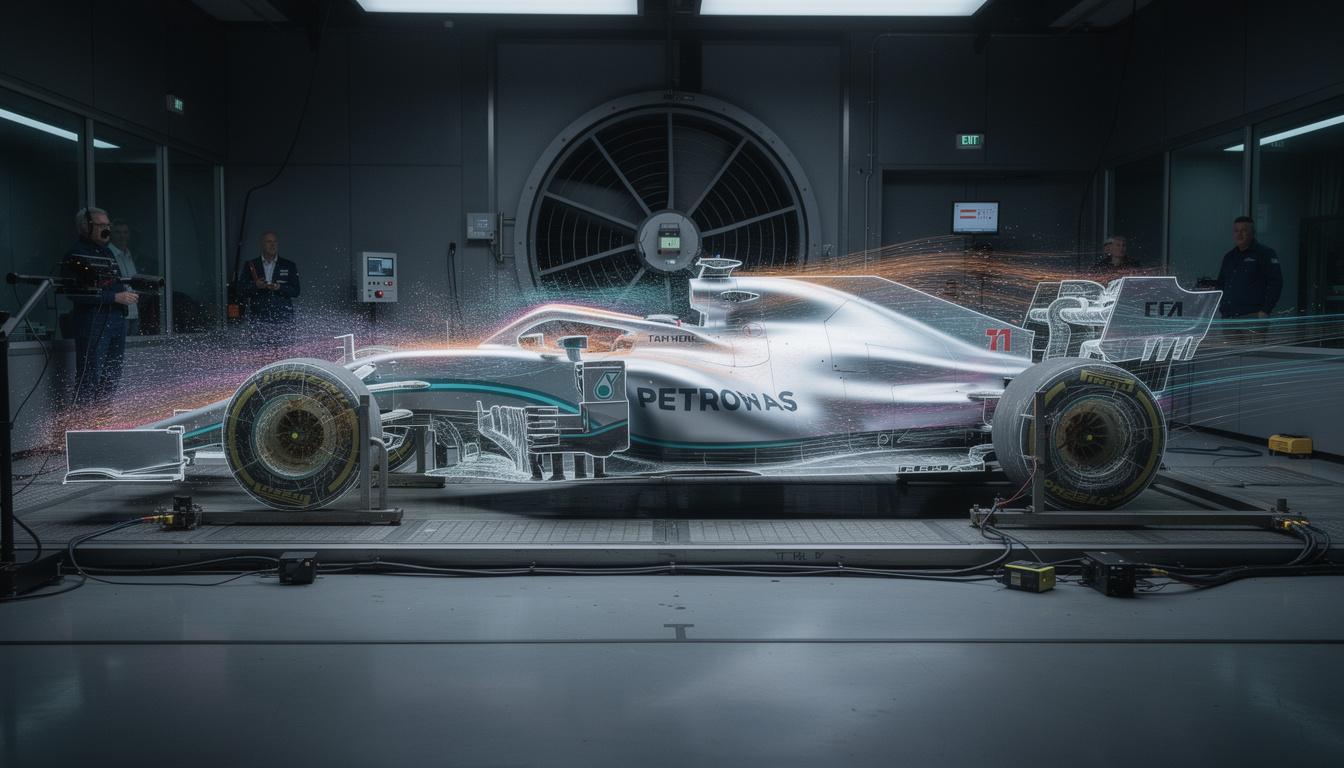
To refine aerodynamic surfaces, teams employ a combination of computational and physical testing methods. Computational Fluid Dynamics (CFD) simulates airflow over detailed car models, enabling virtual validation of concepts and rapid iterative improvements. CFD provides essential data at relatively low cost, accelerating development pace.
Physical wind tunnel testing remains indispensable, offering real-world validation of airflow patterns on scale models or full-size cars. Recent advances in wind tunnel technology, such as moving belts and boundary layer control, improve data accuracy by replicating on-track conditions precisely. Finally, track testing under race conditions complements simulations, ensuring aerodynamic solutions maintain effectiveness during dynamic racing scenarios.
Regulatory impact and future directions in Formula 1 aerodynamics
FIA regulations profoundly influence aerodynamic design philosophy. The 2022 regulations notably reintroduced underfloor ground effect to promote closer racing by reducing aerodynamic wake. Future rules will continue to shape how teams balance downforce, drag, and airflow management. Innovative interpretations within specifications often yield temporary competitive advantages, compelling teams to adapt rapidly.
How evolving rules shape aerodynamic innovation
Changes in technical regulations frequently require redesigning major aerodynamic components to comply with safety and fairness standards. Teams that swiftly decode regulatory language tend to gain a performance edge, making rule interpretation a strategic exercise. For example, limits on wing size and shape have led to creative solutions involving subtle shaping of surfaces to maximize aerodynamic benefit. Monitoring regulations’ evolution is crucial for understanding ongoing team development cycles.
Additionally, environmental and sustainability considerations increasingly influence aerodynamic materials and manufacturing methods. Lightweight composite innovations reduce weight and improve component durability without compromising aerodynamic function. These trends signal a future in which performance gains coexist with responsible engineering principles.
Innovations influencing the future aerodynamic landscape
Advanced CFD powered by artificial intelligence promises finer predictive accuracy, enabling optimization of complex airflow interactions unseen by human intuition alone. Machine learning algorithms assist engineers in discovering performance advantages within tight constraints, accelerating design cycles. Moreover, additive manufacturing opens new possibilities for aerodynamic part complexity and rapid prototyping.
Despite these technological advances, the fundamental challenge remains: balancing downforce generation with drag minimization for optimal race car behaviour. This challenge ensures aerodynamics will remain a central focus of Formula 1 technical innovation and competition in years ahead, underpinning the sport’s technical allure and competitive drama.
What is the primary function of aerodynamics in Formula 1 cars?
Aerodynamics primarily generates downforce, pushing the car onto the track to improve grip and cornering performance while minimizing drag for higher speeds on straights.
How does ground effect improve the performance of F1 cars?
Ground effect accelerates airflow under the car, lowering pressure and creating suction that increases downforce efficiently, allowing higher cornering speeds with less drag.
Why do teams balance downforce and drag during car setup?
Balancing downforce and drag ensures a car has enough grip for fast corners without excessive aerodynamic resistance that slows it on straights, optimizing overall lap time.
What technologies do F1 teams use to develop aerodynamic components?
Teams employ Computational Fluid Dynamics (CFD), wind tunnel testing, and track testing to analyze and refine aerodynamic designs under realistic conditions.
Does ground effect help or hinder overtaking in Formula 1?
While ground effect improves downforce and stability, its influence on overtaking is complex, with some studies indicating it may reduce passing opportunities due to aerodynamic wake disturbance.