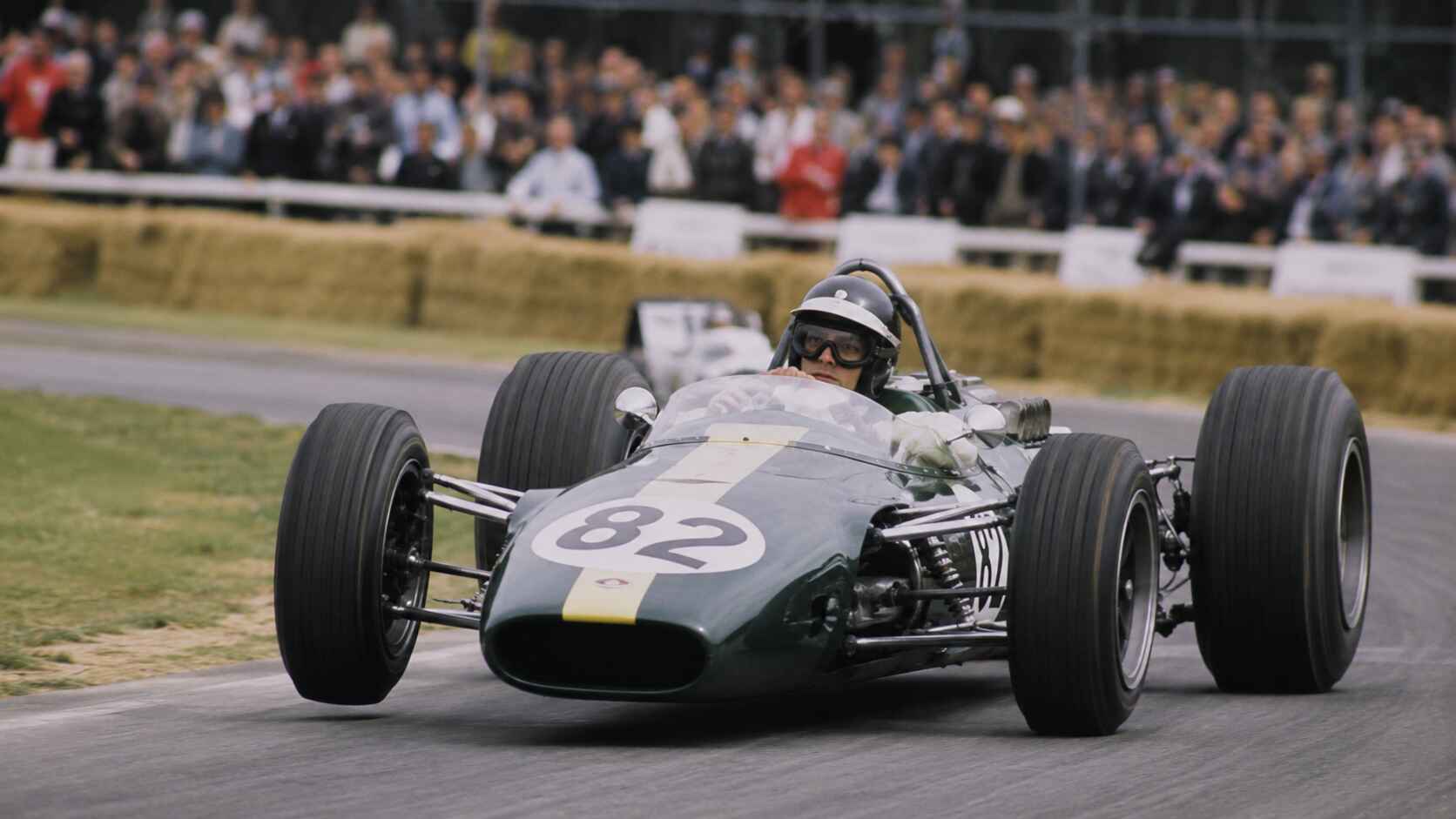

On April 7, 1968, The two-time F1 World Champion Jim Clark was killed in a devastating accident. The Scottish driver died in a high speed crash that destroyed his car beyond recognition, during a Formula Two race at Hockenheim, Germany.
This F1 World Champion fatal crash highlights the inherent dangers of top-level motorsport competition, even decades after it happened. From thrilling speed battles to unforeseen accidents, the sport keeps evolving to protect its stars. For more insights about the sport’s landscape, read the analysis on why F1 needs to return to Africa.
The Essentials: F1 Champion Jim Clark’s Fatal Accident
- Two-time world champion Jim Clark lost his life at 170 mph (roughly 273 km/h) following a probable tire failure during an F2 race in 1968.
- The tragic crash destroyed his Lotus in a forest near Hockenheim, becoming a catalyst for major safety improvements in Formula 1.
- Clark remains one of the sport’s greatest drivers in history, holding the record for wins and pole positions at the time of his death.
Devastating accident details and racing impact
The details of this high speed crash that destroyed the car paint a grim picture of motorsport dangers. Traveling at 170mph, Clark’s Lotus-Cosworth veered off the circuit and cartwheeled into woodland, striking trees broadside.
He suffered a broken neck and skull fractures and died before reaching the hospital. Such accidents remind fans and professionals about the thin line between triumph and tragedy. Crash investigators determined the most probable cause was a deflating rear tyre. Though, no definitive explanation was ever established.

Examining past incidents reveals how fatal crashes spurred safety innovation in Formula 1 history. The motorsport fatality of a World Champion is a profound loss that echoes across the sport’s ecosystem.
Teams, drivers, and governing bodies all reassess safety protocols after devastating accidents. This collective response shapes the future of high-speed racing safety standards.
Clark’s death, in particular, dealt a severe blow to the sport his Lotus teammate Graham Hill went on to win that year’s championship and dedicated the title to Clark’s memory.
Legacy of Safety and Memory in Formula 1
The aftermath of this tragic F1 incident sparked important reflection for the motorsport community. With a car destroyed beyond recognition, the incident reinforced calls for continuous safety improvements.
Racing tragedies such as this renewed commitment to prevent future driver deaths. Every loss deepens the resolve within Formula 1 to protect its talents.
Remembering Jim Clark, the F1 World Champion lost in this crash, brings focus to the human side of this high-risk sport. Regarded by contemporaries like Juan Manuel Fangio as the greatest racing driver ever, Clark held the record for most wins (25). And pole positions (33), 28 fastest laps in F1 history at the time of his death.

He remains one of only two drivers to win both the F1 World Championship and the Indianapolis 500 (1965) in the same year. The passion and courage drivers show leave lasting marks far beyond the racetrack.
Memorials and tributes keep their spirit alive in the racing world. Their legacy drives advancements that keep motorsport safer for all competitors.
For context, only two F1 World Champions have died as a result of an F1-sanctioned race or session: Jochen Rindt (1970, crowned champion posthumously) and Ayrton Senna (1994. That last was the only reigning champion killed during an actual F1 race).