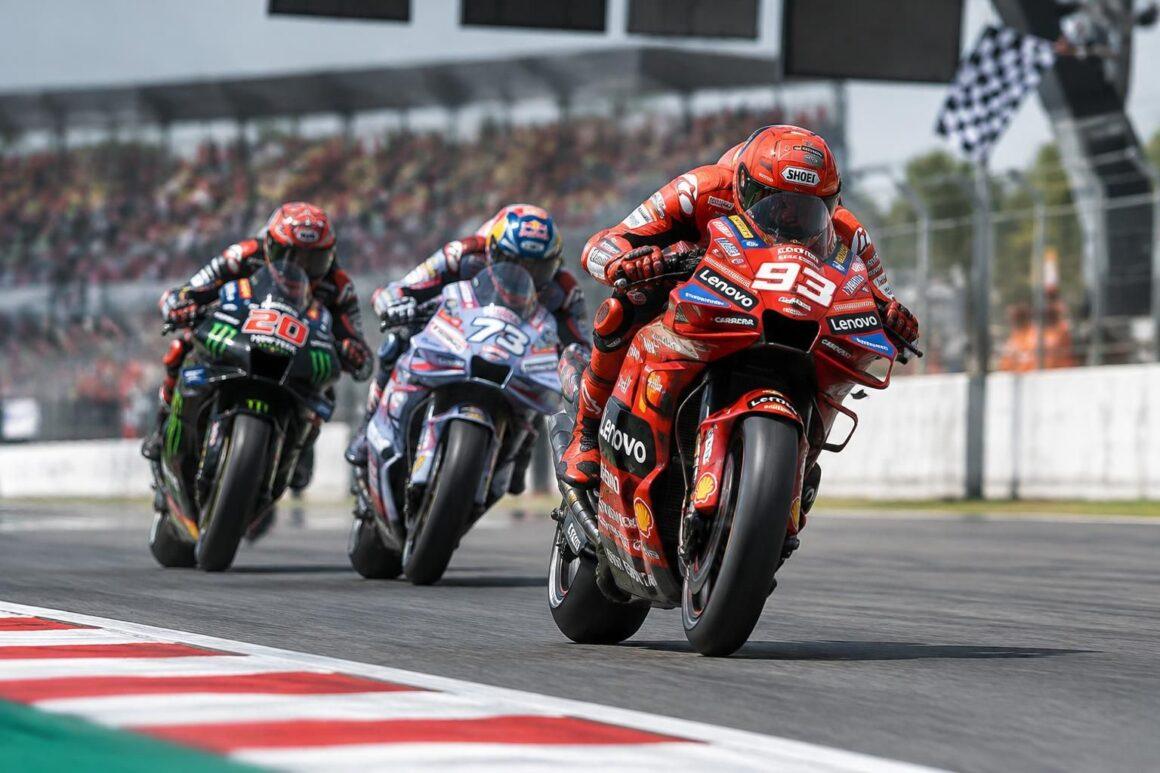
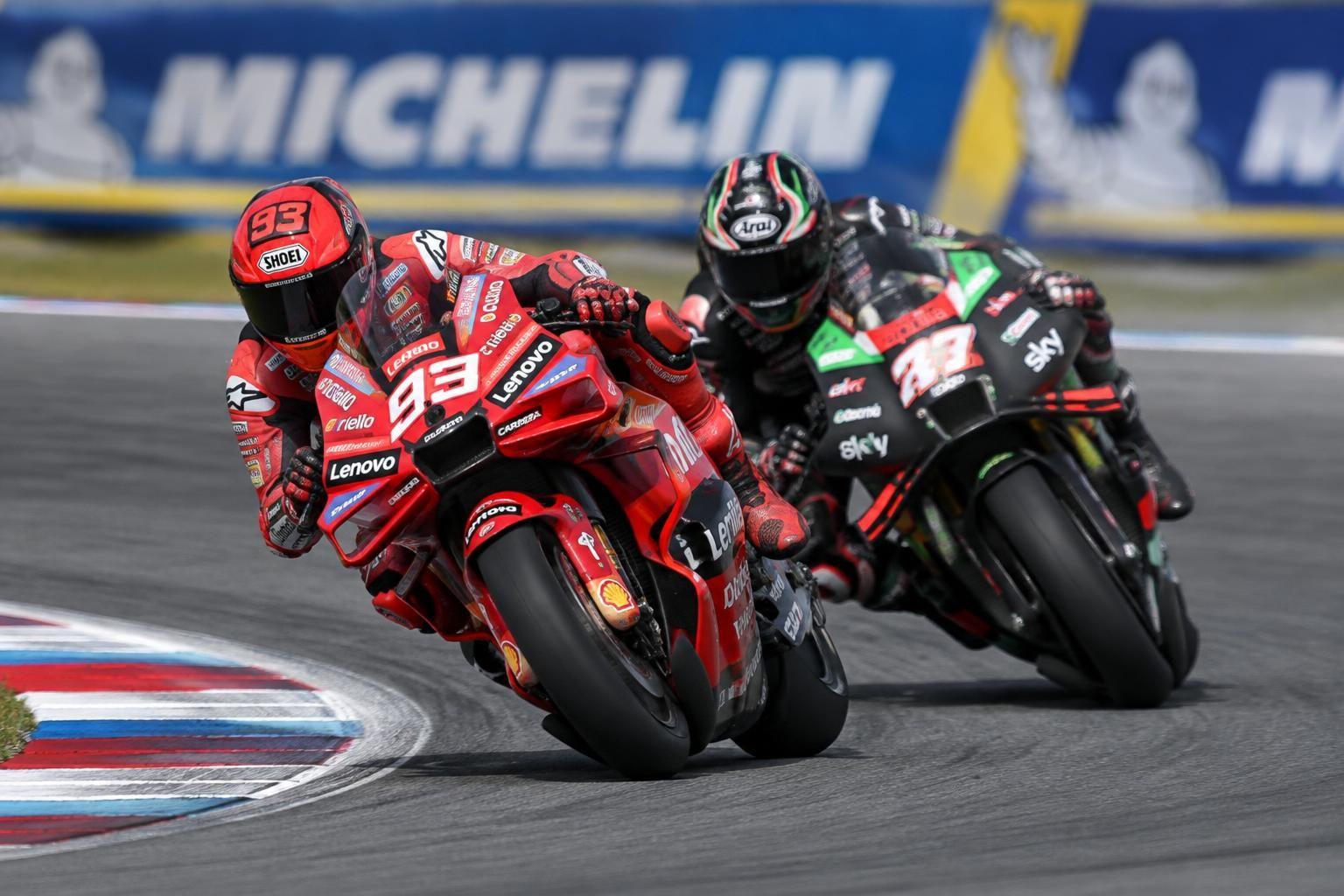

Marc Marquez turned a 102-point deficit into the 2026 MotoGP title by changing the terms of the fight. Aprilia often had the stronger bike performance and, on Sundays, Marco Bezzecchi matched Marquez’s race wins. But the Ducati rider built his campaign around six advantages: sprint scoring, explosive starts, wet-weather pace, pressure on his rivals, fewer race mistakes and ruthless focus.
The turnaround demanded more than the raw speed that has defined Marquez’s career. After injury limited him early in the season, he adjusted his race strategy, accepted safer finishes when needed and made Saturday count. His 10 sprint victories and 164 sprint points repeatedly forced Bezzecchi and Jorge Martin to chase from behind. The title was secured with eighth place at the Portuguese Grand Prix, leaving Marquez 43 points clear of Martin and 45 ahead of Bezzecchi.
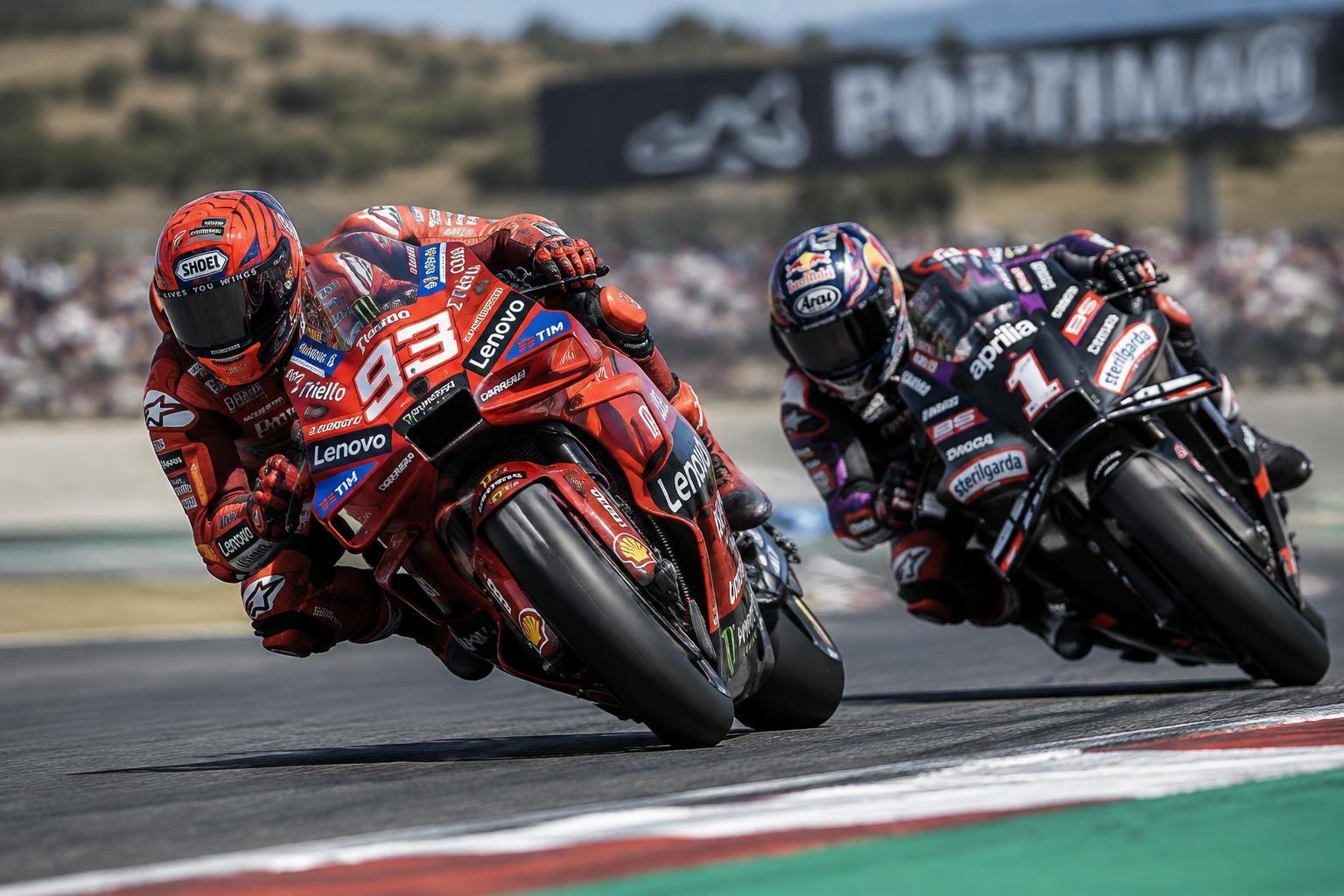
How Marquez seized the MotoGP fight on Saturdays
The sprint became Marquez’s most reliable weapon. Across 21 rounds, he scored 40 more points than Martin and 72 more than Bezzecchi, a gap that gave him room to manage Sundays rather than gamble every time. The pattern recalls how sprint formats can reshape a title contest; this breakdown of sprint-race scoring shows why those short races carry weight beyond the Saturday podium.
He found those wins in very different conditions. Marquez took early sprint victories at Goiania and Jerez while still managing his right shoulder, then beat Aprilia at Misano, Mandalika and Phillip Island, circuits where the RS-GP had strong pace. He did not need to dominate every lap; he stayed close enough to exploit mistakes, traffic or a rival’s tyre drop.
Qualifying offered fewer advantages: Marquez claimed just four poles, while Ducati managed only three poles in the final 13 weekends. His starts supplied the missing track position. At Aragon and Misano, he moved ahead of Bezzecchi early, then used positioning and rider tactics to control the tempo before overtaking became necessary.
That approach proved costly for Aprilia at Misano. Bezzecchi pushed to stay in front in the Sunday Grand Prix and crashed on the opening lap, handing Marquez 25 points. The move was not a spectacular pass; it was racecraft that made the rival take the risk.
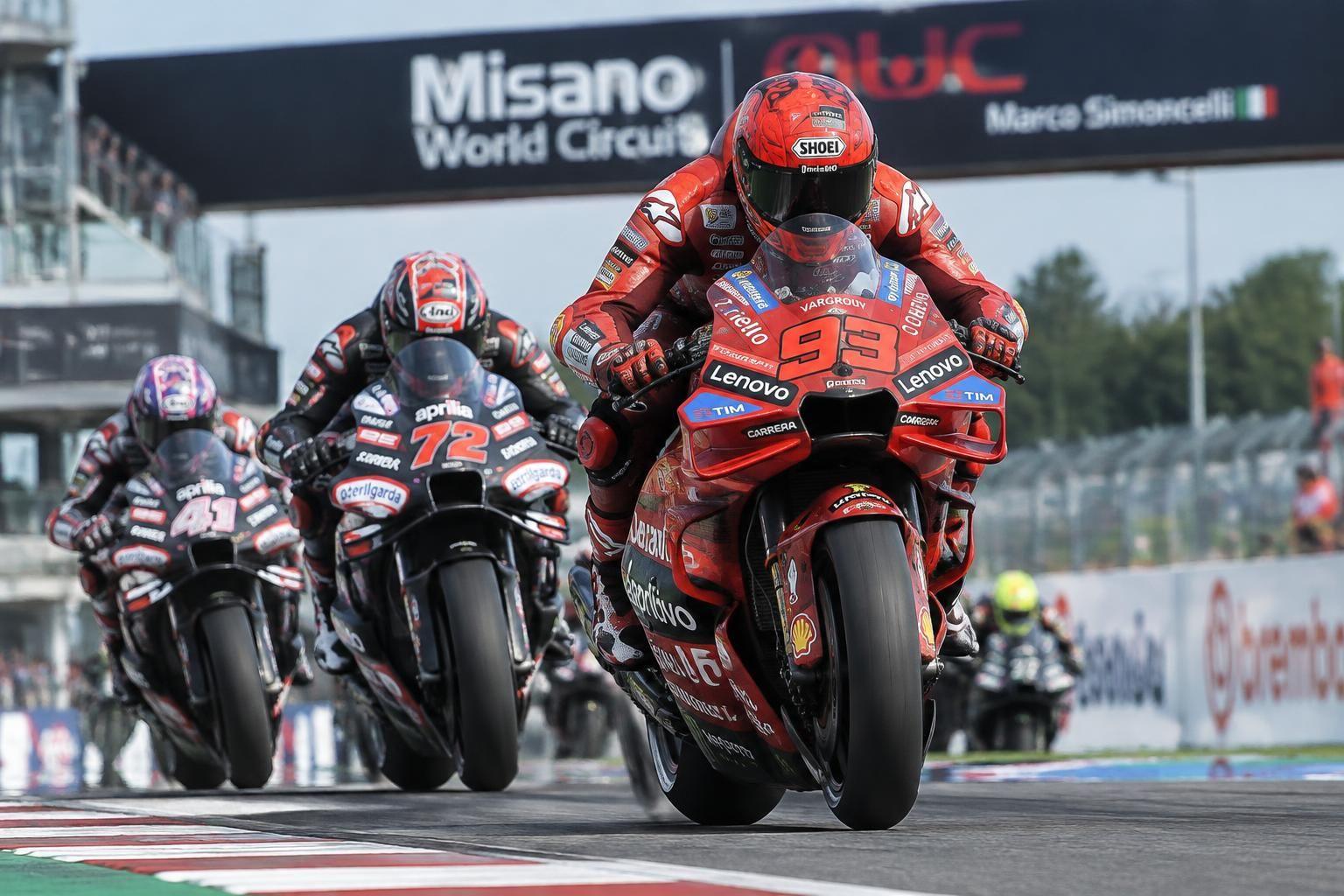
Wet-weather skill and pressure changed the balance
Aprilia had the stronger package on average, but changing weather narrowed that advantage. At Phillip Island, Marquez took pole by nearly 1.5 seconds in rain, then collected the maximum 12 points from the shortened Australian weekend. Jerez also brought a sprint win in mixed conditions; fortune played a part, but he was positioned to take advantage when the track turned tricky.
Marquez also worked on the contest beyond the handlebars. At Phillip Island, his remark that he did not need team orders if he was fast put Aprilia’s internal pressure in the spotlight. He repeatedly framed the championship as an opportunity for his rivals to lose, while insisting that winning would not change his life. Those comments sharpened the psychological edge in a season when Aprilia knew the 2027 rules reset could close its current window.
Fewer errors and a focused title run-in
After returning from injury at Mugello, Marquez became more selective. At Silverstone, he accepted seventh rather than force a result and risk another crash. Bezzecchi and Martin dropped points through errors; Marquez increasingly banked what the weekend offered, keeping his race pace useful without demanding a win every Sunday.
The change showed in where he took risks. Falls increasingly came in practice or qualifying, not from points-scoring race positions; the Portimao sprint error was his first race retirement since the Le Mans accident that broke his foot and brought forward shoulder surgery. Away from the circuit, he cut back on social media and often kept sprint celebrations brief, saving energy for Sunday. That discipline turned speed into a title campaign—and made Marquez difficult for Aprilia to unsettle.
His season also has implications for the next rider-market cycle, as teams prepare for the regulation shift. The early picture of the 2027 MotoGP grid offers context for why this championship carried added pressure. Marquez won it by taking control of the points, the starts and, increasingly, the moments when caution mattered more than outright speed.