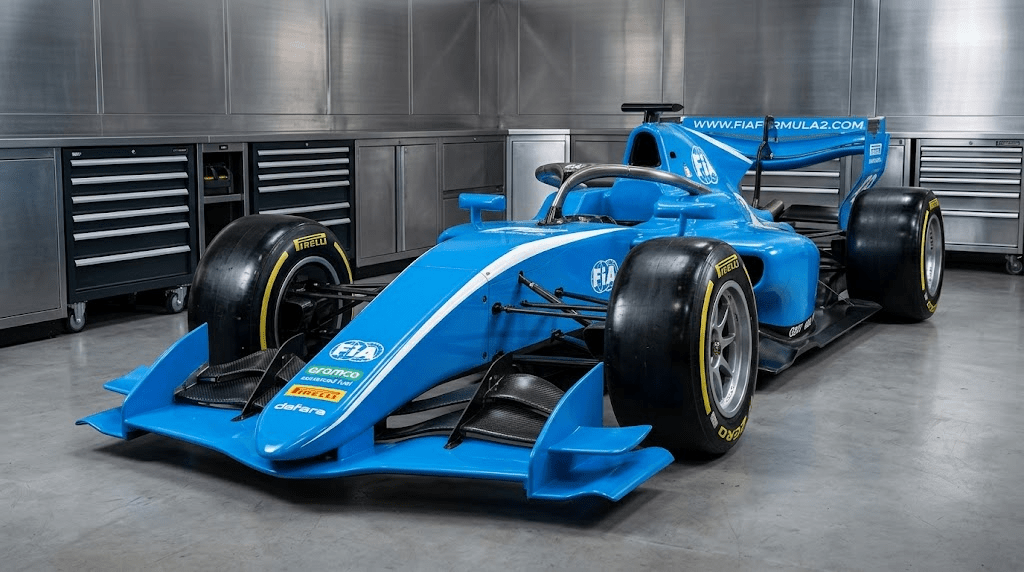


The Formula 2 weekend in Madrid exploded into drama as a spectacular fiery collision forced a red flag during practice. Just minutes after the completion of Formula 3 sessions, Tasanapol Inthraphuvasak crashed violently at Turn 19, slamming rear-first into the barrier.
The impact sparked a fireball that engulfed the car, causing a lengthy stoppage and raising fresh concerns about safety at the new Madring circuit. This incident marks one of the most dramatic moments in the young history of the track, which already holds a reputation as a “car killer.” The session was interrupted for 24 minutes, leaving F2 drivers scrambling to adjust their setups before qualifying later today.
Fiery crash shakes up Madrid F2 practice session
The high-octane excitement surrounding the new Madring circuit took a hazardous turn when Tasanapol Inthraphuvasak lost control at Turn 19 during the opening minutes of F2 practice. His car spun and collided heavily with the barrier, the impact igniting the fuel tank and wrapping the vehicle in flames. The driver managed a swift escape, but track marshals faced difficulties extinguishing the blaze, highlighting safety challenges on the high-speed and tight-cornered layout. The circuit’s unforgiving corners and minimal runoff areas amplify the risks, already seen with an earlier red flag in Formula 3 during the same weekend.
Inthraphuvasak’s fiery incident wasn’t just a scare but a stern warning about the physical demands Madring places on drivers and teams. The delayed track time put pressure on all competitors, who rely heavily on every minute of limited practice to familiarise themselves with the circuit’s unique characteristics. With only a short window remaining before qualifying, strategic adjustments were rushed, raising questions about how teams will manage race-day strategies under such disrupted conditions.

Strategic consequences of the crash on the Madring
The crash and subsequent red flag disrupted the rhythm of the crucial first practice session, forcing teams to compact data gathering into a much shorter period. The technical teams now face a significant challenge in understanding tyre degradation and optimal brake balance on a circuit characterised by demanding downhill braking zones and fast sweeping corners. Early indications suggest that managing tyre wear will be pivotal, as the abrasive nature of the new surface combined with aggressive cornering demands precise setup tweaks to avoid excessive degradation during the race.
Strategically, the incident could have ripple effects throughout the weekend. Limited running time means more uncertainty during qualifying, potentially shaking up the grid for the main race. Being able to deliver a clean, mistake-free lap will be essential at Madring, now branded by many as the next must-watch circuit for unpredictable racing events. Teams will also scrutinise their safety protocols after this crash, which places additional emphasis on car integrity under extreme conditions.

What lies ahead after the Madrid F2 crash
As the season progresses, every session matters. The Madrid incident has heightened tension in the midfield battle, putting pressure on drivers to maximize every track action moment. For rookies and seasoned contenders alike, adapting quickly to disrupted sessions is a recurring challenge, and the crash’s impact on practice time may influence qualification outcomes significantly. This can translate into valuable points differences that swing the momentum of championship campaigns.
Looking forward, teams will retain a laser focus on safety upgrades and circuit analysis as the race weekend unfolds. Given Madring’s reputation and early testing incidents, the fight for points and podiums promises to be fiercely contested. Fans and teams alike will watch with heightened anticipation, eager to see how drivers navigate the technical challenge presented by this fiery collision and ensuing red flag. For those following the broader motorsport narrative, this event exemplifies why continuous evolution in driver skill and team strategy is non-negotiable.

The fiery collision in Madrid is a stark reminder of risks drivers face daily. As the F2 weekend presses on, teams must adapt swiftly to evolving track conditions and safety considerations, underscoring the combative spirit and strategic depth that define modern motorsport. Follow more updates and in-depth analysis on LAS Motorsport, where expert coverage extends beyond the racetrack.
For comprehensive insights into driver dynamics and race strategy, explore how the challenging Madring circuit is reshaping junior categories’ racing approaches in 2026. From tyre management to qualifying tactics, the experiences gained here will echo in future events. Fans looking to deepen their knowledge can find detailed reports and interviews, including perspectives from leading drivers, on LAS Motorsport’s F1 News section.