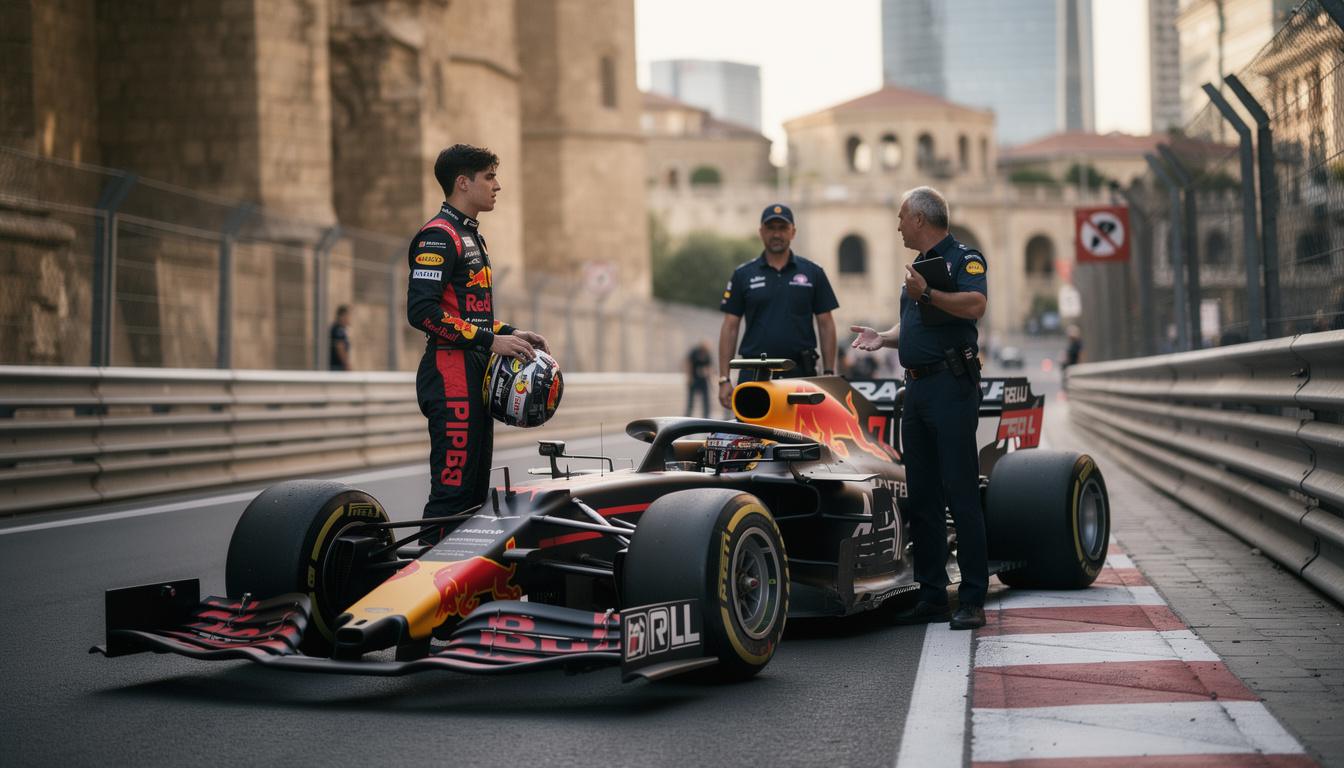

Isack Hadjar’s third place at the Azerbaijan Grand Prix is under scrutiny after the Red Bull driver received a summons from the race stewards in Baku. The Frenchman returned from injury to finish behind race winner George Russell and team-mate Max Verstappen, but an alleged breach before the start has put that result in doubt.
The investigation concerns a reported practice-start infringement and an alleged failure to follow the race director’s instructions. Hadjar must attend a post-race hearing at 18:10 local time in Baku, or 15:10 BST; the summons opens a case, not a verdict. A race penalty remains possible if the stewards uphold the allegation, but the podium stands unless they rule otherwise.
The call has added a sharp twist to a comeback that had looked like a clean sporting result. For the latest developments from the paddock, follow F1 News and the wider coverage at LAS Motorsport.
Why the Azerbaijan Grand Prix stewards summoned Isack Hadjar
The alleged offence centres on the procedure for a practice start before the race and whether Hadjar complied with the race director’s instructions. Those details matter: the stewards will assess what happened, the applicable instructions and any evidence presented by the driver and team, rather than judge the incident from the final result alone.
Red Bull will need to explain the sequence at the hearing, while Hadjar will have the chance to respond to the accusation. The distinction is important in Formula One: a summons signals a formal investigation, but it does not confirm wrongdoing or automatically strip a driver of points.
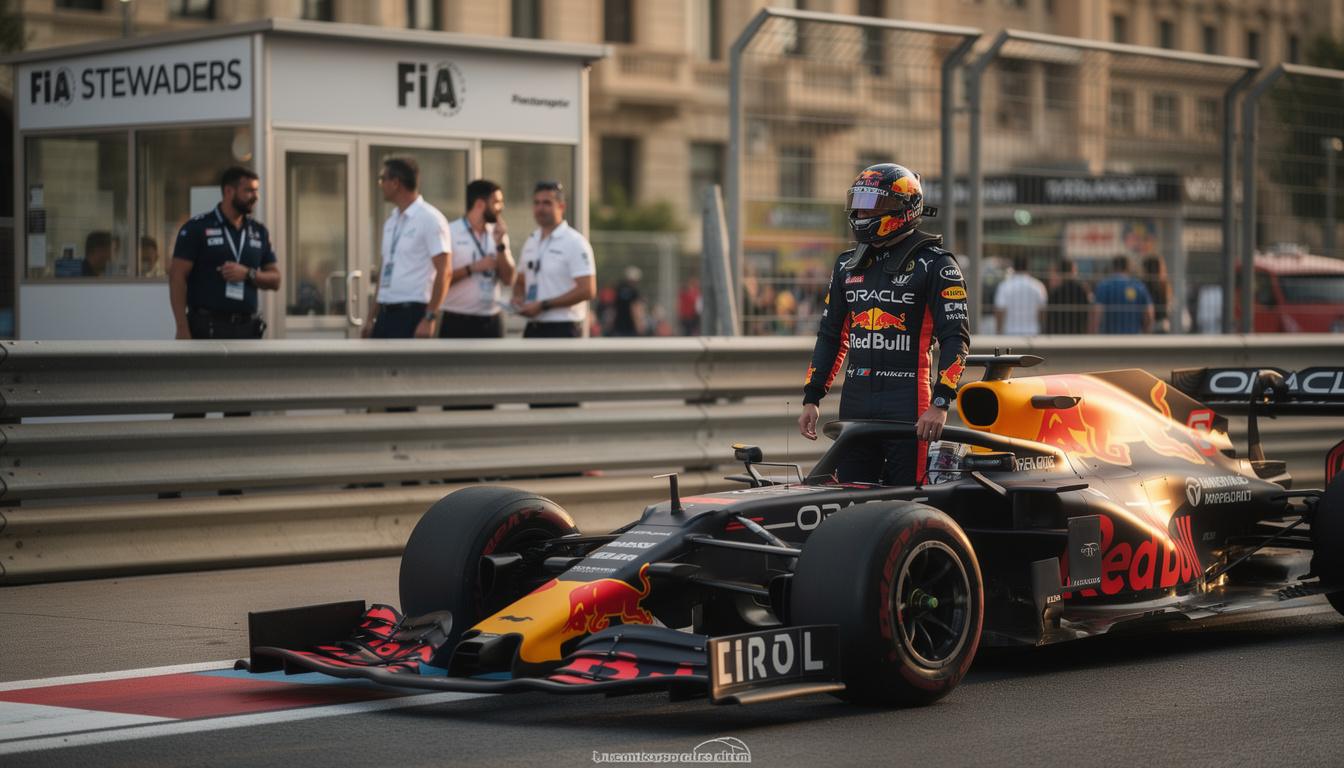
Hadjar’s third-place finish came on his return from injury, with Russell and Verstappen ahead. That context raises the stakes for the team, yet the hearing must turn on the alleged procedural breach—not on the value of the podium or the comeback story.
What a post-race hearing could mean for Hadjar’s podium
The stewards can weigh the available evidence before deciding whether the instructions were breached and what sanction, if any, fits the offence. A race penalty is one possible outcome, but its form and effect depend on the ruling; the summons alone does not establish that Hadjar will lose his result.
There is a parallel case involving Carlos Sainz, who finished 10th for Williams and scored the team’s first point since Monaco. He has also been called to answer for a similar alleged offence, putting two drivers from different teams under scrutiny for the same type of incident.
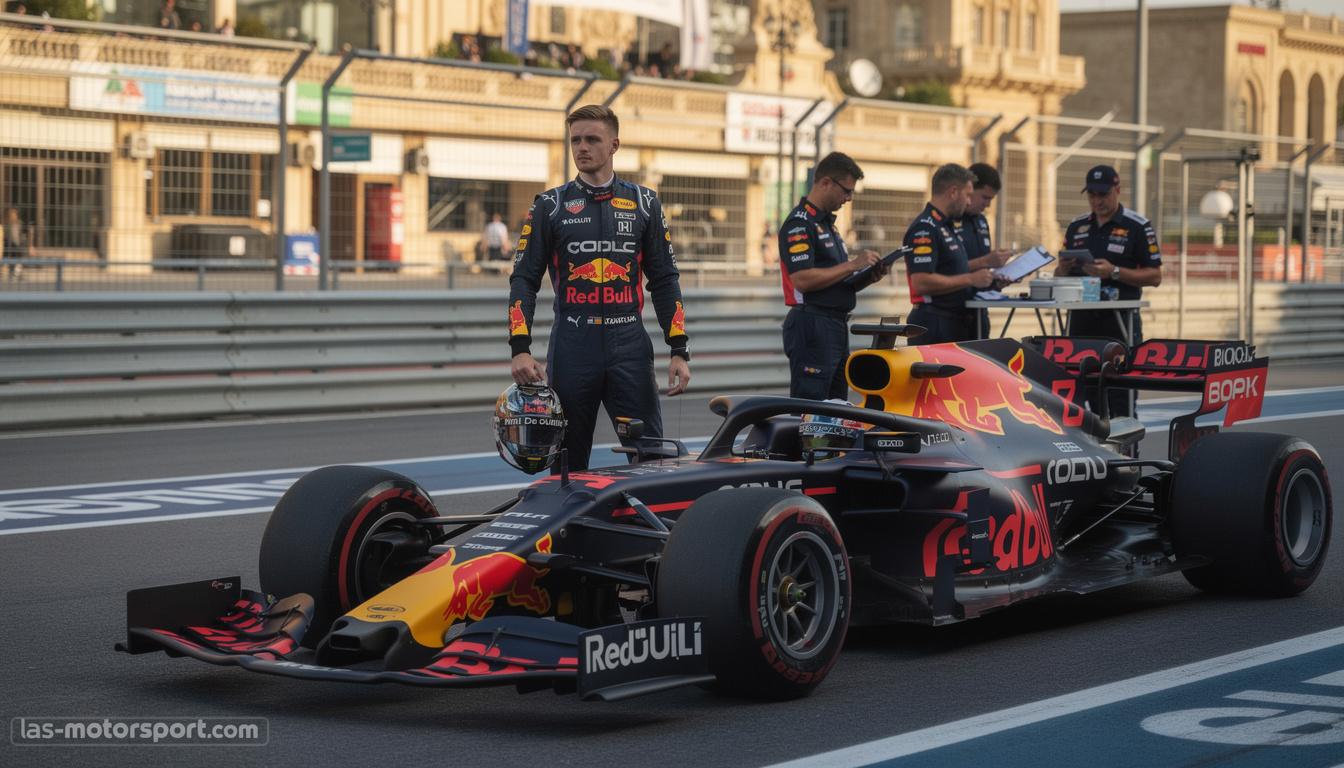
The comparison could help clarify how the race director’s instructions applied, though each driver’s circumstances will be assessed separately. Sainz’s point for Williams is also at stake in his case, making the stewards’ decisions significant beyond the fight at the front.
Red Bull awaits the ruling as Baku’s results remain provisional
Until the hearings conclude, Hadjar’s podium remains subject to the stewards’ decision. The immediate focus for Red Bull is the evidence around the pre-race procedure; the competitive gains from the comeback cannot settle the question.
For Hadjar, a clear ruling would close the first test of his return. For the paddock, the paired investigations offer a reminder that compliance with race-director instructions can carry consequences even when the chequered flag has already fallen.