
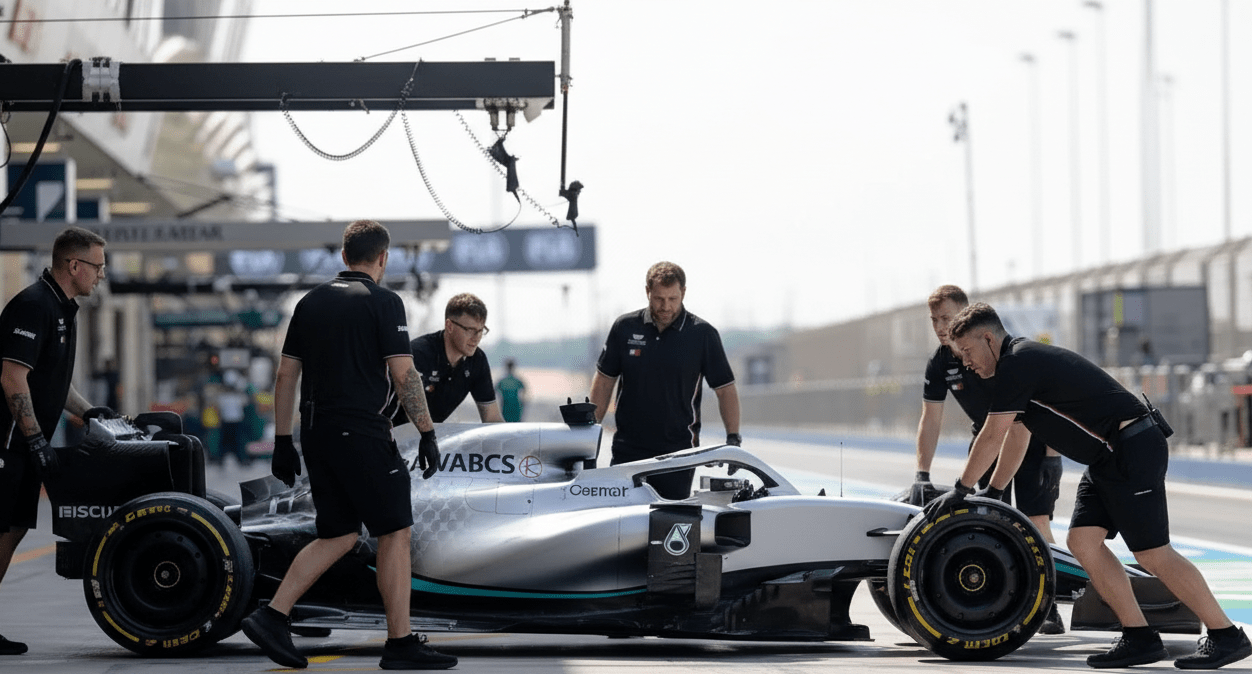
Let’s uncover the unexpected moves behind Cadillac’s entry into Formula 1. This revelation about fake tires, used in wind tunnel tests, shakes the automotive engineering community.
Cadillac has officially joined the Formula 1 grid as its 11th team, making waves prior to the 2026 F1 season. Their wind tunnel test strategy, involving fake tires during critical evaluations, highlights unique challenges in adapting to the sport’s sports regulation changes.
How fake tires influenced Cadillac’s F1 wind tunnel efforts ?

Cadillac’s wind tunnel tests faced a unique obstacle: absence of official Pirelli tires for early evaluations. The team resorted to manufacturing their own dummy tires to simulate real conditions during aerodynamic testing. This workaround was vital to keep race car development on pace, despite deviating from other teams already equipped with proper tires. The challenges reflect the complex nature of adapting to Formula 1’s stringent 2026 sports regulation framework.
While other teams had received approved Pirelli tires early January, Cadillac encountered delays due to its late official entry confirmation. This timing gap meant adjusting design parameters multiple times as tire shapes differed from initial expectations. The consequence forced continuous re-optimisation of data, impacting their trajectory within race car development progress.

Implications of the testing controversy on Cadillac’s 2026 F1 season
Despite setbacks, Cadillac maintained a steady development pace, demonstrating impressive coordination across its newly formed team. Their adherence to tight timelines shows a dedicated focus on achieving competitive readiness for a demanding Formula 1 environment. Early shakedown tests in Barcelona and Bahrain accumulated invaluable data for their engineers. These efforts exemplify resilience in the face of challenging sports regulation adjustments.

The use of substitute tires in wind tunnel testing has highlighted important lessons in automotive engineering within Formula 1. Cadillac’s experience reveals how external factors shape the pace of innovation and adaptation. Their story provides unique insights into a race car development journey complicated by evolving regulatory standards.


