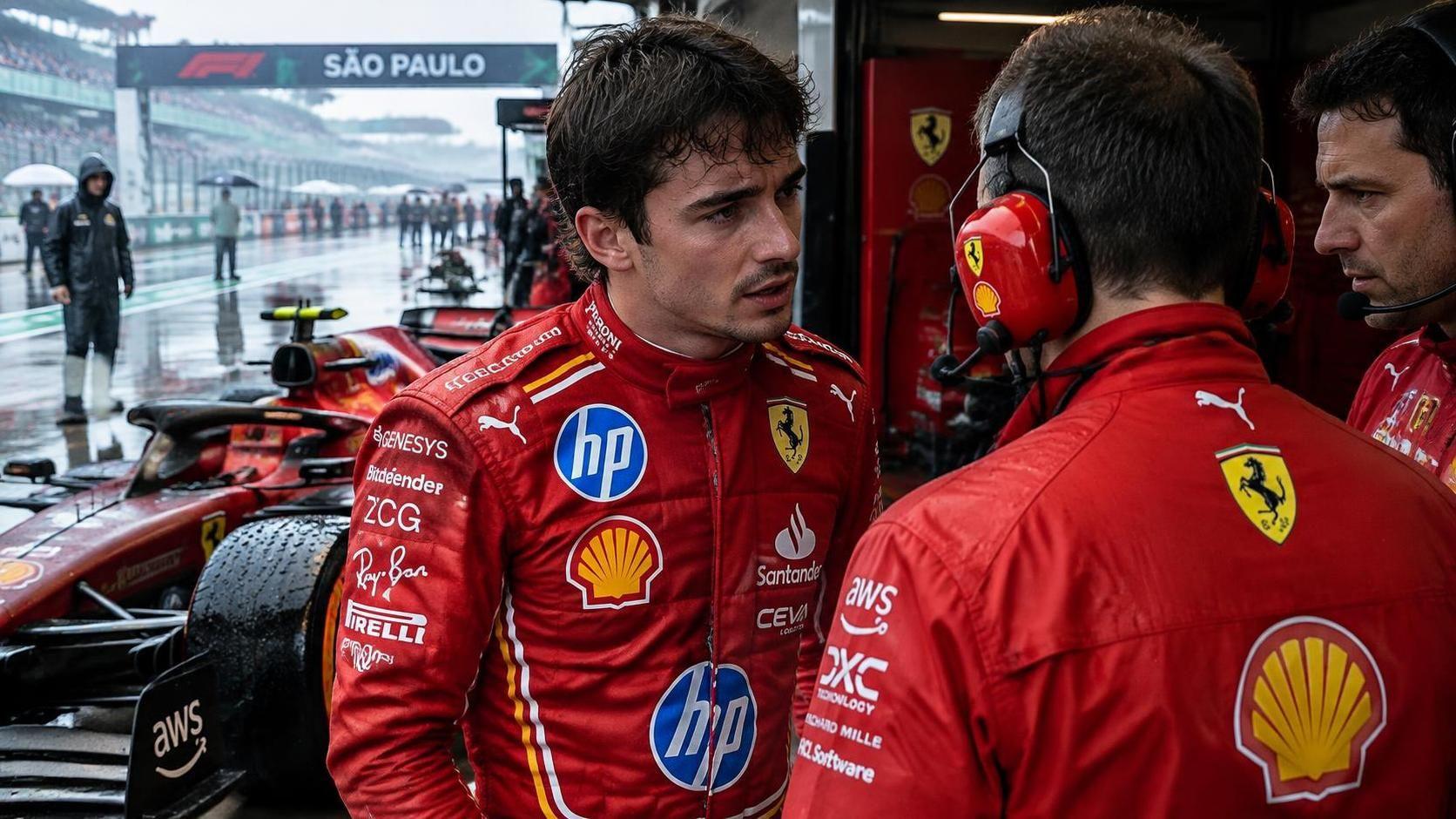
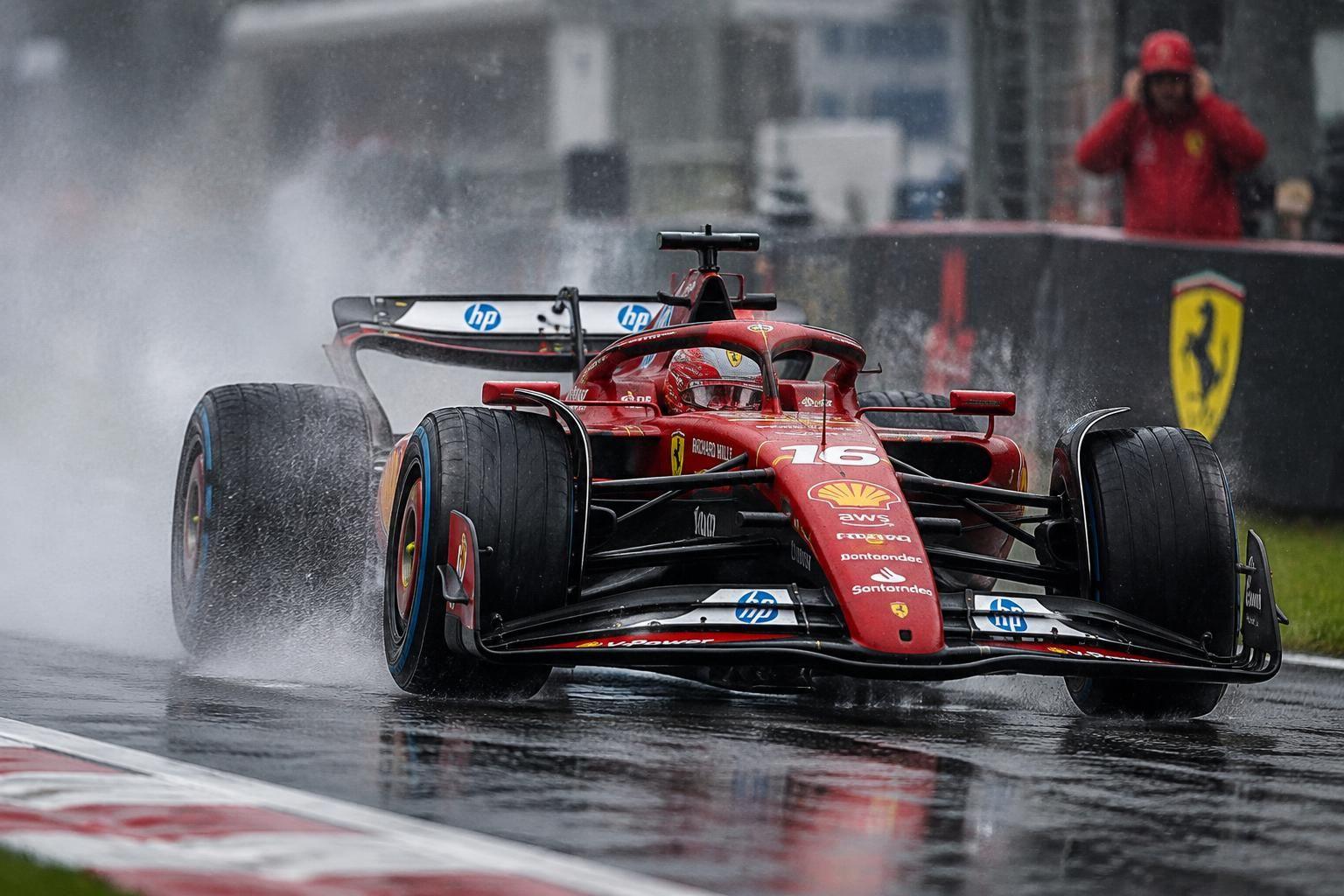

Ferrari’s rain call left Leclerc stranded. The tyres never came alive. He called the car a “complete disaster”.
Charles Leclerc left the São Paulo Grand Prix with a blunt verdict on Ferrari’s wet-weather performance: the car felt undriveable, and the opening stint left him fighting for grip rather than positions. Starting 13th after an engine-related grid penalty, the Monegasque could not match the early progress of team-mate Lewis Hamilton, who had started 20th after a similar penalty. Leclerc said Ferrari struggled to bring its tyres up to temperature, turning the first laps into a battle on a slippery surface.
His race improved on the soft tyre, but traffic and lost time on the straights blunted that recovery. Leclerc crossed the line seventh, then dropped to eighth after a five-second penalty for contact with Liam Lawson. The result sharpened a wider question for the Scuderia: can its rain strategy become something more reliable than a coin flip? The F1 News desk tracks the calls that can turn a difficult race into a lost opportunity.
Why Ferrari’s wet-weather gamble stalled Leclerc’s race
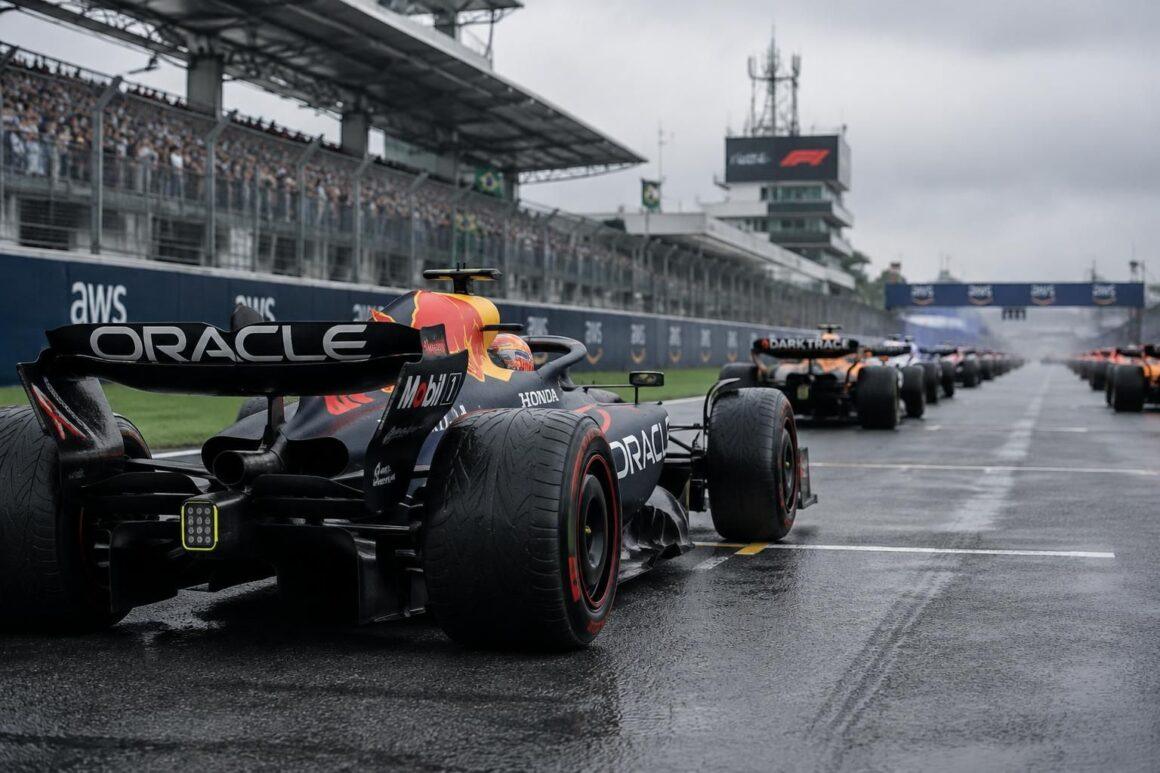
From the opening phase, Leclerc lacked the grip needed to attack. He described the car as feeling like it was on ice, while Hamilton found a way to make progress from the back of the field. That contrast does not prove the drivers faced identical conditions or car behaviour, but it underlined how little margin Ferrari had once the tyres failed to switch on.
Leclerc said the execution itself was acceptable, yet the pace in the first stint was “horrendous”. His progress stalled before he could use clean air or build momentum, and the wet-weather gamble offered no immediate reward. In Formula One, a tyre choice only works when the driver can bring it into its operating window; at São Paulo, Ferrari’s opening phase left Leclerc chasing that grip.
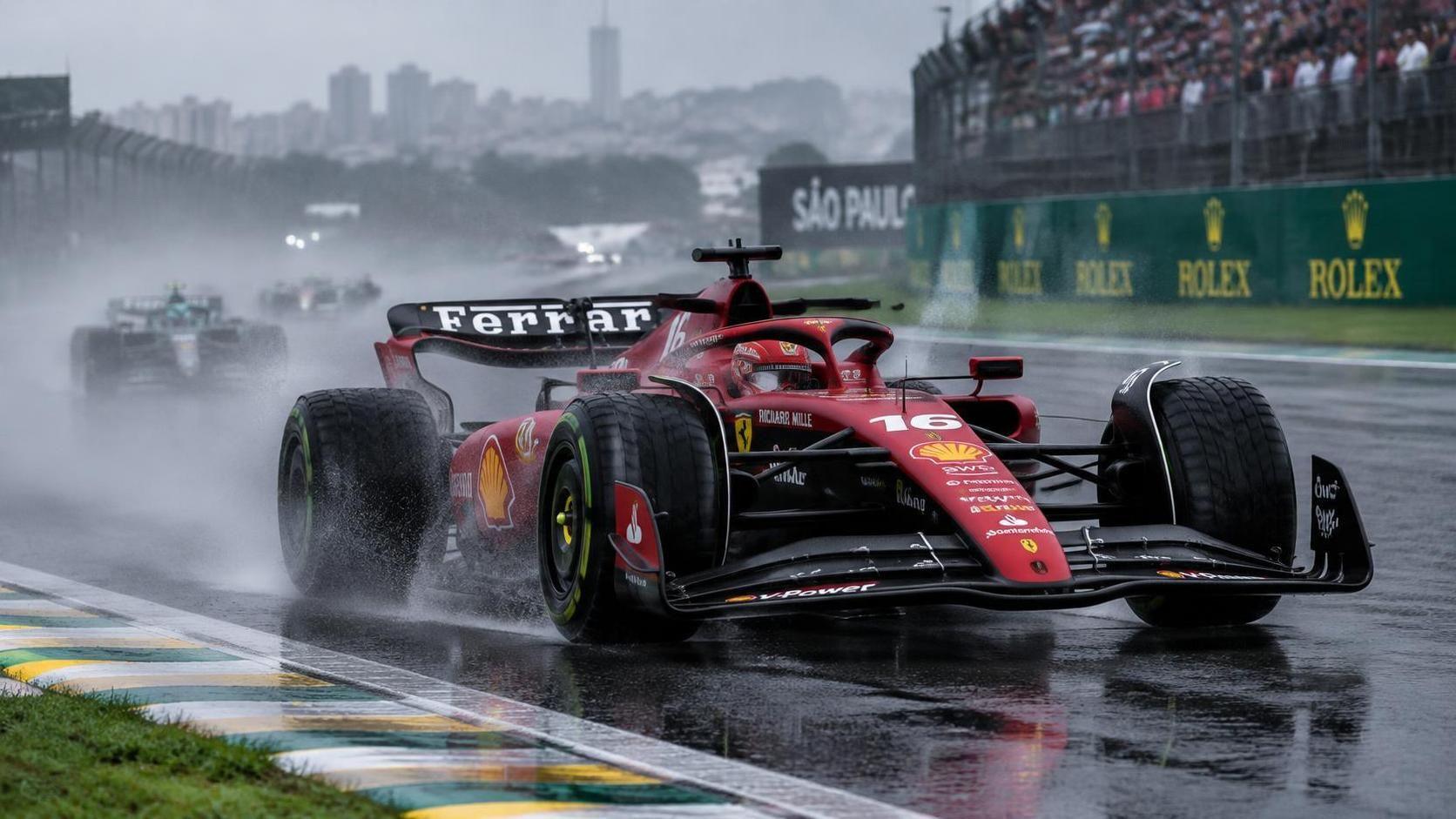
The late-race picture was less bleak. Leclerc found better pace on the soft tyre, but traffic denied him the free air needed to convert it into a stronger finish. He also reported losing time on the straights, leaving Ferrari with more than one performance issue to review.
Ferrari’s rain strategy and tyre choice under scrutiny
The available account does not identify a single pit stop or tyre call as the cause of the result. Leclerc’s complaint points instead to a broader weakness: Ferrari’s response to changing conditions felt unpredictable, both in qualifying and in the race. When the driver sees a rain decision as a coin flip, preparation and feedback have not yet produced a dependable operating plan.
That gives Ferrari a clear technical task: examine how its set-up, warm-up procedures and tyre choice affect grip in the opening laps. Leclerc’s stronger second stint suggests the car could find pace once conditions and tyres aligned, but traffic restricted the payoff. For the LAS Motorsport technical team, the key question is whether Ferrari can narrow that gap without sacrificing dry-weather performance.
A review of telemetry should separate tyre preparation from straight-line losses and traffic effects. Those factors demand different fixes: a pit stop can reset the race, but it cannot solve poor warm-up or a car that lacks speed down the straights. Ferrari needs to identify which problem cost Leclerc the most time before changing its approach.
Leclerc’s penalty leaves Ferrari with work after São Paulo
The five-second sanction for contact with Lawson changed Leclerc’s classification from seventh to eighth and cost Ferrari two points. It made little difference to the constructors’ battle, which Mercedes had already secured, but it added frustration to a weekend shaped by penalties and compromised starts. Leclerc’s account makes clear that the rain performance—not the final place alone—will occupy Ferrari’s post-race review.
For Leclerc, the next step is practical: use qualifying and race data to understand why the tyres took so long to respond, then test whether revised preparation can give him a more consistent platform in the wet. Hamilton’s early gains offer a useful comparison, though not a ready-made answer. Ferrari leaves São Paulo with a firm diagnosis from its driver and a narrow target: make wet-weather pace less of a gamble.