

Red Bull found its Baku pace. Verstappen’s qualifying setback had hidden the car’s potential. The race exposed it.
Red Bull Racing turned a compromised Saturday into a double podium at the Azerbaijan Grand Prix, with Max Verstappen climbing from eighth to second and Isack Hadjar taking third. The result marked the team’s first double podium in almost two and a half years, and showed how sharply its performance changed once an engine problem no longer held it back. Verstappen’s difficult Q3 followed issues with the internal combustion engine, which also affected battery use and tyre preparation; his best lap left him 1.555 seconds off pole.
After the team fixed the power-unit trouble ahead of the race, both cars had the pace to move through the field. That recovery was no fluke: Baku’s long straights rewarded the team’s power and energy deployment, while a more effective car setup helped turn Friday’s promise into Sunday’s result. For more on the weekend’s early pace, see our reports on Russell’s opening-practice benchmark and the second practice session in Baku.
How Red Bull Racing recovered after Verstappen’s qualifying setback
The reversal began with a repair, not a sudden leap in car performance. Team principal Laurent Mekies said Red Bull had faced two power-unit issues in qualifying, costing the team time and leaving Verstappen eighth on the grid. Replacing the troubled engine for the race restored the competitive level the team had expected to show.
Verstappen had topped final practice and felt the car could challenge near the front before the fault disrupted his weekend. Had he started higher, Mekies believed a front-row fight—and potentially a stronger result—was on the table. The qualifying setback, rather than a lack of underlying pace, shaped the recovery story.
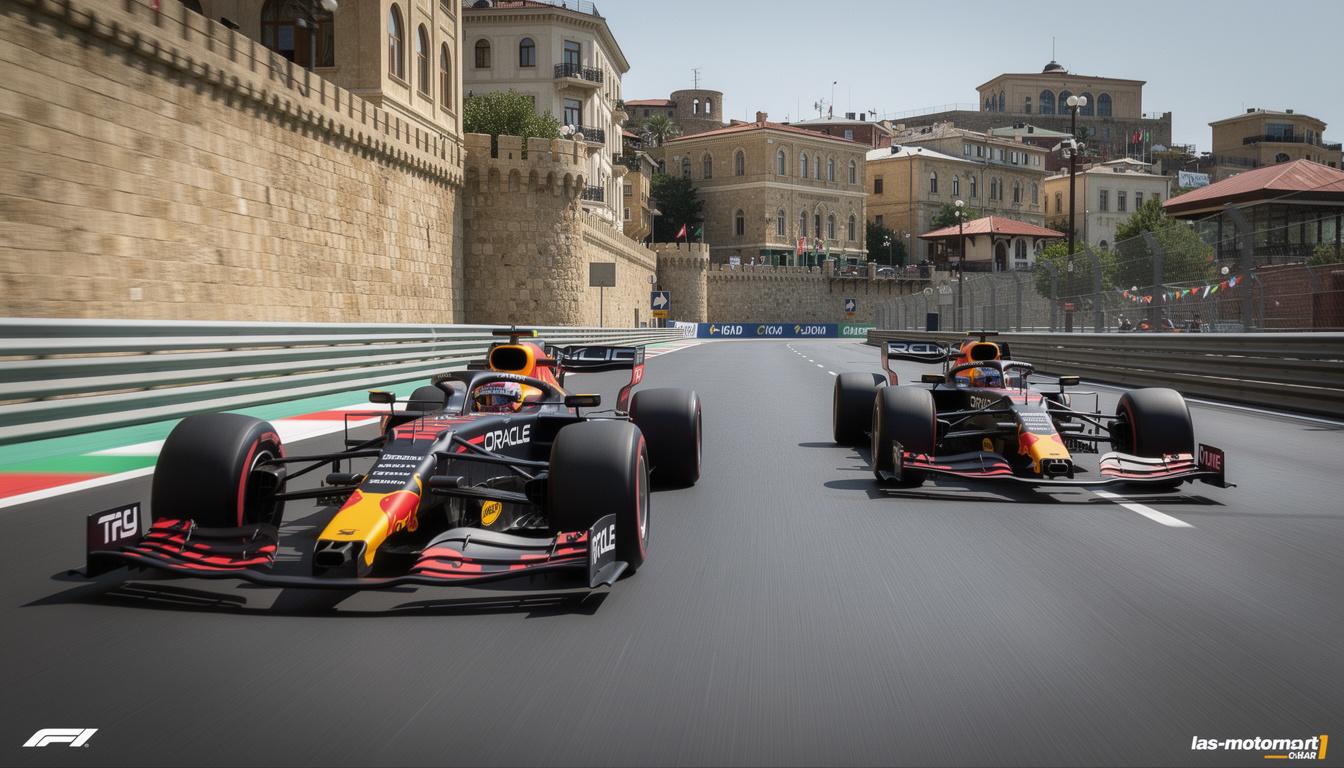
Power, energy deployment and straight-line speed at Baku
Mekies described Red Bull’s power unit as strong but demanding to operate within a narrow performance window. Engineers must align the internal combustion engine with battery deployment and energy recovery; get that balance wrong, and the car cannot use its full potential where Baku rewards it most.
The speed trap offered a clear marker. Racing Bulls’ Liam Lawson recorded 349.4km/h, the fastest speed of the race, while Verstappen and Hadjar also made the top ten. That evidence points to straight-line speed supported by power and energy management, not a single aerodynamic trick; aerodynamic efficiency still matters because low drag must coexist with enough grip to attack and defend through the city’s tight corners.
Both Red Bull drivers used that speed to cut through the field, while the repaired power unit let them sustain their race pace. The result also put Hadjar’s strong weekend in the spotlight; his progress at the team is covered in this Isack Hadjar assessment.
Why Red Bull’s performance recovery matters beyond Baku
Red Bull had been viewed as having roughly the fourth-fastest car for stretches of the season, yet Mekies pointed to gradual gains made without a major package between Australia and Baku. He cited qualifying gaps of around 0.15 seconds in Madrid and 0.2 seconds at Monza, crediting work across the chassis and power-unit groups for extracting more from the existing specification.
Recent upgrades added another edge, but the team still needs to prove that the gains travel to other circuits. Mercedes was expected to bring a major update package to the next round, increasing pressure on Red Bull to keep improving through setup and execution rather than relying on another large development step.
For Verstappen, Baku may have been Red Bull’s clearest 2026 win opportunity so far, but the result leaves the team with evidence it can challenge when the power unit, chassis and team strategy work together. The podiums did not erase the qualifying failure; they showed how much it had concealed.