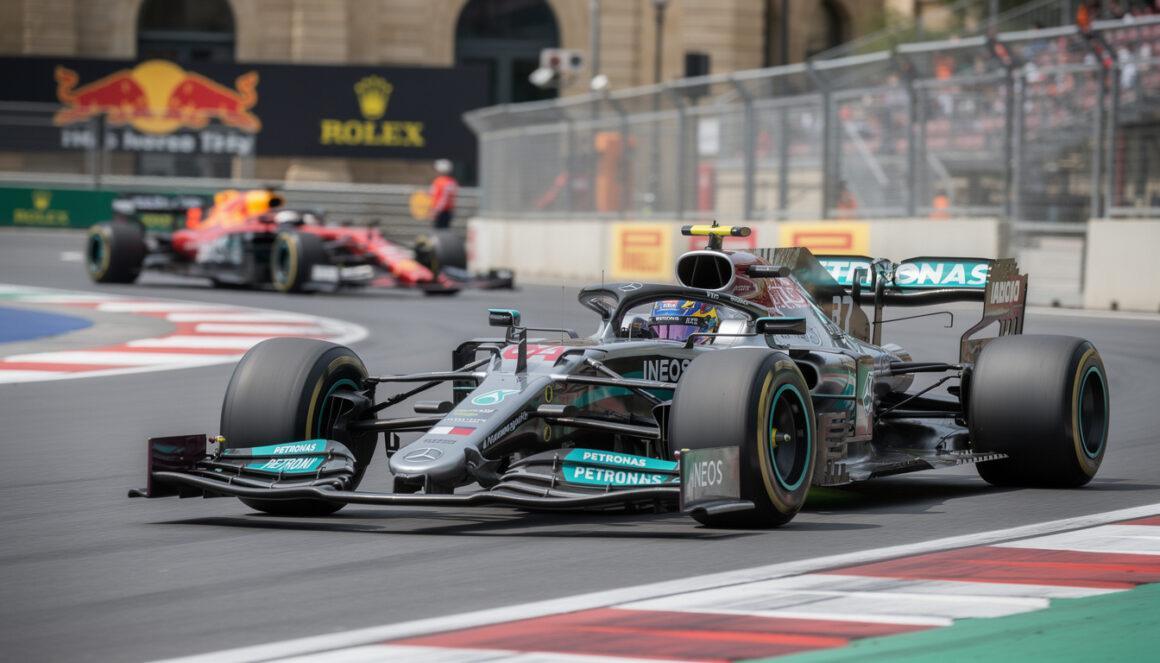


George Russell fired a warning shot to the field by topping the timesheets in the first practice session at the Baku City Circuit for the Azerbaijan GP.
The session saw tension rise with a notable setback for Mercedes as Andrea Kimi Antonelli suffered a hydraulic failure that abruptly ended his running. Max Verstappen and Charles Leclerc kept the pressure on, showcasing their intent early in this fast and tricky street track setting. With the race scheduled for Saturday, teams approached Thursday’s first session with caution, battling dusty track conditions that demanded precision and patience. The early pace battle is shaping up to be a key facet of this weekend’s strategic calculations on the unforgiving Baku layout.
Russell’s dominance and Antonelli’s untimely breakdown at Azerbaijan GP
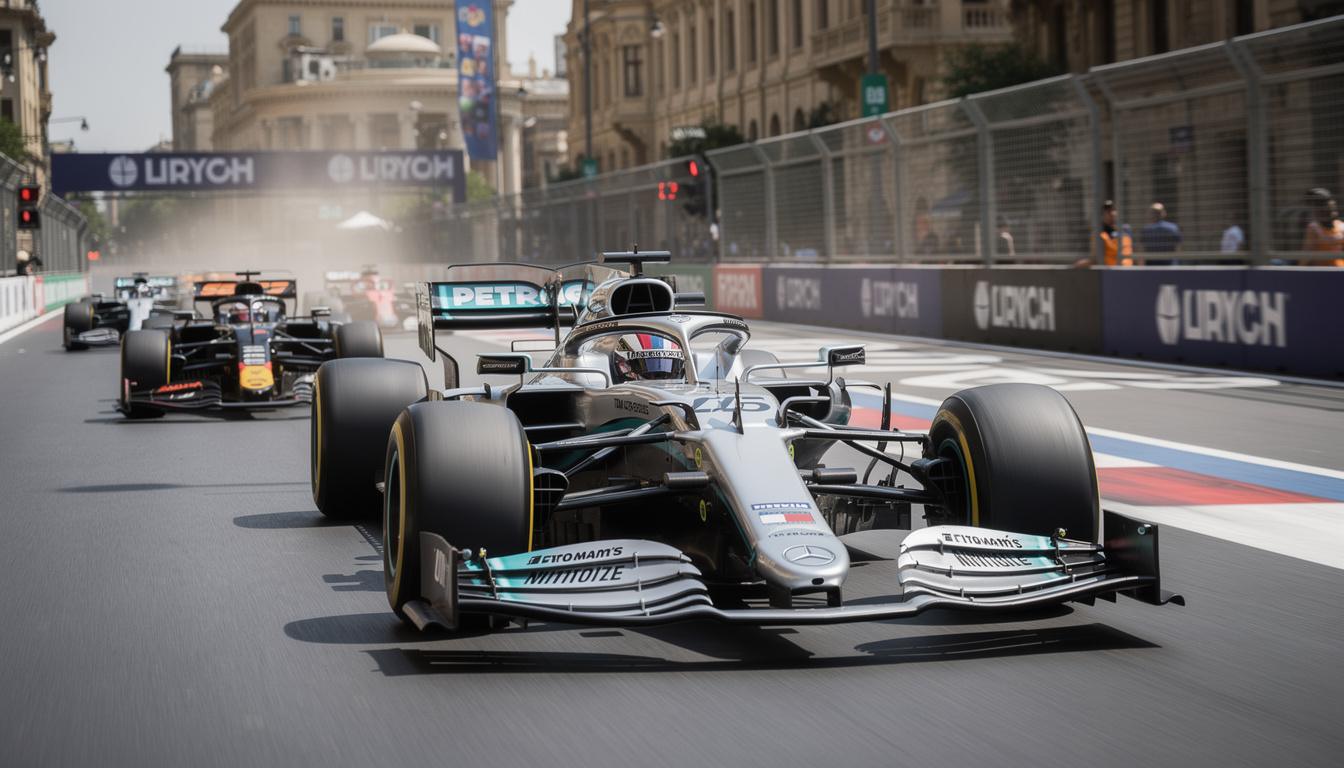
Mercedes’ George Russell emerged as the fastest driver in FP1, setting a commanding lap time of 1:45.387 on soft tyres with 20 minutes remaining. This effort edged out Red Bull’s Max Verstappen, who experienced brake issues yet pushed hard to secure second, while Ferrari’s Charles Leclerc rounded off the top three. The session started with the usual caution typical of a street circuit first run; the Baku track was notably dusty, a challenge given its once-a-year appearance on the calendar. After initial runs on harder compounds, drivers switched onto softer tyres to fully exploit performance in the latter stages.
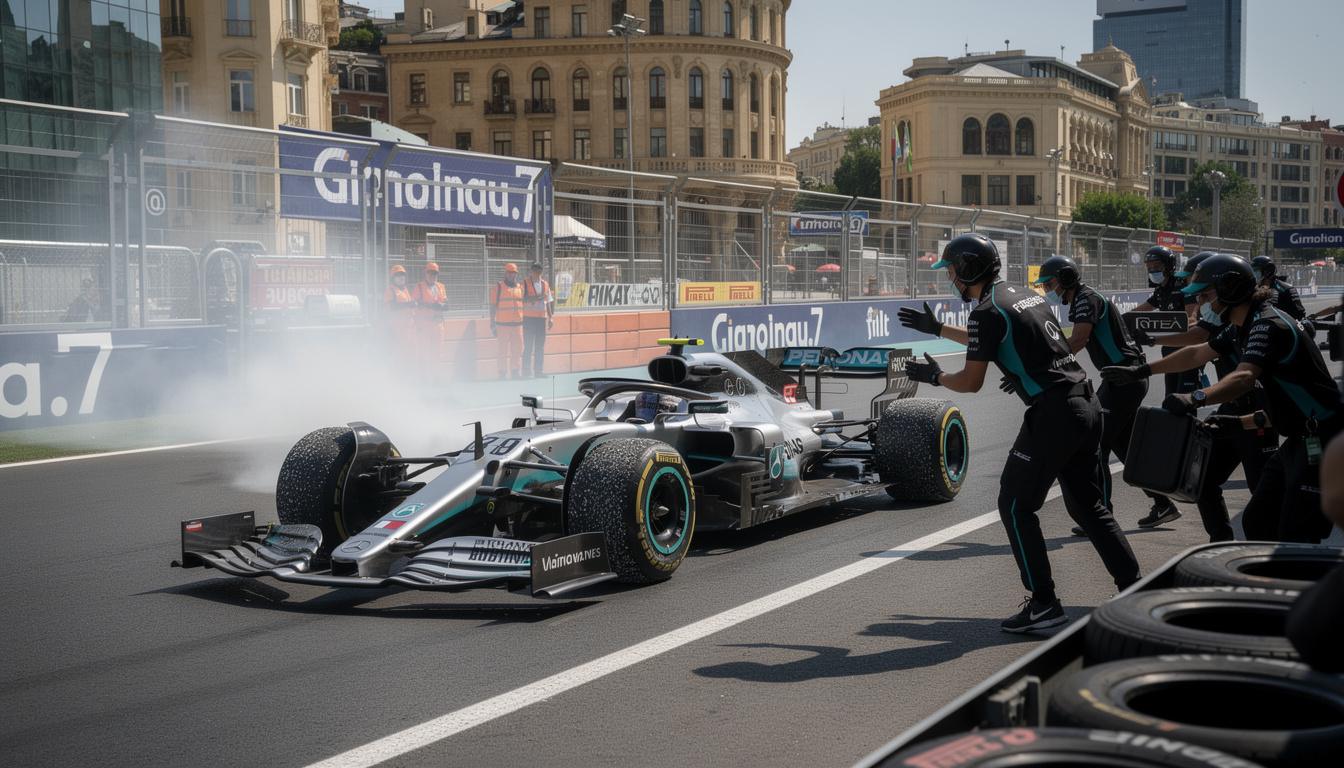
Meanwhile, Mercedes faced disruption when championship leader Andrea Kimi Antonelli’s W17 ground to a halt at Turn 7 due to a suspected hydraulic issue. His car emitted smoke, prompting a virtual safety car but no red flags, which allowed the session to continue without lengthy interruption. The 20-year-old Italian’s early pace of 1:46.265 demonstrated his speed before the setback, placing him fifth in the session standings after repairs.
Technical struggles and on-track battles define FP1 dynamics
Red Bull’s returnee Isack Hadjar faced power unit woes shortly after stepping back into his race seat, echoing the technical challenges that typify the early stages of this race weekend. Verstappen’s brake issues, despite handicapping his car slightly, didn’t prevent a potent pace, as he managed a quick lap of 1:45.787 on soft rubber. Charles Leclerc’s 0.004-second deficit to Verstappen placed him solidly as Ferrari’s top contender, while Lewis Hamilton ended just outside the podium bracket in a competitive midfield battle.
McLaren introduced daring upgrades addressing low-speed handling issues that have dogged their campaign this year. Their new sidepod design, revised floor edge, and updated diffuser aimed to mitigate instability at Baku’s tight corners. Oscar Piastri posted a respectable sixth place after late-session gains, compensating for a challenging run for teammate Lando Norris, sidelined partly by damage and setup adjustments.
Strategic insights from FP1
Early practice sessions in Formula 1 are a chess game, and Baku is no exception. The dusty surface initially compelled teams to take cautious stabs before dialing into qualifying and race simulations. Russell’s timing showed Mercedes has refined their setup for improved street circuit grip, though Antonelli’s breakdown signals potential reliability concerns amid their pursuit of championship glory. With Red Bull running power unit assessments on Hadjar, and McLaren pushing aero upgrades, the midfield shakeup remains expected this weekend.
Williams debuted a significant upgrade package featuring a lighter chassis and redesigned floor, but brake overheating issues blunted their progress in FP1. This complicated Carlos Sainz’s and Alex Albon’s attempts to ascend the timing sheets, underlining the tight competitive margins across teams scrambling to find pace. As the track ‘rubbers in’ across the weekend, these developments will prove crucial for race strategy and setup refinement.
The championship race ahead
This practice session puts the spotlight on how Mercedes is balancing raw pace with the fragility of their machinery. Russell’s quick adaptation to Baku’s demanding conditions puts him firmly in contention to challenge Red Bull’s dominance. Despite his early exit, Antonelli’s pace positions him as a principal threat, assuming reliability woes can be solved promptly. Meanwhile, Verstappen’s resilience despite brake issues and Leclerc’s formidable challenge mean the fight at the front remains intensely close.
The mid-pack battle promises to heat up with McLaren’s upgrades and Williams’ fresh package aiming to claw back ground. With Baku’s reputation for dramatic races, the performance and strategic plays initiated in practice will heavily influence Saturday’s race outcome. Fans tracking the unfolding story should keep an eye on tyre management and pit stop execution, with some of the fastest stops in F1 history becoming increasingly pivotal (see more on pit stop performance). The Azerbaijan GP weekend is shaping up to be a compelling mix of speed, strategy, and endurance.