

Running a Formula 1 team requires far more than building a fast car. The visible $135 million cost cap covers only the regulated racing programme.
Driver salaries, engines, marketing, property, and hospitality create a far larger financial ecosystem behind every grid slot. In 2026, new power-unit rules make financial efficiency as important as aerodynamic performance.
How Much Do F1 Team Costs Really Reach?
The simplest answer hides the real structure. A competitive Formula 1 operation can spend between roughly $140 million and more than $450 million annually. These figures depend on accounting methods, manufacturer support, driver contracts, and excluded expenses. The regulated figure is therefore not the team’s complete annual budget. It is only the controlled section of spending under Formula 1’s financial regulations.
Public estimates require careful interpretation. Liberty Media reported Formula 1 revenue above $3 billion during 2023. Team payments approached $1.2 billion that year. Those payments came through the sport’s commercial distribution system. They did not represent every dollar available to each constructor.
A front-running organisation might report annual revenue between $350 million and $650 million. A midfield team could operate between $160 million and $300 million. A lower-grid organisation might generate between $120 million and $200 million. These ranges remain indicative, because commercial contracts rarely become fully public.
For a fictional team called Northstar GP, the accounting challenge appears immediately. Its regulated car programme could sit near $135 million. Its two drivers might require another $15 million combined. Its engine agreement, factory property, marketing campaigns, and hospitality could push the total beyond $200 million.
The Cost Cap Controls Only Specific Spending
The cost cap covers chassis development, aerodynamic work, manufacturing, performance operations, and many trackside activities. It also includes salaries for most employees involved in that racing programme. Personnel usually becomes the largest internal expense. A modern organisation may employ 700 to 1,000 people across factories and circuits.
The headline cap is not the complete bill faced by a Formula 1 organisation. Driver salaries remain outside the main limit. The three highest-paid non-driver executives also receive exclusion. Marketing, property costs, hospitality, and selected legacy payments sit outside the calculation.
Power units follow separate financial controls. Customer teams pay regulated supplier prices. Works teams account for engine operations through different corporate structures. That distinction matters when comparing Ferrari, Mercedes, Red Bull Powertrains, and customer organisations.
The financial regulations also interact with capital expenditure rules. Wind-tunnel time and computational fluid dynamics usage face sporting restrictions. Factory investment therefore requires careful timing. Spending heavily today can reduce flexibility during a regulation cycle.
Formula 1’s car construction economics explain why the cap matters. Building a single race car is expensive. Developing an entire fleet, spare parts programme, and upgrade path costs considerably more.
Where the Annual F1 Budget Goes
Northstar GP’s regulated budget would divide between engineering, manufacturing, racing operations, and employee costs. Aerodynamics receives significant funding because small airflow gains create measurable lap-time improvements. Composite structures require expensive tooling, inspection, and skilled labour. Simulation departments need computing capacity, software licences, and specialist engineers.
Efficiency now replaces unlimited spending as the primary competitive advantage. A stronger team can identify useful upgrades earlier. It can reject weak concepts before manufacturing begins. That decision may save money while protecting wind-tunnel and CFD resources.
Logistics creates another substantial burden. Formula 1 travels across several continents during a season. Freight, customs, hotels, flights, garage equipment, and temporary infrastructure all generate team expenses. Formula 1 Management provides a base freight allowance. Teams still pay staff travel and additional logistics costs.
Tyres and fuel create a different accounting relationship. Pirelli supplies the championship’s tyres under its sporting arrangement. Fuel and lubricants often involve technical partnerships. Such agreements can combine cash, research, materials, and marketing value.
The cost structure shows a clear principle. A smaller team can survive with less spending, but poor decisions still waste valuable performance resources.

F1 Team Revenue, Sponsorship, and Prize Money
Formula 1 teams do not fund racing through a single source. Prize distributions, sponsorship, manufacturer support, merchandise, hospitality, and engineering services combine into one commercial structure. Each stream carries a different level of certainty. Performance determines several streams simultaneously, making the Constructors’ Championship financially important.
Prize money usually forms the most predictable team revenue. The Concorde framework distributes funds through continuity and performance mechanisms. Exact contractual terms remain confidential. The broad structure gives established teams a recurring share, then rewards championship position.
Historically, the gap between first and last could destabilise smaller organisations. Modern agreements have narrowed that spread. A midfield team can now gain meaningful financial value from finishing higher. One additional championship position may improve prize money and strengthen sponsor negotiations.
That effect creates a powerful feedback loop. Better results increase cash flow. Cash flow supports upgrades. Upgrades improve results. The loop does not guarantee success, because every competitor pursues the same strategy.
Why Sponsorship Still Funds Performance
Sponsorship remains the most visible commercial engine behind many teams. A title partner can contribute between $40 million and $70 million annually. Strong midfield operations may secure between $20 million and $40 million. Smaller agreements can begin below $1 million, especially when technical services replace cash.
Sponsors purchase access, not only exposure through the Formula 1 paddock. Brands gain global broadcasting, hospitality, content rights, and executive networking. Technology companies may receive direct access to engineering departments. Financial firms often value business relationships more than television logos.
A sidepod position carries commercial value because television cameras repeatedly frame it. Driver overalls and team caps extend that visibility. A title partnership also includes launch events, digital content, factory visits, and client experiences.
The strongest sponsorship contracts reflect measurable business outcomes. A cloud provider may support simulation and data infrastructure. An energy company may provide fuel technology or sustainability research. A watchmaker may use Formula 1 association to reinforce precision and exclusivity.
Performance affects renewal negotiations. A team fighting for podiums can request stronger rates. A struggling organisation may sell additional inventory at discounted prices. Commercial departments therefore monitor lap times as closely as marketing metrics.
Prize Money, Merchandising, and Commercial Stability
Front-running teams often receive between $150 million and $250 million in prize money. Sponsorship and partnerships may contribute between $180 million and $350 million. Merchandise, hospitality, and related activities can add $20 million to $60 million.
Midfield economics depend on consistency rather than occasional attention. A team finishing sixth repeatedly can build predictable sponsor value. A single surprise podium helps, but stable visibility supports longer contracts.
Merchandise responds quickly to sporting momentum. A win can trigger immediate demand for caps, shirts, model cars, and special collections. Team shops operate separately from Formula 1’s official retail business. Factory tours and team hospitality add further income.
Driver popularity also influences commercial value. A recognised driver can increase regional sponsor interest. Personal sponsors may connect with team partnerships. However, commercial appeal cannot replace technical competitiveness indefinitely.
Engine relationships add another layer. Works teams integrate power units, chassis design, and marketing. Customer teams buy engines under regulated arrangements. Technical alliances may include simulation, materials, cloud computing, and manufacturing support.
The revenue model rewards teams that connect sporting performance with commercial storytelling. Fast cars attract attention, but disciplined businesses convert attention into funding.
This visual guide helps explain how commercial income supports the visible racing operation.
Behind the Scenes: Team Expenses During a Race Season
Race-weekend spending extends far beyond the two-hour Grand Prix. Teams transport cars, garages, tools, spares, computers, catering equipment, and personnel. The calendar’s geography changes the financial pressure. A European triple-header differs greatly from a flyaway sequence across Asia, the Americas, and the Middle East.
Logistics departments plan movements months ahead. Containers must meet customs requirements. Sensitive components require controlled handling. Delays can force expensive alternatives, especially when replacement parts need rapid transport.
Race crews also generate large expenses. Mechanics, engineers, strategists, data specialists, and management travel to each event. Hotels and flights become especially costly during congested calendar periods. Staff rotation protects people from exhaustion, but increases operational complexity.
Modern teams use remote operations centres during sessions. Engineers at the factory analyse live data and communicate with the circuit. This structure requires secure networks, specialist software, and resilient communication systems. It also transfers some workload away from the pit wall.
Race Operations and Pit Crew Preparation
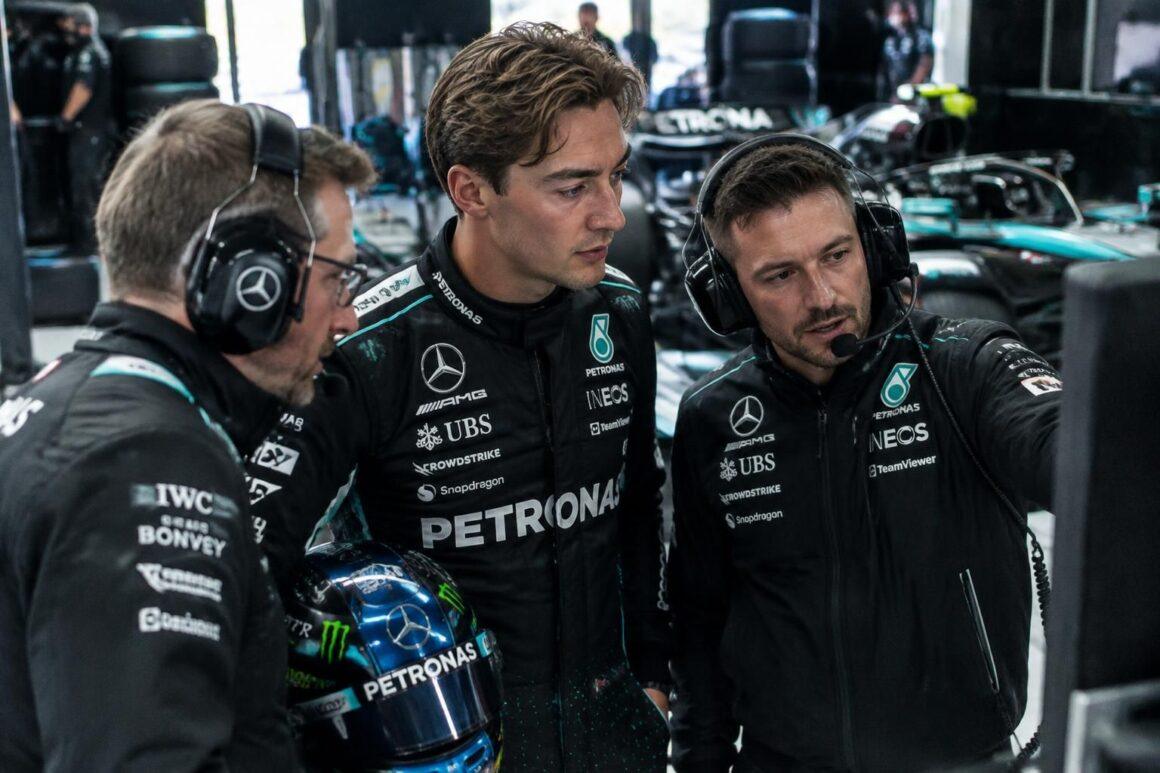
The pit crew represents only a small part of total headcount. Its work, however, demands precision and constant rehearsal. A wheel change involves coordinated movement around the car within seconds. Poor execution can destroy a strong strategic decision.
Every pit stop depends on expensive preparation long before the car reaches pit lane. Teams train with timing systems, dummy cars, video analysis, and physical conditioning. Mechanics practise wheel-gun control and release procedures repeatedly.
Race engineers monitor tyre temperatures, energy deployment, brake behaviour, and aerodynamic balance. Strategists calculate traffic, weather, safety-car probabilities, and pit windows. These decisions influence tyre life and finishing position directly.
Driver controls add further complexity. Steering wheels manage engine modes, brake balance, differential settings, radio functions, and energy deployment. The driver must change settings while controlling a car exceeding 300 km/h.
The financial consequence is clear. A team does not purchase performance only through carbon fibre. It buys reliability, information, preparation, and decision speed.
Car Development and Spare Parts
Car development consumes resources throughout the year. Aerodynamic departments create concepts, models, and full-size components. Manufacturing teams convert approved designs into usable parts. Trackside engineers then measure whether those parts deliver expected gains.
Upgrade value depends on correlation accuracy between factory predictions and track behaviour. A part producing no real benefit wastes manufacturing capacity. It may also compromise future development by sending engineers toward a false direction.
Teams carry extensive spare inventories. Front wings, floors, suspension components, bodywork, and steering systems can suffer damage. A crash may require several replacement assemblies during one weekend.
Spare parts therefore create an invisible financial reserve. Their value is not seen during a clean race. Their absence becomes obvious when a damaged car cannot return to qualifying.
Fuel strategy also affects operations. Race fuel quantities remain tightly controlled by regulations. The technical explanation of Formula 1 fuel consumption shows why engine modes and lift-and-coast decisions matter.
Behind every televised session sits a supply chain designed to prevent small failures becoming championship losses.

How Racing Technology Changes the Financial Equation
Formula 1 spending produces value only when engineering decisions improve the car. Racing technology therefore connects accounting directly with lap time. A hundred engineers do not automatically outperform a smaller group. Organisational quality determines how quickly useful information becomes performance.
Aerodynamics remains the largest development battleground. Floor geometry, diffuser behaviour, wing loading, and ride-height control interact continuously. A design producing more downforce may also increase drag. That compromise affects qualifying speed, tyre temperatures, and overtaking ability.
Vehicle dynamics creates similar trade-offs. A setup delivering strong corner entry may punish rear tyres during long stints. A stable rear axle can help a driver attack kerbs. It may also limit rotation in slow corners.
These effects explain why a single lap-time figure cannot describe development quality. Engineers assess balance, degradation, reliability, and operating range. A part gaining 0.15 seconds in qualifying may lose more during a race stint.
Drivers, Salaries, and Performance Return
Driver contracts remain outside the primary cost cap. Leading drivers can earn more than $30 million annually. Championship-level agreements may exceed $50 million with bonuses and image rights.
A driver’s value extends beyond salary calculations when margins become extremely small. A stronger driver extracts performance from difficult balance conditions. That skill can convert a narrow setup window into points.
Drivers also influence sponsorship and market reach. A popular champion attracts hospitality demand and media attention. A driver connected with a growing national market can strengthen regional partnerships.
However, the car remains the principal performance factor. A gifted driver cannot overcome a persistent aerodynamic deficit every weekend. The best commercial return usually comes from combining a fast car with reliable execution.
Bonuses create another incentive structure. Wins, podiums, pole positions, and championship results can alter annual payroll. Teams must forecast these payments while budgeting uncertain prize revenue.
Power Units and the 2026 Technical Reset
The 2026 regulations increase the importance of power-unit integration. Electrical energy becomes more prominent within the hybrid system. Sustainable fuel requirements also affect development priorities and supplier relationships.
Power-unit architecture will reshape commercial partnerships across the grid. Works teams can coordinate engine, gearbox, cooling, and chassis decisions internally. Customer teams depend more heavily on supplier performance and packaging support.
Energy recovery affects race strategy as well as technical cost. Engineers must manage deployment across straights and braking zones. Poor harvesting can create vulnerability during defensive or attacking laps.
Cooling design becomes equally important. More electrical hardware may require additional thermal management. Extra cooling can increase drag or packaging volume. The fastest solution may not be the cheapest solution.
New regulations often redistribute competitive advantage. Existing factories must finance fresh research. New suppliers can enter with modern facilities. Teams that control development priorities will protect budget flexibility better than teams chasing every concept.
The 2026 reset confirms a wider truth. Financial regulation cannot separate performance from engineering judgement.
The footage clarifies how new energy systems can influence packaging, strategy, and operating cost.
Why F1 Team Costs Matter for the Future Grid
Financial regulation changed Formula 1’s ownership logic. Before the cap, wealthy manufacturers could sustain enormous technical programmes. Smaller teams often struggled to match factory infrastructure. The modern model places greater emphasis on process quality, commercial strength, and long-term planning.
Team valuations have risen as revenue becomes more predictable. Limited grid positions create scarcity. Stronger prize distributions reduce financial volatility. Global audience growth increases the value of sponsorship inventory and intellectual property.
An established entry can therefore be worth more than its factory equipment. It owns commercial access to a championship with restricted participation. A new applicant must prove sporting value, financial stability, and technical credibility.
The widely reported anti-dilution fee for a new entrant stands near $200 million. That payment compensates existing teams for dividing prize distributions. Buying an existing entry can avoid that barrier and provide immediate championship access.
Profitability, Ownership, and Competitive Balance
Many teams now operate with stronger commercial prospects than during previous decades. Cost controls reduce uncontrolled development races. Improved sponsorship markets increase income. Better prize-money distribution supports investment in personnel and facilities.
Profitability now depends on operational discipline as much as sporting ambition. A team must spend enough for competitiveness. It must also protect cash flow through weak seasons.
Ownership structures vary across the grid. Automakers support some operations. Investment groups control others. Billionaire-led turnarounds have transformed several teams through factory investment and commercial expansion.
Manufacturer involvement can reduce direct financial pressure. Yet it also introduces corporate targets, governance requirements, and branding expectations. Investor-owned teams may move faster, but rely heavily on sponsors and prize income.
A team’s financial health can influence technical patience. Stable owners can fund several development cycles. Uncertain ownership may force short-term decisions. Formula 1 rewards continuity because aerodynamic concepts often require years of refinement.
What Future Cost Rules Could Change
Future agreements may revisit excluded salaries, power-unit accounting, and capital expenditure allowances. Driver salary limits remain frequently discussed, but no universal driver cap currently operates. Any change would affect contract negotiations, sponsorship value, and team strategy.
The next financial battle concerns hidden competitive advantages outside the core spending limit. Factory technology, software ecosystems, and supplier relationships can create unequal benefits. Regulators must decide which advantages require control.
Artificial intelligence and advanced simulation may alter staffing requirements. Faster design tools could reduce repetitive work. They could also increase demand for specialist computing and validation expertise.
Commercial growth creates another challenge. More races increase sponsor exposure and hospitality revenue. They also increase freight, staffing, and equipment demands. Calendar expansion therefore raises income and operating costs together.
Formula 1’s future depends on maintaining that balance. Teams need enough freedom to innovate. The championship needs rules preventing financial power from overwhelming sporting competition.
Understanding F1 tyre costs reveals the wider principle. Every controlled component influences strategy, preparation, and commercial planning.
The modern team is therefore both a racing organisation and a complex technology company. Its fastest gains come from coordinating money, people, machinery, and information.

How much does it cost to run a Formula 1 team?
A complete annual operation can range from roughly $140 million to more than $450 million. The regulated racing programme represents only part of that total.
What does the Formula 1 cost cap include?
It generally covers chassis development, aerodynamics, manufacturing, performance operations, and most racing staff salaries. Driver pay, marketing, property, hospitality, and selected executive salaries remain excluded.
Are Formula 1 driver salaries included in the cost cap?
No. Driver salaries and performance bonuses sit outside the main cost cap. Leading drivers can earn more than $30 million annually.
How do Formula 1 teams make money?
Teams combine prize distributions, sponsorship, manufacturer support, merchandise, hospitality, licensing, and technical partnerships.
Why will 2026 affect team budgets?
New power-unit rules increase the importance of electrical systems, sustainable fuel, cooling, and engine integration. These changes can redirect development spending across the grid.