
The 2026 WEC calendar reshuffle shakes up the title fight. Barcelona and Monza replace Qatar and Bahrain, altering strategic outlooks. This calendar change reshapes team approaches in a compact and intense season finale.
The 2026 World Endurance Championship faces a seismic shift in its second half as a revised calendar swaps the traditional Middle Eastern rounds for high-profile European tracks. The cancellation of the Qatar and Bahrain races, forced by geopolitical tension linked to the Iran war, introduces Barcelona and Monza into the mix. This alters the championship’s dynamics profoundly, reducing total available points and reshuffling the technical challenges teams face. With four rounds squeezed into just over two months, teams must now navigate a condensed sprint-like finish rather than a prolonged endurance battle. This change impacts team strategies, driver performance, and the overall championship narrative.
How the revised WEC 2026 race schedule changes the championship battle
The replacement of Qatar and Bahrain by Barcelona and Monza marks a fundamental shift in the 2026 WEC calendar, affecting more than just logistics. Both Middle Eastern rounds were bonus-points events, with up to 38 points on offer due to their extended race durations. Conversely, Barcelona and Monza are standard six-hour races awarding the typical 25 points. This reduction of around 26 points effectively removes the equivalent of a full six-hour race from the season’s scoring potential.
Given the season is now halfway through, roughly 55% of the available points have already been claimed, including the double-points Le Mans 24 Hours. The cancellation of high-value rounds like Bahrain now amplifies the significance of Le Mans and tightens the margin for error in the remaining races. The condensed schedule spans across America, Asia, and Europe, demanding that teams optimise both reliability and aggressive pace over a short timeframe to maximise every point.
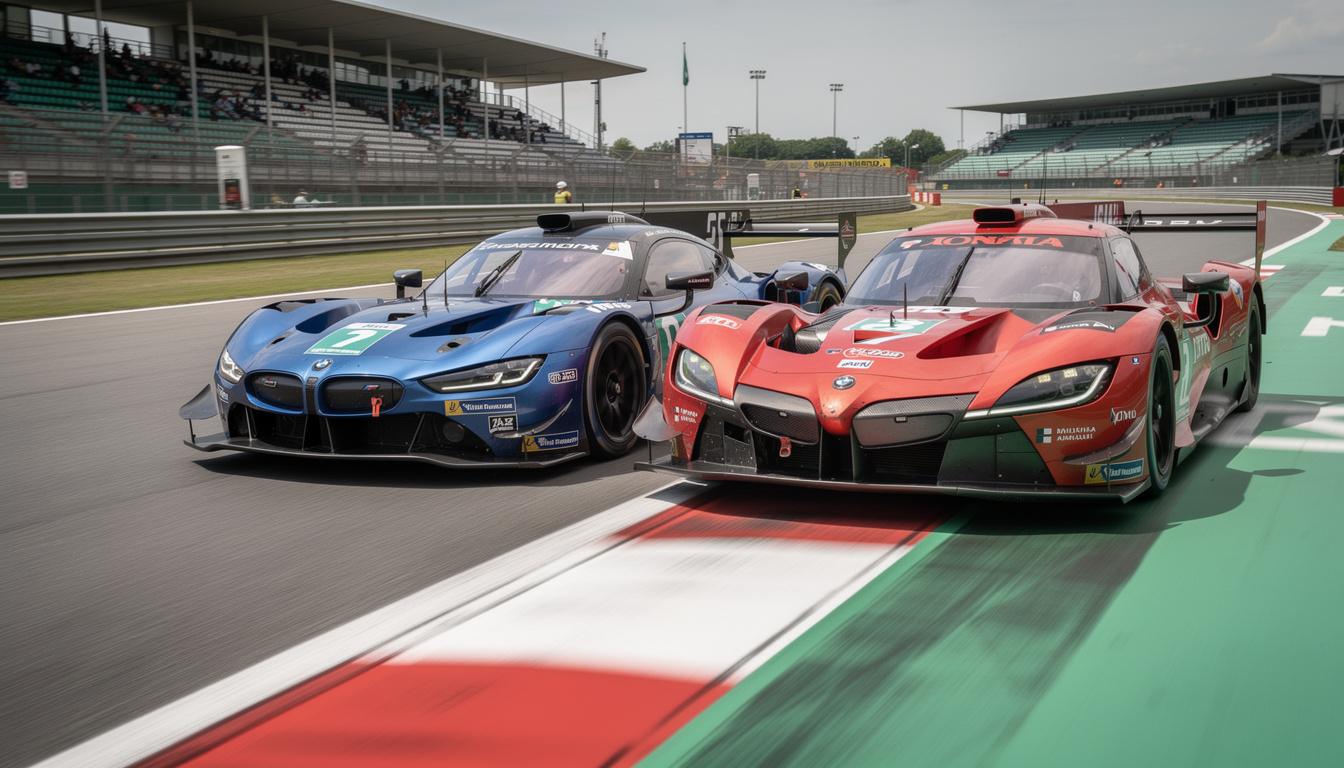
Strategic implications of calendar adjustments
Barcelona and Monza bring markedly different demands compared to Qatar and Bahrain. Barcelona’s sweeping, high-downforce corners impose sustained tyre loads, forcing teams to adopt a balanced aerodynamic set-up and aggressive thermal management. In contrast, Monza maintains its reputation for top speeds and low drag, which will push teams to fine-tune power units and exploit slipstreaming on its elongated straights.
These contrasting circuit characteristics dictate divergent strategies. The Balance of Performance (BoP) will play an outsized role, especially at Monza where the long straights highlight differences in powertrain efficiency and aerodynamic drag. Manufacturers with strong tyre management, such as Toyota—who dominated Qatar and Bahrain previously—face new challenges adapting to the more technical Barcelona circuit and Monza’s raw speed focus. These changes disrupt historical performance patterns and shake up team confidence heading into the closing stages.
Championship dynamics and what lies ahead in the WEC 2026 title fight
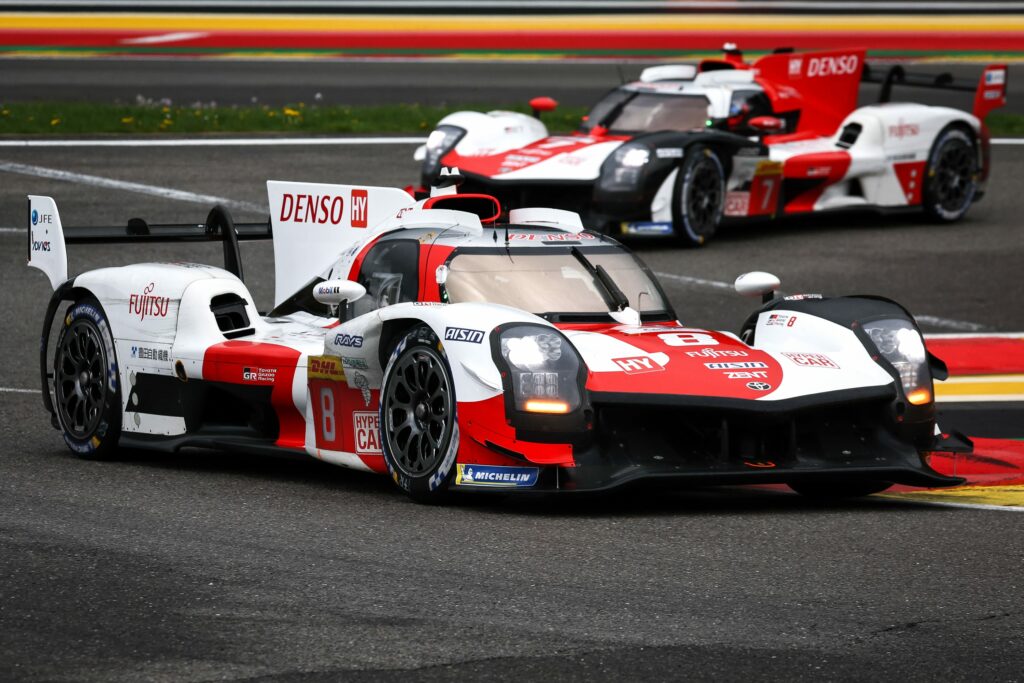
The current standings underscore a tight contest at the top. The #20 BMW M Hybrid V8 crew of Robin Frijns and Rene Rast sits level with the Le Mans winners Kamui Kobayashi, Nyck de Vries, and Mike Conway in the #7 Toyota, each holding 75 points. Although Sheldon van der Linde is technically third on the BMW roster, his IM results exclude him from the title fight leaving James Calado’s #51 Ferrari crew in closer contention with 57 points.
This leaves BMW and Toyota locked in a high-octane battle with Ferrari trailing closely despite lacking a win so far. The reduced points pool heightens pressure for each round, and the absence of Bahrain denies Toyota the comeback platform seen in past seasons. The final four races, including the new European fixtures, become a chessboard of risk versus reward for manufacturers competing fiercely in both driver and team championships.
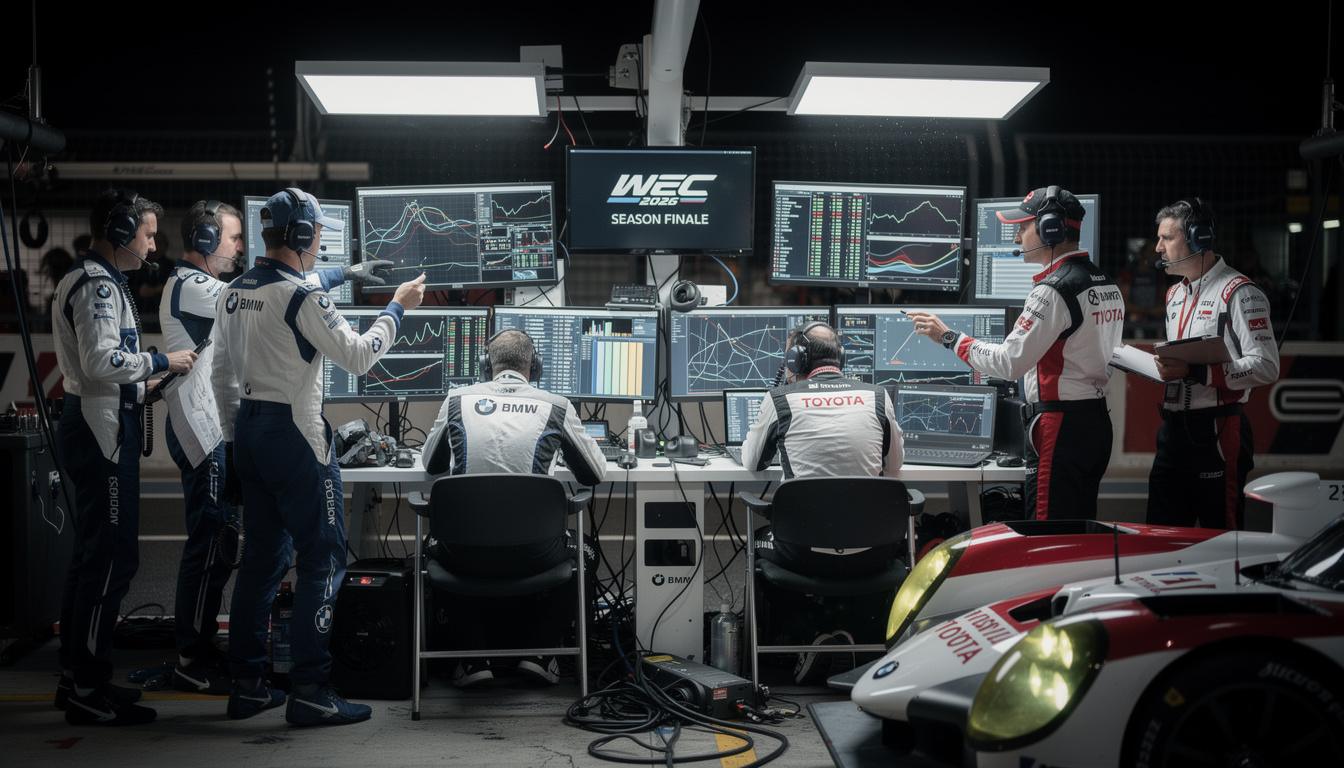
Season planning and motorsport strategy in the race for glory
With just over two months to contest four rounds, teams must fine-tune their season planning more acutely than ever. Reliability and strategic flexibility hold equal weight with outright speed due to the compressed schedule, while the single Pro-Am LMGT3 class adds another tactical element for manufacturers juggling priorities. The shifting calendar forces a recalibration of resource allocation and driver stints, especially as teams adapt to circuits they have less recent race track record on, like Barcelona.
Despite these new challenges, the WEC remains wide open. A cumulative 104 points remain available, including pole position bonuses, which keeps the battle alive for manufacturers’ and drivers’ honours. Every lap through Barcelona or Monza can swing the fate of a championship where margins grow razor-thin. Teams must combine technical mastery with sharp execution to thrive in this altered championship environment.
To keep abreast of further developments around the WEC 2026 calendar changes and their sporting impact, visit LAS Motorsport for expert analysis. For broader context on how geopolitical events are shaping motorsport calendars, see this update on F1 and WEC race disruptions.