
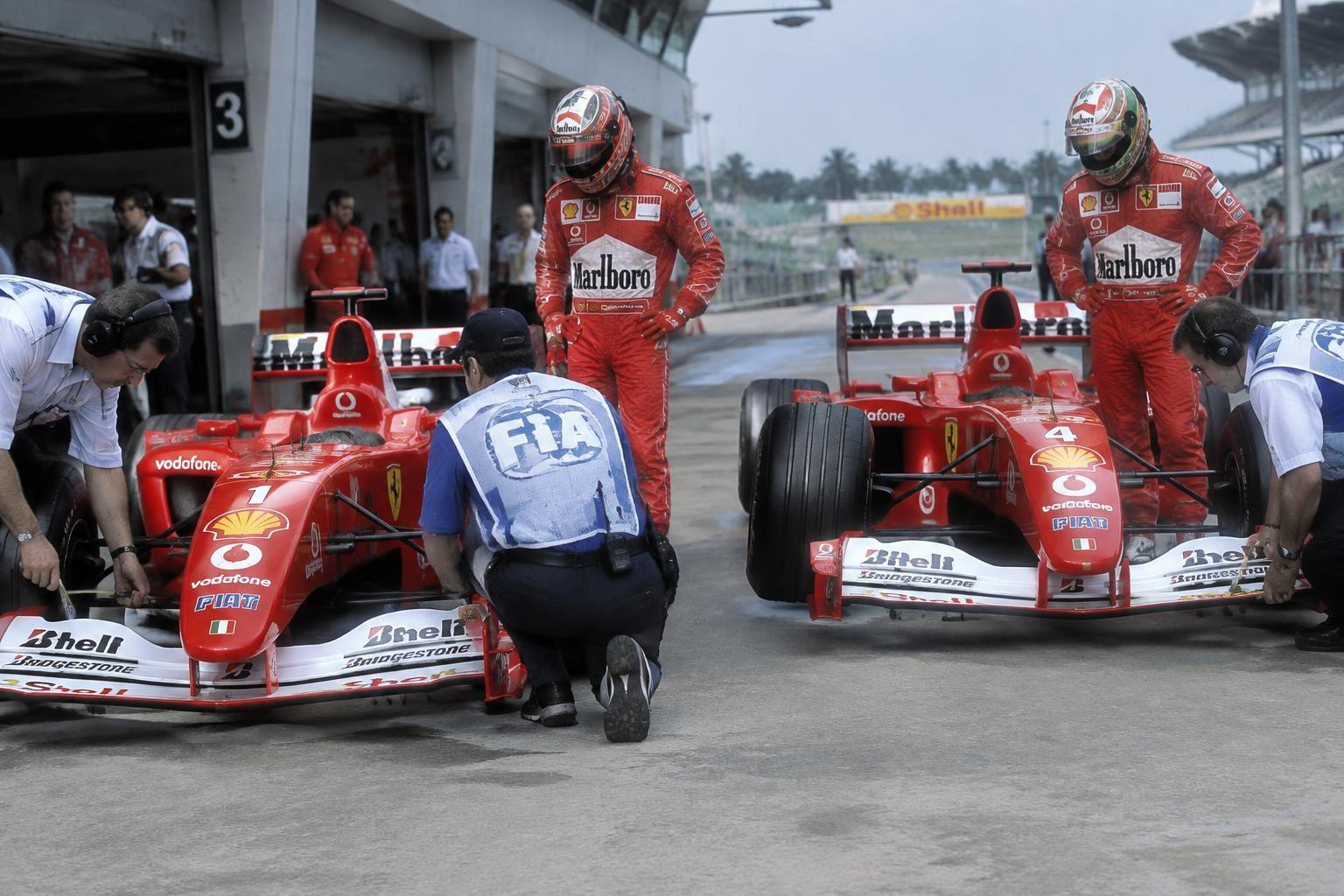

Ferrari’s Sepang One-Two Vanishes. The FIA Strikes. The Title Fight Reopens.
Ferrari appeared to seize control of the 1999 season at Sepang, only for a post-race ruling to erase its Malaysian Grand Prix one-two. On 17 October, Eddie Irvine won ahead of Michael Schumacher, who had returned from injury to support his team-mate’s title bid. Hours later, race stewards disqualified both cars over their bargeboards, turning a triumph into a technical dispute. Their decision briefly handed Mika Häkkinen the drivers’ crown and secured McLaren the constructors’ championship. An appeal restored the result, but the bargeboard controversy remains a sharp reminder that Formula 1 can swing from the track to the measuring bench in a single evening.
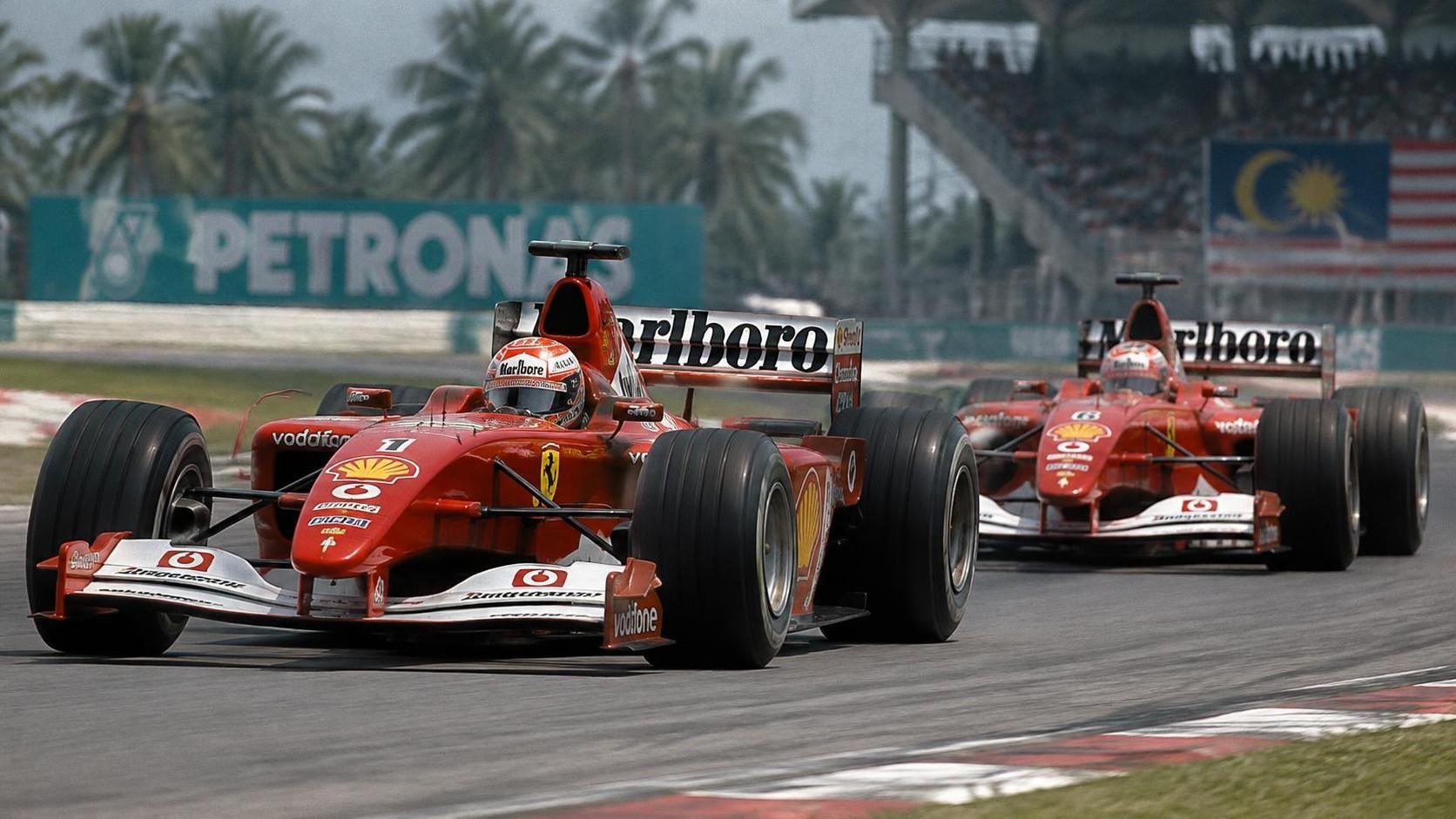
Ferrari’s Double Disqualification at Sepang
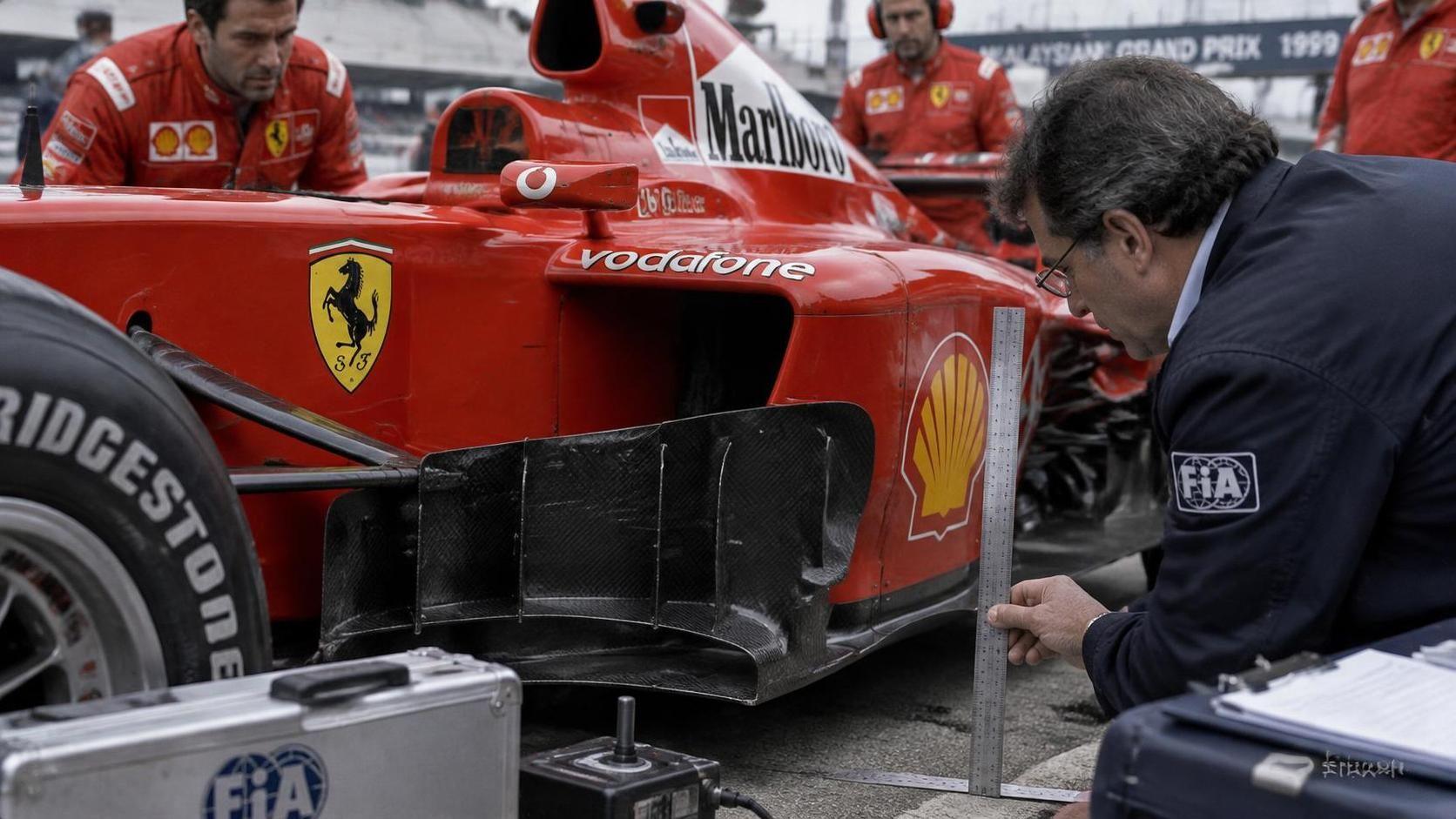
The trigger was the cars’ bargeboard deflectors, bodywork that helped manage airflow around the sidepods and front of the floor. Scrutineers ruled that the lower shadow plates failed to meet the coverage required under Article 3.12.1 of the technical regulations, with the disputed area measuring roughly 10 millimetres short. In a sport where small surfaces can reshape airflow, the finding carried major consequences.
The stewards relied on a single graduated ruler at the circuit to assess whether the parts sat outside the permitted reference plane. That trackside method became part of the dispute: Ferrari argued the measurement did not capture the car’s geometry with enough precision. The original ruling removed both cars from the classification, and the points loss briefly settled both championships before Suzuka.
Ferrari’s Appeal Challenges the Bargeboard Measurement
Ferrari appealed immediately, taking the argument to the FIA International Court of Appeal in Paris. The hearing began on 22 October, five days after the race, and the court overturned the stewards’ decision on 23 October. At the centre of the defence stood Article 3.12.6, which the team said allowed a manufacturing tolerance of plus or minus 5 millimetres for the relevant bodywork.
Demonstrations at the hearing supported the team’s case: when officials used proper measuring fixtures, the deflectors’ deviation sat within that tolerance. The court also found the Sepang checks insufficiently precise to justify throwing out the result. This was not a finding that technical rules did not matter; it was a judgement that the evidence had not proved a breach. For more on the arguments that shaped this episode of F1 News, the measurement method is as telling as the ruling itself.
Suzuka Restores Ferrari’s Championship Opportunity
With the result reinstated, Irvine travelled to Suzuka for the finale four points ahead of Häkkinen, while Ferrari recovered its lead in the constructors’ standings. The Malaysian ruling had not merely changed a points table; it had briefly made the season’s final race irrelevant to both titles. The appeal put the pressure back where it belonged: on the circuit.
At Suzuka, Häkkinen won and secured his second consecutive drivers’ championship, leaving Irvine as runner-up. Ferrari, however, clinched its first constructors’ crown since 1983, making the restored Sepang points part of a season-defining recovery. The episode still stands out in F1 history: a dispute over aerodynamics, scrutineering and measurement briefly threatened to decide the championship away from the track. More stories from the sport’s past are collected at LAS Motorsport.