

Williams reveals a surprising Formula 1 strategy this season. Instead of gathering data at the Barcelona shakedown, the team takes a different approach. You will discover how their focus on alternative testing methods shapes their 2026 campaign and challenges conventional racing tactics.
After missing the physical F1 test at Barcelona due to unforeseen delays with their FW48 car, Williams emphasizes a strategy focusing on virtual and technical development. This approach aims to safeguard component updates while preserving team performance throughout the season.
How Williams optimizes strategy beyond the track ?
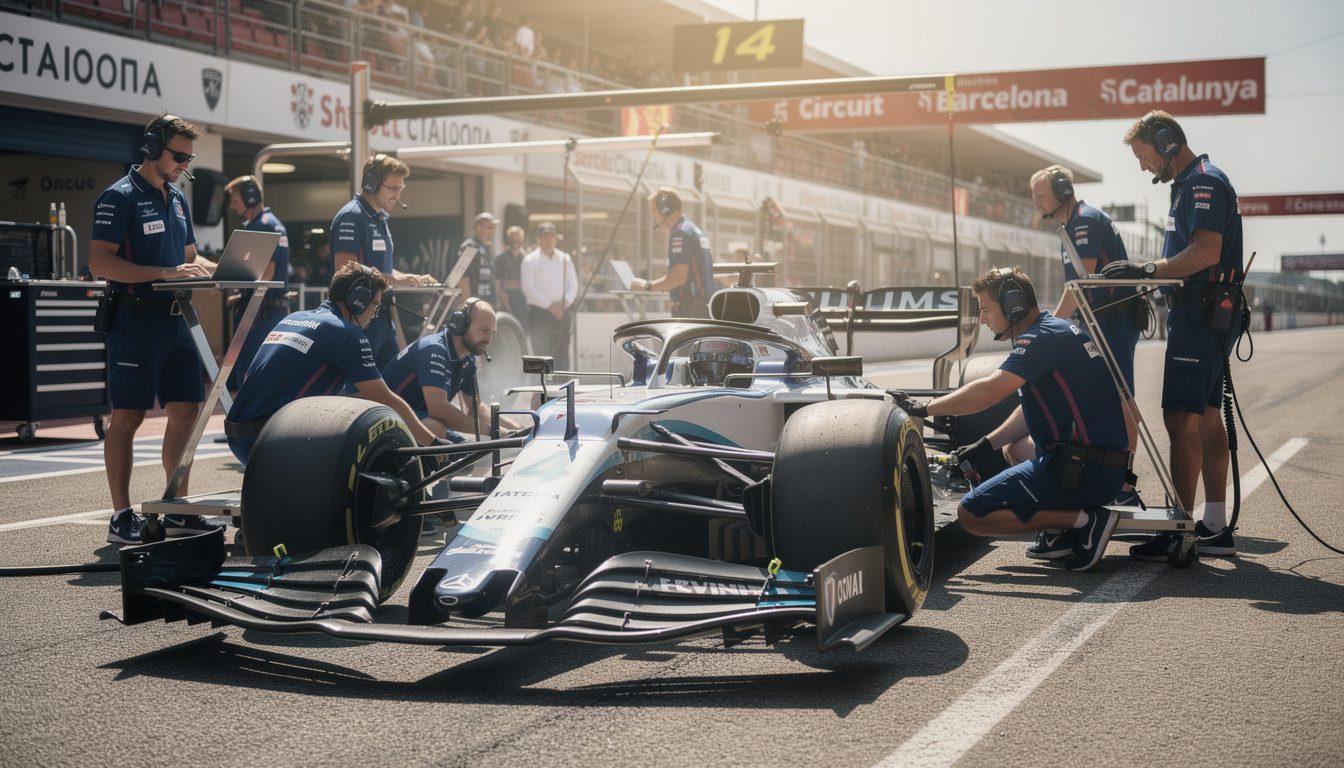
Williams continues its upward trajectory with a renewed focus on team performance through innovative testing solutions. Skipping Barcelona’s shakedown was a decision guided by the desire to preserve spares and uphold updates at early races. The team principal, James Vowles, highlighted the importance of reliable preparation for the Bahrain tests. This alternative method allows Williams to focus on long-term championship ambitions.
A crucial advantage lies in their partnership with Mercedes, which supplies both the power unit and gearbox. The team benefits from data Mercedes collects during the Barcelona runs, adopting insights to refine their own car setup. Such track analysis delivers indirect performance gains without risking additional wear or failure. This tactical usage of external data ensures valuable learning before any on-track action.
Virtual test track enhances Williams’ preparation
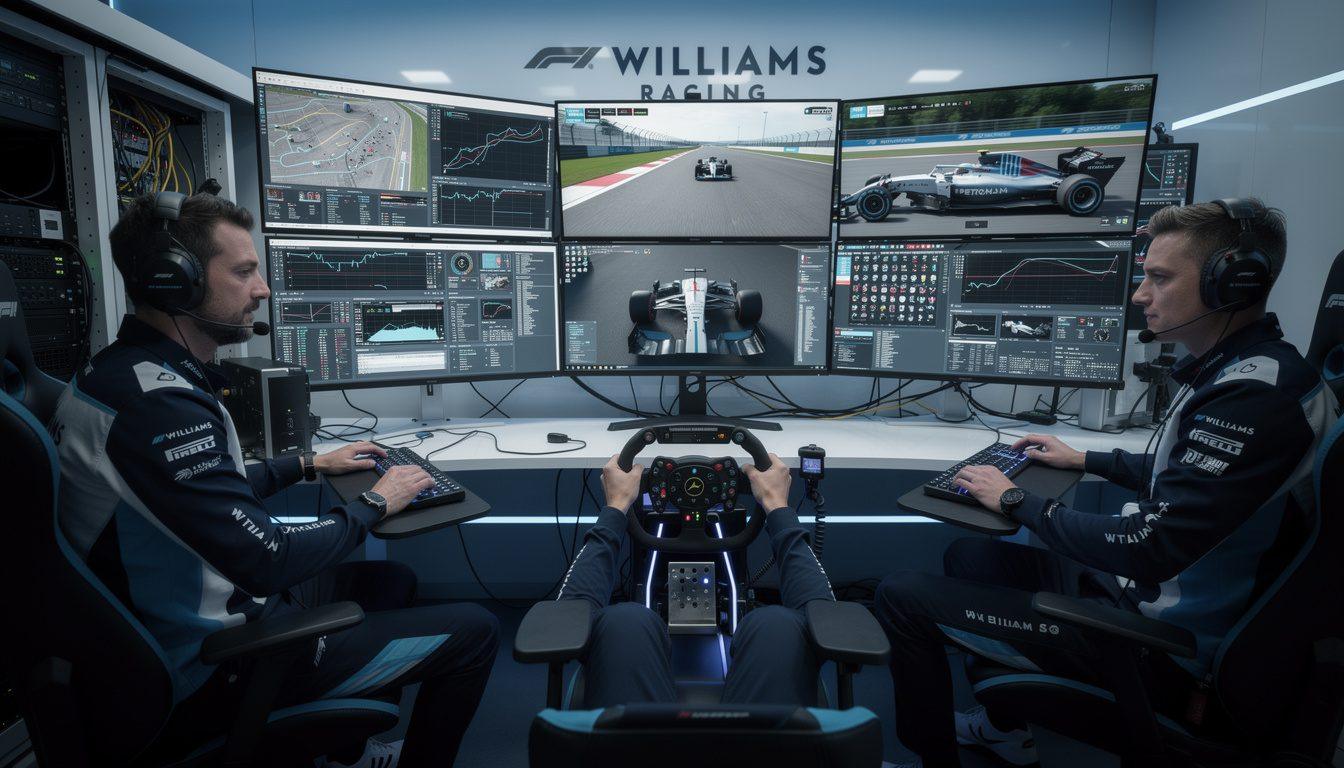
Williams invests heavily in the Virtual Test Track (VTT), a simulator differentiating itself by incorporating real car components under controlled conditions. The VTT program offers precise control over thermal and mechanical loads, simulating race conditions without physical track time. By testing cooling and reliability under various scenarios, the team gathers critical insights on system performance. This advanced simulation system supports continuous car development despite test session absence.
Vowles stresses the VTT’s value, especially in addressing reliability challenges faced in prior seasons. Simulated runs allow for comprehensive assessments of the cooling system and future packaging upgrades. While it cannot replicate every dynamic load present on a race circuit, the method provides stable conditions for iterative improvements. This formula 1 technology creates new opportunities for refining the FW48 ahead of the official Bahrain tests.


