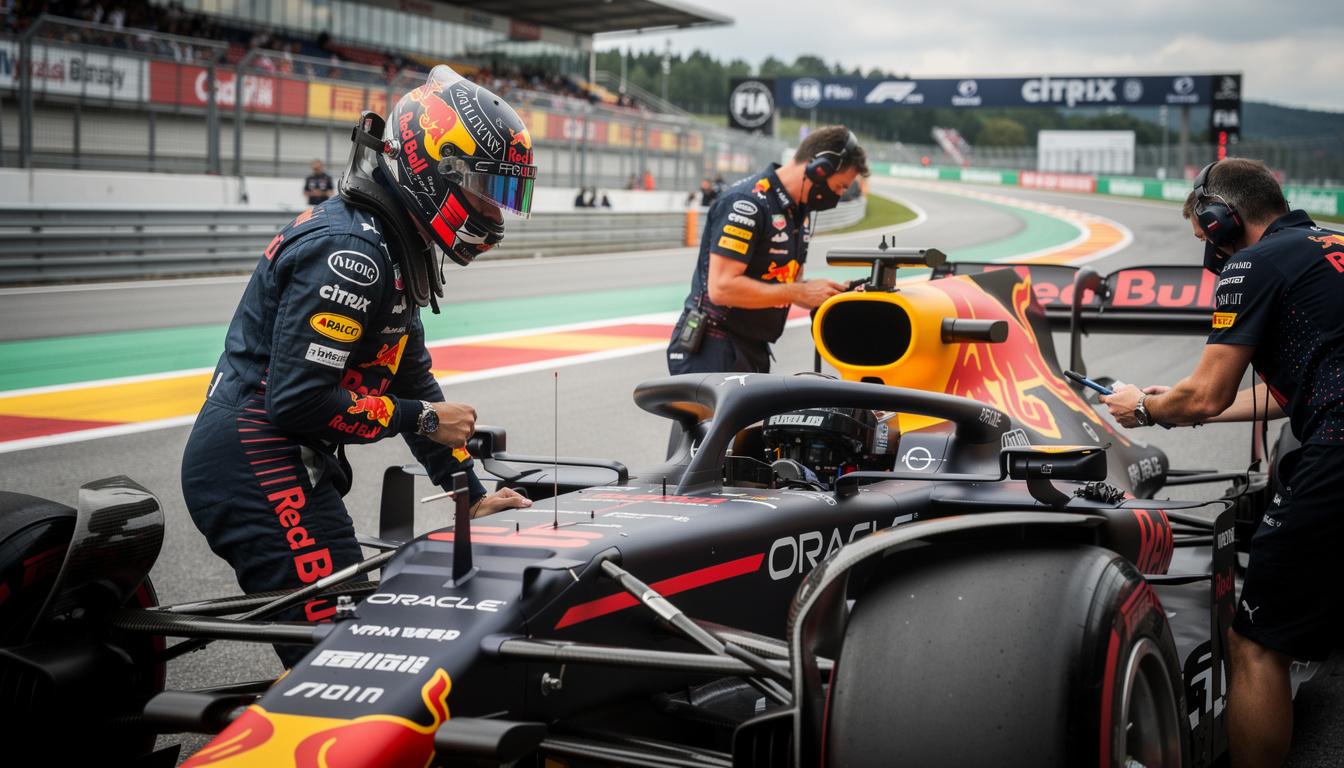

Red Bull is intensifying its investigation into Max Verstappen’s rear wing malfunction. The team is leaving no stone unturned as it prepares for Spa. Two consecutive crashes linked to the rear wing have raised alarms. With Spa looming, safety and performance balance hang in the air.
For the second race weekend running, Max Verstappen crashed due to a rear wing failure on the Red Bull RB29. Despite both incidents resulting in loss of control, Verstappen immediately clarified the faults were distinct. The first failure occurred late in Q3 at the Spielberg qualifying session, which Red Bull identified and understood quickly. Trouble struck again the very next weekend with a new rear wing defect unexpected by the team. These malfunctions have thrust the design into the spotlight ahead of the upcoming Belgian Grand Prix at Spa-Francorchamps.
Red Bull’s twist on the so-called ‘Macarena wing’ first debuted in Miami after extensive development beginning November 2025. The design aims to reduce drag by rotating up to 160 degrees in a direction opposite to Ferrari’s 270-degree rotation, enhancing aerodynamic efficiency. Despite this advanced engineering yielding speed gains, the associated risk has now become a major concern heading into one of F1’s fastest circuits.
Strategic challenges behind the rear wing malfunction
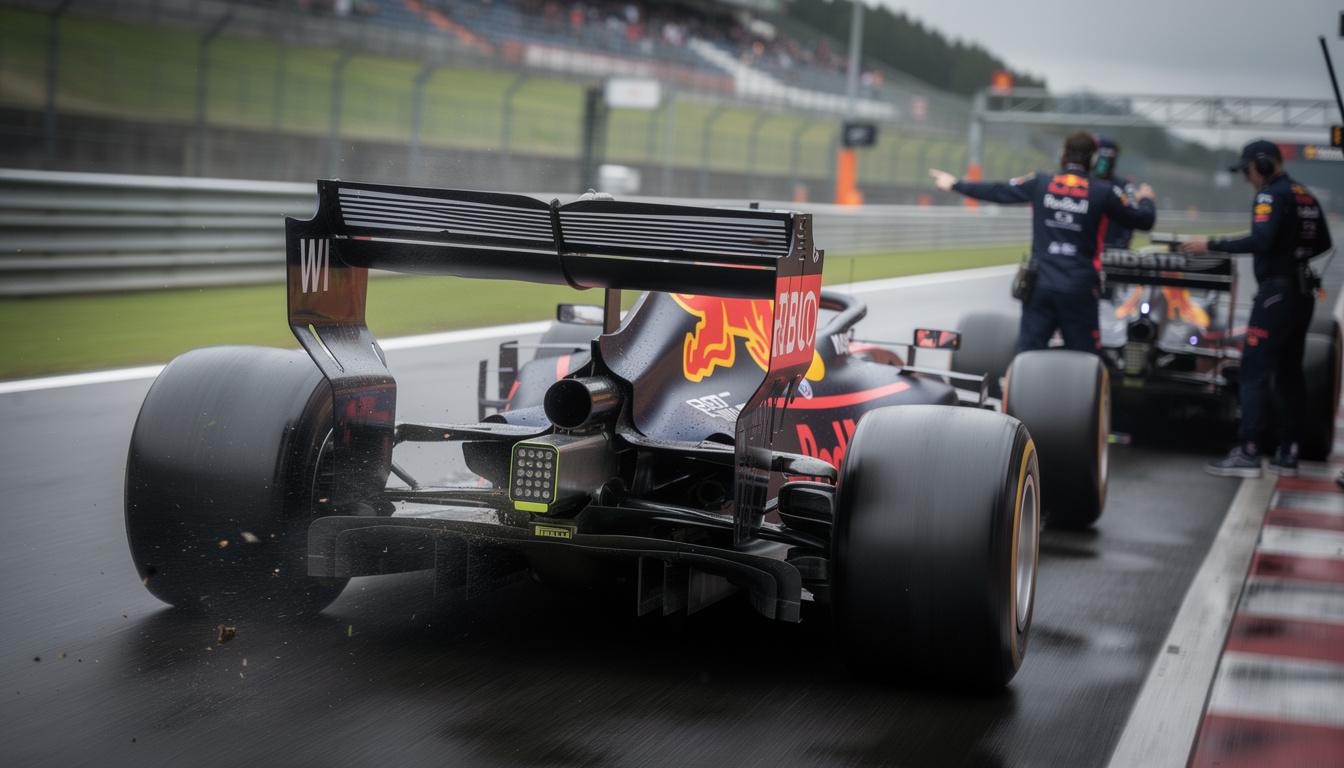
The aerodynamics on the RB29’s rear wing are central to both its performance edge and recent reliability woes. The rotating system creates the largest opening on the grid, designed to optimise drag reduction but also one that has proven tricky to tame. Red Bull technical chief Pierre Wache admitted the team is still analysing whether the core concept or other factors caused the failures. The FIA has been deeply involved since the wing’s inception, emphasizing that safety is non-negotiable.
Strategically, running this wing at Spa offers clear gains in terms of lap time and energy efficiency one cannot ignore, particularly as energy management becomes critical on this demanding track. However, the risk of a third failure and potential crash forces the team to consider fallback plans. Red Bull principal Laurent Mekies confirmed the investigation is thorough and ongoing, with “all options open” — including possibly reverting to a conventional rear wing setup should concerns remain unresolved before race weekend.
Spa’s high-speed demands heighten pressure on Red Bull’s rear wing decision
Heading into Spa, the stakes are elevated. Red Bull’s current rear wing offers valuable drag reduction, a pronounced advantage in energy-starved conditions that Spa notoriously presents due to its long straights and high-speed corners. Yet, the team cannot risk exposing Verstappen to another mechanical failure after back-to-back incidents that have drawn sharp criticism from the driver himself, who labelled the malfunction “super dangerous”.
Other teams, notably McLaren, have adopted a more cautious path with their rotating wings. McLaren introduced their own version in Spielberg but withheld it from use, citing readiness concerns, and did not deploy it in Silverstone’s sprint format. Spa could mark the true debut if Red Bull decides against reverting. For Verstappen and his team, the balance between maximising race strategy and ensuring uncompromised safety is the tightrope they now walk.