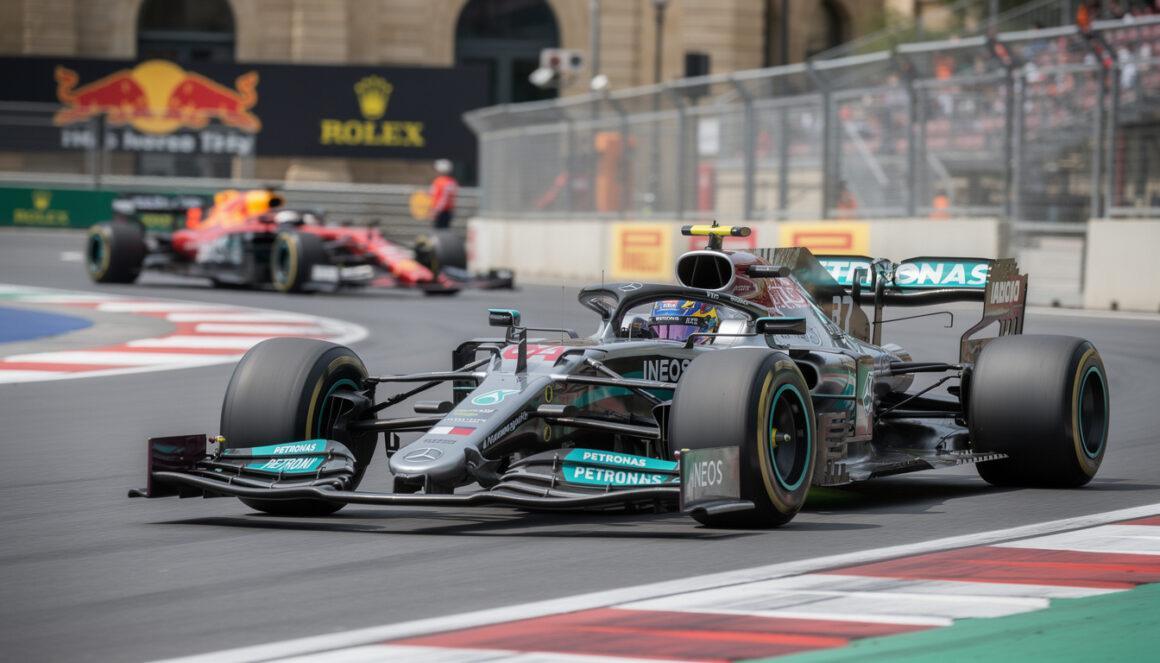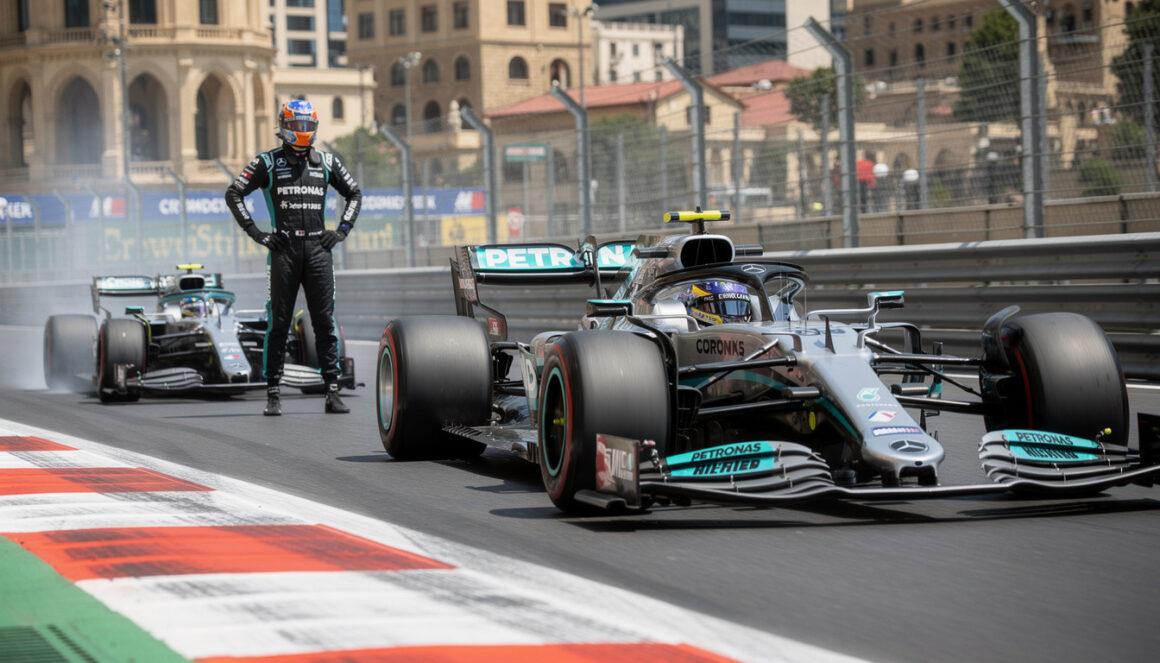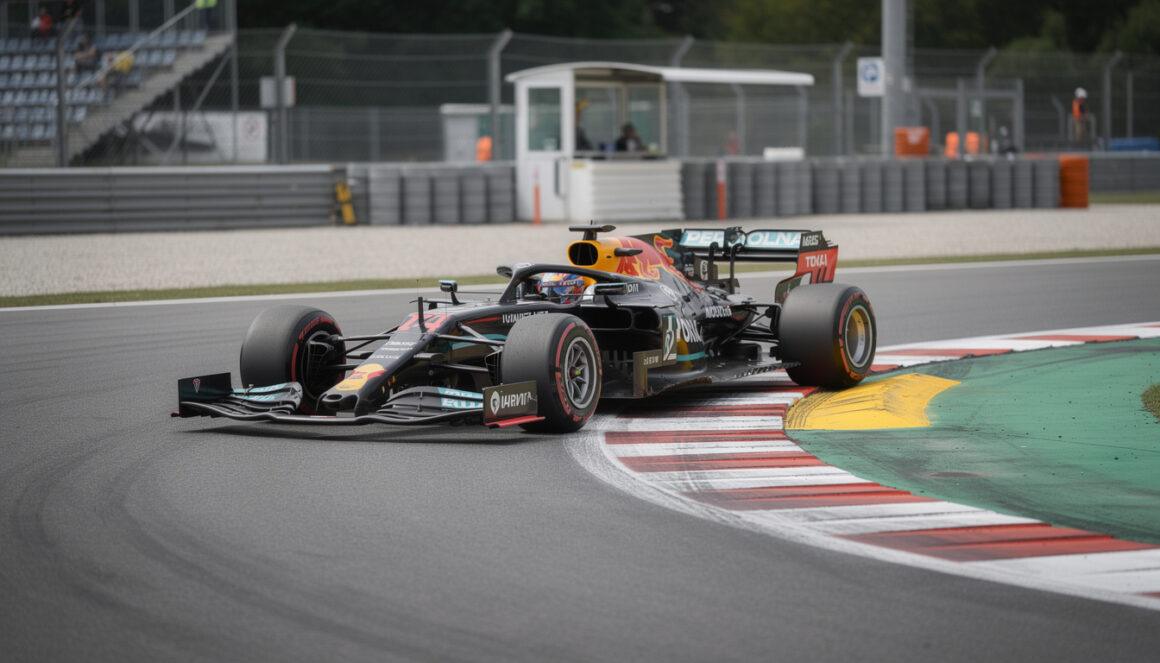


When Oliver Bearman’s Haas hit the barrier at Spoon Curve during the 2026 Japanese Grand Prix, the impact registered 50G. That means the crash subjected the car to forces around 50 times the pull of gravity, a level of force that can have serious consequences. Yet Bearman was able to walk away with only a bruised knee.
His escape was a reminder that modern Formula 1 safety is not built around one clever device. It relies on multiple layers of protection working together, from the car’s survival cell and crash structures to the Halo, HANS device, helmet, and restraint system. Each plays a role in managing the forces of a high-speed impact.
But what does 50G actually mean for a driver? And how do these technologies help protect the person inside the car? Understanding the answers shows just how far F1 safety has come and why even the biggest crashes can have survivable outcomes.
What does 50G actually mean?
G-force measures acceleration compared with the force of gravity. In a crash, it shows how suddenly a driver’s speed changes. At 50G, a driver’s body is briefly subjected to a force fifty times its normal weight.
But that force does not last. It is a spike lasting only a fraction of a second, and its duration matters as much as its peak. A short, controlled spike is far more survivable than a sustained load, which is why F1 engineers focus on absorbing crash energy rather than simply stopping the car.
Bearman’s impact at Suzuka was severe even by F1 standards. Carlos Sainz, who recorded 46G in a crash in Russia in 2015, noted that Bearman’s was higher. Yet Bearman left the car with only a bruised knee, which shows how effectively the car’s protection systems manage forces of this size.
What happened in the Suzuka crash
The crash happened on lap 22 of the 53-lap Japanese Grand Prix as Ollie Bearman approached the Spoon Curve. He was caught by a significant closing speed to Franco Colapinto’s Alpine, forcing him to take avoiding action.
Bearman moved onto the grass, lost control, and speared into the barriers on the outside of the corner. The impact registered 50G and immediately brought out the Safety Car.
The crash was particularly concerning because the Spoon Curves can produce a large speed difference when one car is running with no MGU-K power while another is using its available boost. Haas team principal Ayao Komatsu described the closing speed as “huge.”
Bearman remained alert and was able to communicate after the crash, but he was visibly limping and was taken to the medical center for an X-ray. He was diagnosed with a right knee contusion and suffered no fractures. The stewards reviewed the incident and decided that no further action was necessary.
Layers of protection in F1 safety technology
No single component explains why drivers survive. F1 safety works as a chain, where each element absorbs part of the force and passes the remainder to the next.
The Halo
Introduced in 2018 despite early criticism of its looks, the halo is a titanium structure above the cockpit designed to withstand 125 kN, a load often compared to a double-decker London bus. It has since been credited in several major accidents, including Romain Grosjean’s crash in Bahrain in 2020, Lewis Hamilton’s collision at Monza in 2021, and Zhou Guanyu’s crash in 2022.
The survival cell
The carbon-fiber monocoque around the driver is extremely strong yet light. Crash structures at the front, sides, and rear are designed to crumple and absorb energy, so the car sheds parts while the cell stays intact. The roll hoop behind the cockpit must also pass load tests of 60 kN laterally, 70 kN longitudinally, and 105 kN vertically. The dramatic debris after a crash is often the system working as intended.
HANS, harness and helmet
The HANS device links the helmet to the shoulders, limiting violent head and neck movement. A multi-point harness holds the driver firmly in a molded seat, spreading the load across the strongest parts of the body. The helmet and fireproof clothing provide additional protection against impact and fire.
Comparing the protection from everyday cars
Road cars borrow ideas from F1, but the protection differs greatly. Where an F1 driver has a halo, a HANS device, a six-point harness, and a carbon-fiber survival cell, a road car offers seat belts, airbags, and crumple zones. Those systems work well for everyday driving, but they were not designed for racing-level forces.
On public roads, instead of purpose-built barriers, a car may meet oncoming traffic, trees, or poles. When crash forces reach the body, a serious injury in a car wreck can mean head trauma, spinal damage, or internal injuries, with recovery lasting months or years.
Legal and medical documentation can become important after such incidents. Loewy Law Firm notes that comprehensive medical records can help establish that injuries resulted from a collision, particularly when symptoms appear later. These records can also help document whether the impact aggravated a pre-existing medical condition.
Barriers, medics and learning beyond the car
Safety in Formula 1 extends far beyond the cockpit. Circuits are purposefully designed with run-off areas and energy-absorbing barriers that help reduce the forces of a crash. Highly trained track marshals are stationed around the circuit, while a dedicated medical car follows the field on the opening lap to provide a rapid emergency response.
More importantly, every serious accident provides an opportunity to learn. Following major incidents, the FIA investigates what happened and looks for ways to improve car design, circuit safety, driver equipment, and regulations.
This continuous feedback helps F1 safety evolve. A clear example came after the opening rounds of the 2026 season, when the FIA confirmed targeted regulation changes for the Miami Grand Prix. The updates included limiting MGU-K deployment in non-acceleration zones to reduce potentially dangerous closing speeds and adding automatic low-power start detection to help prevent rear-end collisions.
Frequently asked questions
What does 50G mean in a crash?
It means the body briefly experiences a force fifty times its normal weight. The key factor is how long that force lasts. F1 cars are designed to absorb energy so the peak is as short and controlled as possible.
Does the halo really save lives?
Drivers and the FIA credit it with saving lives in several serious accidents. It is designed to withstand 125 kN, protecting the driver’s head from debris and impacts. No device is a guarantee, but it has become a cornerstone of F1 safety.
Can road cars use F1 safety features?
Some principles, like crash structures and restraints, have influenced road-car design. But features such as the halo, HANS device, and six-point harness are impractical for everyday use because of comfort, cost, and visibility. Road cars rely on seatbelts, airbags, and crumple zones.
Statistics and insights at a glance
| 50G | Peak force recorded in Ollie Bearman’s crash at the 2026 Japanese Grand Prix |
| 46G | Force recorded in Carlos Sainz’s 2015 crash in Russia, as referenced in the article. |
| 125 kN | Force the F1 Halo must withstand from above and from the side. |
| 2018 | Year the Halo was introduced into Formula 1. |
| 22 laps | Number of laps Bearman completed before his Japanese Grand Prix crash. |
| 53 laps | Total race distance in laps at the 2026 Japanese Grand Prix. |
Bearman’s 50G crash shows why F1 drivers can walk away from impacts that would be devastating elsewhere. The halo, survival cell, HANS device, harness, barriers, and medical response each take a share of the force, and together they turn a violent crash into a survivable one.
The contrast with ordinary road cars is a useful reminder that these protections are purpose-built for racing. As the FIA reviews the 2026 regulations, the lesson is clear: safety is never finished, and every crash teaches the sport something new.