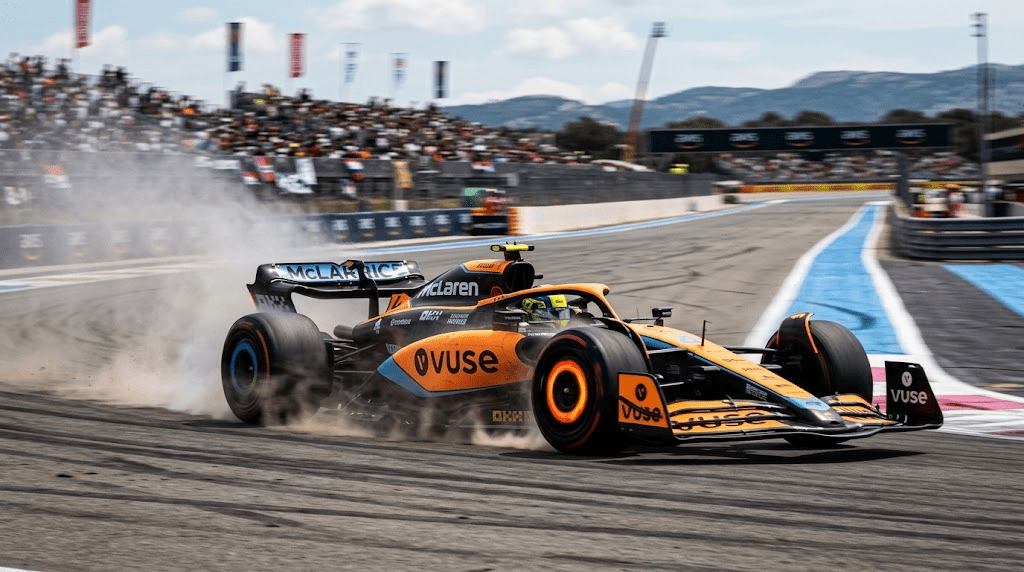

Formula 1 stopping from extreme speeds is a feat of engineering and precision craftsmanship. Every detail of the braking system is designed to deliver controlled deceleration without sacrificing lap time or vehicle stability. The complexity of this process reveals why F1 brakes are among motorsport’s most advanced components, essential in mastering circuits where every millisecond counts.
Understanding how Formula 1 cars stop from 300 km/h requires examining the interplay of physics, materials, and driver skill. The orchestration between carbon brakes, heat dissipation, and aerodynamic drag offers insight into the delicate balance drivers and teams maintain to optimize performance. For a detailed technical description, exploring the F1 Dictionary entries on braking components enriches understanding.
This video demonstrates the workings of carbon brakes and brake cooling that enable rapid deceleration in F1 cars.
Technical fundamentals of F1 brakes and their stopping power
The braking system in Formula 1 cars revolves around carbon-carbon composite brake discs and pads. These components operate optimally within a narrow temperature band, typically between 400–1000°C. This temperature range ensures ideal friction and avoids brake fade, which occurs if the brakes become too hot or cool down excessively. The choice of materials and cooling design is critical in enabling the car to stop from over 300 km/h with phenomenal consistency.
Engineers pair carbon brake discs with four-piston calipers crafted for maximum stiffness. This setup guarantees consistent pedal response and high clamping force required to decelerate at over 5 g. For drivers, the interaction with these components feels more like pressing a pressure scale than a typical brake pedal. Detailed technical aspects about brake materials and cooling are documented well in LAS Motorsport’s technical library.
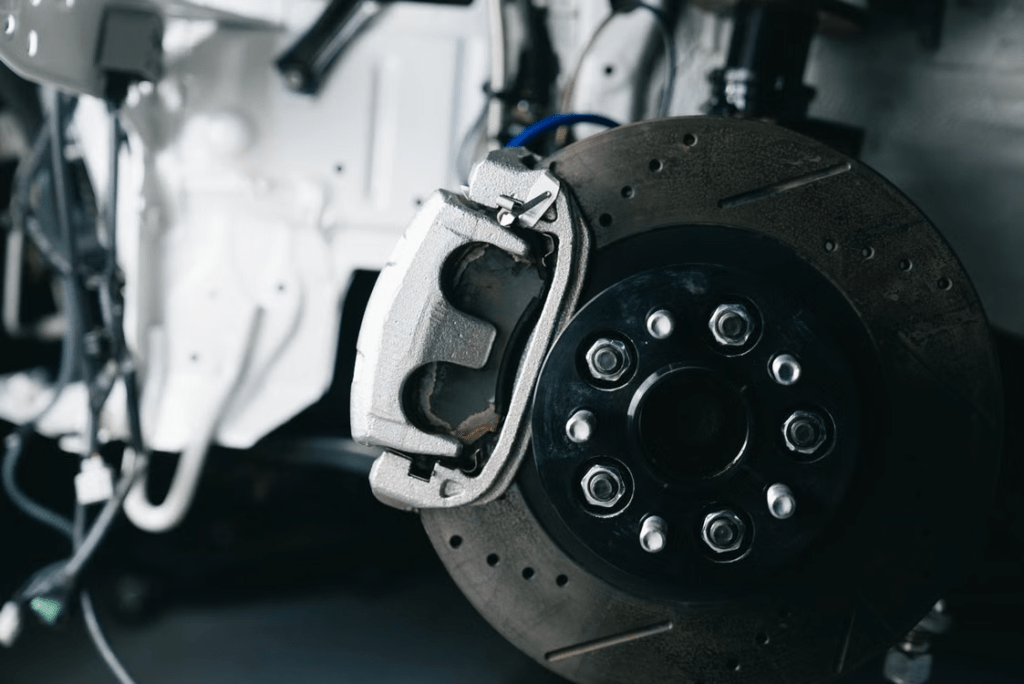
Carbon brakes: composition and thermal management
Integral to the braking process are carbon discs and brake pads. Their lightweight carbon-carbon construction offers superior heat resistance and thermal conductivity. Due to this, heat dissipation becomes a vital factor in maintaining brake performance during a race.
Brake cooling is carefully managed through ventilation ducts and adjustable brake duct blanking. Teams tailor duct size depending on the circuit’s braking demand and ambient temperature. Achieving the right balance maintains surface temperatures where brake fade risks are minimal while preserving optimal pedal feel and stopping power.
Brake cooling’s impact on race-day performance and reliability
Managing brake temperature is a constant challenge during race weekends. Cooling airflow through brake ducts influences tire temperatures and aerodynamic drag, with subtle trade-offs at high-speed circuits. Cooler brakes prolong pad and disc life but increase aerodynamic drag and reduce straight-line speed.
This cooling management also plays a role in the complex setup changes between qualifying and race sessions. Teams adjust brake cooling to preserve brake health during long stints while allowing aggressive braking in qualifying. Such adaptability supports the driver’s ability to balance braking zones and throttle application efficiently.
Deceleration physics and driver skill behind F1 brakes
Beyond hardware, the art of Formula 1 stopping is governed by how drivers exploit physics during braking. Vehicles decelerate at rates surpassing five times gravitational force (5g), a significant physical challenge considering driver endurance. This intense load demands precision pedal control, especially as aerodynamic downforce diminishes with speed.
The interplay between hybrid system regeneration and brake usage creates constantly shifting brake balance during stops. Drivers finesse brake pressure as downforce fades and the rear’s electric regenerative braking tapers off. Understanding how G-forces affect braking helps illuminate why mastering these systems is critical for maintaining a competitive edge in tight corners.
How the absence of ABS intensifies driver feedback demands
Unlike commercial cars, F1 regulations ban ABS, placing the driver in complete control to prevent wheel lock-up. The driver’s foot acts as an anti-lock system, requiring millisecond accuracy to modulate brake pressure. This demand for feel and reaction is a defining feature of F1 driving and explains why braking mistakes can easily lead to lock-ups or lost lap time.
Telemetry shows how leading drivers maintain a sharp “strike” of the pedal and then execute a delicate “bleed” phase to keep tires just on threshold grip. This braking finesse directly influences corner entry speed, tire wear, and ultimately, race outcome. Such skill combines physical conditioning and extensive simulator practice to build impeccable brake modulation ability.
Brake balance tuning and its effects on vehicle dynamics
Brake bias and migration are essential parameters drivers adjust, often via the steering wheel, to adapt to fuel load and tire temperature changes. Adjusting brake balance front-to-rear affects car rotation and stability during corner entry. Fine-tuning this balance helps manage understeer and oversteer risks under heavy braking.
Hybrid energy recovery systems add complexity by varying rear brake input electronically, also influencing brake balance. Collaboration between driver input and electronic management ensures maximum deceleration with control. These adjustments regularly distinguish top drivers during qualifying and race stints alike.
This video highlights G-force effects and pedal feel demands during high-speed deceleration in Formula 1.
Dynamic brake system design: integration with hybrid technology
The modern F1 braking system integrates hydraulic brake force with electric regenerative braking on the rear axle. This hybrid setup allows energy recovery (MGU-K) to slow the car at high speed without direct hydraulic input. The system adapts dynamically, shifting braking effort as the car decelerates through corners. This complex balance is managed through brake-by-wire technology that optimizes deceleration and energy harvesting.
Brake pedal pressure feels non-linear due to this electronic modulation, requiring drivers to fine-tune their brake inputs accordingly. The seamless transition between electric and hydraulic braking extends component life and improves overall efficiency. For an in-depth look at hybrid system interaction with brakes, readers will find comprehensive technical briefings on LAS Motorsport valuable.
Hybrid regeneration’s influence on braking patterns
At high speeds, electric regeneration provides significant slowing power and battery recharge, reducing hydraulic brake workload. This shift results in varying brake pedal feel and balance as the car slows. Drivers note changes in the brake pedal around mid-corner when rear regeneration tapers off.
Teams develop brake maps to adjust this interplay depending on circuit profiles, track temperatures, and fuel load. Effective management enables faster lap times and energy recovery strategies tailored to each event’s specific demands.
Brake cooling optimization with aerodynamic considerations
Brake duct design directly affects aerodynamic drag and cooling efficiency, forming a critical setup trade-off. Smaller ducts decrease drag but increase brake temperatures, risking fade or overheating. Conversely, larger ducts improve cooling but reduce straight-line speed. Teams often adjust duct blanking from session to session based on weather conditions and track layouts.
This aerodynamic compromise emphasizes the importance of integrated vehicle design. Cooling demands link closely to tire performance and overall race strategy planning, mandating constant adjustment during a race weekend.
Track-specific braking challenges and driver adaptation
Braking demands vary significantly across F1 circuits, requiring drivers and engineers to tailor techniques for each challenge. Heavy braking zones like Monza’s first chicane or Bahrain’s Turn 1 test durability and precision under maximum deceleration. Conversely, tight hairpins demand longer trail braking to rotate the car while maintaining traction. Drivers adapt by adjusting brake bias and modulation to suit these diverse corner characteristics.
Understanding mechanical grip and tire behavior under braking on different surfaces is equally crucial. Tire compounds, track evolution, and temperature changes alter grip availability. Successful drivers modify braking points and release rates in response to these shifts, often consulting team-supplied data and simulations during race weekends. This dynamic response is key to preserving tire life and maximizing lap times.
Heavy braking zones: technique and risk management
Approaching high-speed braking zones requires a sharp initial “hit” to maximize deceleration. Over applying brakes early risks tire lock-up and flat-spotting, which degrades tire performance for laps ahead. Drivers carefully modulate pressure during the “bleed” phase to keep tires at peak grip without losing momentum.
Once past the peak deceleration, subtle trail braking into these turns aids car rotation while preventing instability. Mistakes lead to understeer or overshoot, commonly seen in races where brake balance or pedal feel is compromised. Mastery here marks the difference between clean laps and compromised tire wear.
Trail braking in low-speed corners and hairpins
In slower corners, drivers hold slight brake pressure past turn-in to maximize front tire load and improve rotation. This balancing act requires precise brake pedal modulation to avoid spinning or locking the rear wheels. Use of left-foot braking techniques facilitates fine control, combined with differential and engine braking adjustments.
Variations in brake bias settings during race stints allow drivers to adapt to changing conditions such as fuel weight reduction and tire degradation. Steady trail braking can preserve momentum on exit, especially when combined with optimal throttle application timing. These techniques link directly to lap times and overtaking opportunities.
How do carbon brakes perform better than steel brakes in Formula 1?
Carbon brakes provide superior heat resistance and operate efficiently between 400–1000°C, offering consistent stopping power without fading compared to steel brakes.
Why is there no ABS system in Formula 1 cars?
ABS is banned in Formula 1, so drivers manually modulate brake pressure to prevent lock-ups, demanding high skill and precision.
What role does brake cooling play in Formula 1 performance?
Brake cooling balances maintaining optimal brake temperatures and minimizing aerodynamic drag, crucial for reliability and lap times.
How does hybrid energy recovery affect braking balance?
Hybrid systems shift rear braking effort electronically during deceleration, requiring drivers to adjust brake bias dynamically for stability.
What is trail braking, and why is it important in Formula 1?
Trail braking involves maintaining slight brake pressure after turn-in to help car rotation, improving cornering speed and control.